
24/7 Customer Support

Free returns

Same-day & Next-day Delivery

Quality Guaranteed

Unlock Your Welcome Offers: FREE Delivery | Up to 80% OFF | Free 30-day JoyPlus trial
Download the APP
A mini fridge can solve a practical space problem, but choosing one based only on capacity or appearance can lead to disappointment. A model that looks suitable online may not fit beneath a desk, cool food consistently in a warm room or leave enough ventilation around the compressor.
Before buying a tabletop mini fridge, undercounter fridge or portable car fridge, check three common traps:
Measure the intended location, including space for the door to open. Check height, width and depth, rather than relying on product photographs. A 43–46-litre mini refrigerator may suit drinks, snacks and packed lunches, while an 88-litre compact fridge provides more practical space for fresh food.
For a small kitchen, an undercounter fridge should fit beneath the worktop without obstructing ventilation. A freestanding fridge usually offers more flexibility than an integrated model, but it still needs a stable, level surface.
Pay attention to internal organisation:
A compressor-based small fridge is generally more suitable for milk, fresh food and everyday groceries. Look for an adjustable thermostat so you can alter the internal temperature according to the contents and room conditions.
Portable thermoelectric models are different. They are convenient for a bedroom, office or car, but their cooling performance is usually stated as a reduction below ambient temperature. They are not designed to freeze food, and performance can vary in a warm vehicle or sunny room.
A portable car fridge with a compressor can offer a wider temperature range, including freezer-style settings. However, it may require more careful battery management and ventilation than a personal cooler.
The UK energy label uses classes from A to G. An E-rated fridge is not automatically the lowest-cost appliance to run, so compare the stated annual consumption in kWh/year where available. Actual electricity costs depend on your tariff, room temperature, usage and ventilation.
Noise matters when choosing a quiet mini fridge for a bedroom, home office or student accommodation. Published figures around 39–41 dB can be more suitable for shared or open-plan spaces than louder appliances, although the compressor may still make intermittent sounds when cycling.
A reversible door fridge can make a significant difference in a narrow room. Confirm whether the hinge can genuinely be changed and whether there is sufficient space to complete the adjustment safely.
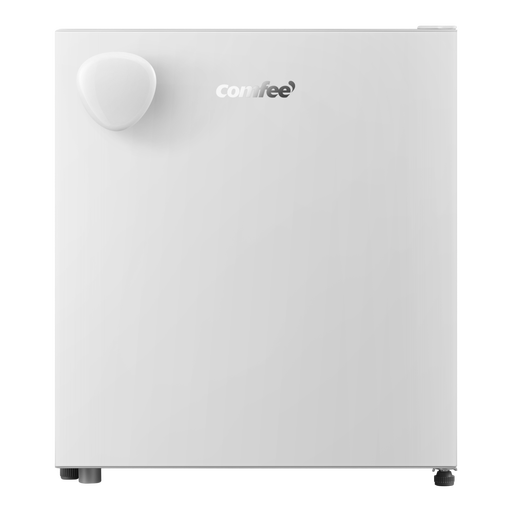
Why This Suits Their Profile: Its 43-litre capacity and 445 mm width suit people living alone, renters and students who need a compact fridge for a kitchen corner, office or studio flat.
The three-stage temperature adjustment gives more control than a basic fixed-setting cooler, while the narrow body is easier to position in a limited space.
E energy class, height-adjustable storage and a dedicated vegetable compartment.

Why This Suits Their Profile: This dark inox tabletop mini fridge is suited to home offices, bedrooms and worktops where a neat appearance, flexible placement and low operating noise are important.
Its listed 41 dB noise level and reversible door address two frequent problems: disturbance in quiet rooms and awkward access beside a wall.
46-litre capacity, adjustable thermostat, removable wire shelf and E energy rating.
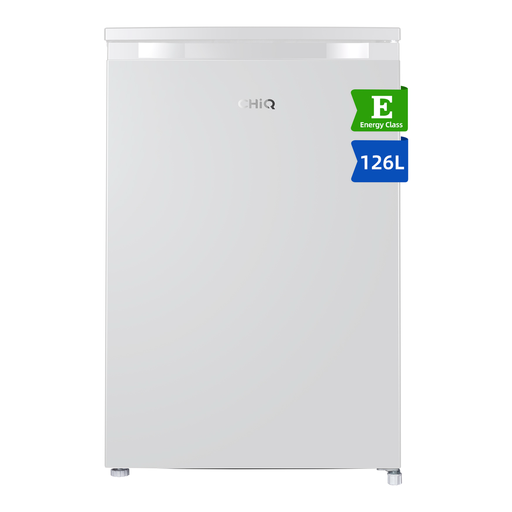
Why This Suits Their Profile: A 126-litre freestanding fridge is more suitable for a small household, shared accommodation, office kitchen or anyone needing regular fresh-food storage rather than occasional drinks cooling.
The full-height layout avoids the limited usable space of a personal cooler, with two shelves, three door bins and a crisper drawer.
39 dB listed noise level, seven temperature settings, LED interior lighting and 545 × 562 × 850 mm dimensions.
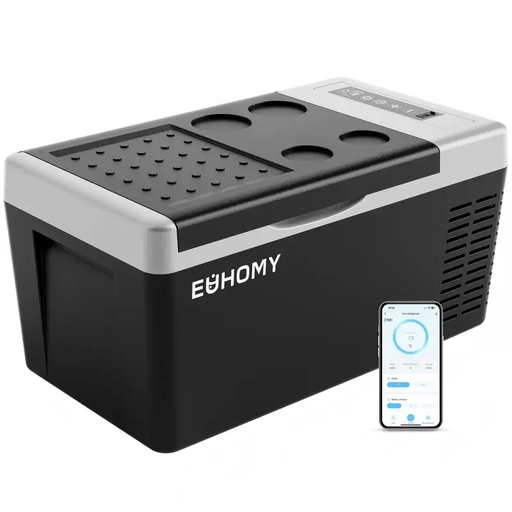
Why This Suits Their Profile: This portable car fridge is designed for camping, boating, campervans and road trips, with both vehicle and household power compatibility.
Unlike a basic thermoelectric cooler, its stated temperature range is -20°C to +20°C, and three-stage battery protection helps manage vehicle power use.
18-litre capacity, 12/24V DC and 100–240V AC adapters, plus app control and compressor cooling.
Allow a compressor fridge to stand upright before switching it on after delivery, following the manufacturer’s instructions. Position it on a flat, stable surface and keep ventilation openings clear. The CHiQ CSD46D4EU guidance recommends at least 5 cm at the rear and 30 cm at the top and sides; always check the specific instructions for your model.
Do not overload the interior, as cold air needs to circulate. Keep the door seal clean, unplug the appliance before cleaning and never use sharp tools to remove ice. Do not store flammable or corrosive substances inside, and keep children from climbing on or entering the appliance.
We have compiled a complete, real-time list of products that fully satisfy these strict selection criteria and UK safety regulations.
A compressor mini fridge can be suitable if its published noise level and dimensions work for the room. Place it on a stable surface with ventilation space and avoid positioning it directly beside the bed if compressor cycling may disturb your sleep.
Running cost depends on annual kWh consumption, your electricity tariff, room temperature and usage. Compare the energy label and stated annual consumption rather than judging cost from the fridge’s physical size alone.
Lifespan varies with build quality, usage, ventilation and maintenance. Keeping the condenser area clear, avoiding overloading and maintaining a clean door seal can support reliable operation. Always follow the manufacturer’s care instructions and warranty terms.