
24/7 Customer Support

Free returns

Same-day & Next-day Delivery

Quality Guaranteed

Unlock Your Welcome Offers: FREE Delivery | Up to 80% OFF | Free 30-day JoyPlus trial
Download the APP
A mini fridge can solve a practical space problem in a flat, student room, home office, guest room, caravan or bar. However, compact refrigeration is not one-size-fits-all. A 4-litre portable cooler is designed for cans and skincare, while an undercounter fridge may hold a full weekly shop but require permanent ventilation and floor space.
The main buying mistakes usually come from confusing product categories and focusing on headline capacity without checking how the appliance actually works.
A portable mini fridge for a car or bedroom may use thermoelectric cooling. This type generally cools items by a stated amount below the surrounding temperature, rather than maintaining the same low temperature as a conventional refrigerator. For example, a product rated to cool up to 20°C below ambient temperature may perform differently in a warm room or parked vehicle.
Thermoelectric models are useful for drinks, snacks and skincare, but they cannot freeze and may not be suitable for storing perishable food for long periods. A compressor-based compact fridge is more appropriate for regular household food storage.
Advertised capacity does not show how easily you can organise bottles, cartons or containers. Check the internal layout, shelf adjustment, door racks and crisper drawer. A smaller appliance with removable shelves may be more useful than a larger model with fixed compartments.
Also distinguish between a tabletop fridge, an undercounter unit and a portable mini fridge. Their external dimensions, cooling systems and intended uses are different.
A compact fridge still produces heat and requires clear airflow around its ventilation areas. Placing it tightly against a wall or beside a radiator can affect cooling performance and energy use. Check the manufacturer’s installation instructions before positioning it under a worktop or inside furniture.
Door direction is another frequent oversight. A reversible door can make a significant difference in a narrow kitchen, but not every small refrigerator offers this feature. For bedrooms and open-plan rooms, check the stated noise level rather than relying on descriptions such as “quiet”.
Use the following guide as a starting point:
A dedicated drinks fridge or wine cooler may have bottle-focused shelving and temperature controls, but it is not automatically suitable for general food storage.
Measure the available height, width and depth, including space needed for the plug, door opening and ventilation. A standard undercounter fridge may be close to 82–85 cm high and around 50–55 cm wide, but dimensions vary.
For example, the Sharp SJ-UE121M4W-EN measures 838 x 540 x 595 mm, while the COMFEE’ RCD92BL2UKY(E) measures 82.7 x 44.5 x 47 cm. These differences matter when fitting an appliance beneath a worktop or into a studio flat.
UK appliances use the current A–G energy label system. An energy class E fridge is not the highest-rated category, but comparing the stated annual consumption in kWh per year is more useful than looking at the letter alone.
For instance, the Sonlu CS-100L lists annual consumption of 84 kWh, while the Sharp SJ-UE121M4W-EN lists 145 kWh. Capacity, cooling system and freezer provision also influence consumption, so compare like-for-like models.
Look for practical features such as LED lighting, adjustable thermostats, effective door seals and automatic or low-frost operation. These do not remove the need for sensible installation and regular maintenance.
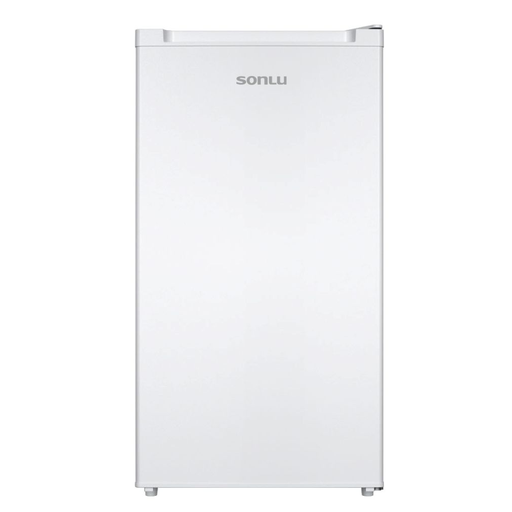
Why This Fits Their Persona: A practical choice for students, single occupants and offices needing everyday chilled storage without a freezer compartment.
Its 82-litre capacity is clearly positioned as an all-refrigerator, avoiding confusion about limited freezer storage.
Adjustable glass shelves, a vegetable drawer, LED lighting, 40 dB noise level and stated annual consumption of 84 kWh.
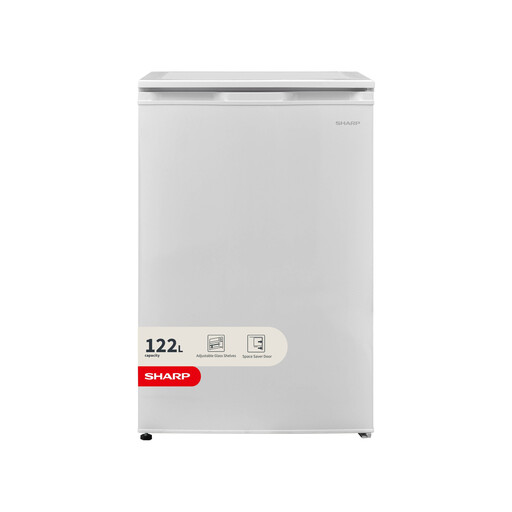
Why This Fits Their Persona: Suitable for a carefully planned compact kitchen or as a secondary fridge where flexible installation and organised storage matter.
The 54 cm width, reversible door and flush-opening design help address awkward layouts and restricted door clearance.
122-litre total capacity, two adjustable glass shelves, an icebox, LED light and stated 40 dB operation.
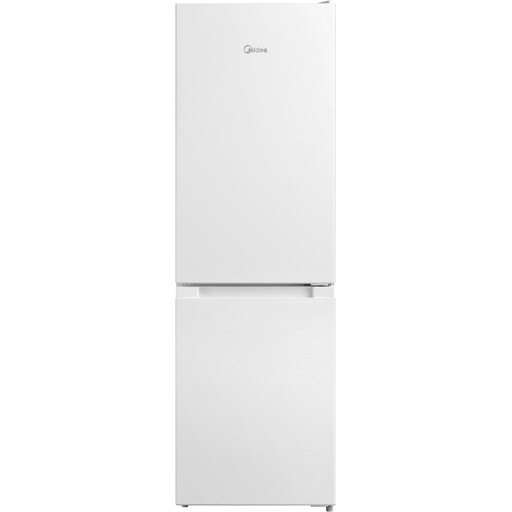
Why This Fits Their Persona: Designed for small households that need both chilled and frozen storage but cannot accommodate a standard 60 cm-wide appliance.
It provides clearly separated 121-litre fridge and 52-litre freezer compartments rather than treating a small cooler box as a freezer.
50 cm width, 173-litre total capacity, reversible door, adjustable glass shelves, transparent freezer drawers and 40 dB stated noise level.

Why This Fits Their Persona: A portable option for bedrooms, home offices, travel and car use when a full-size compact fridge is impractical.
Its thermoelectric design is described as cooling below ambient temperature and not freezing, so expectations are clearer than with an unspecified “ice box”.
6-litre capacity, AC 220–240V and DC 12V cables, cooling and warming modes, removable shelf and condensation tray.
We have compiled a complete, real-time list of products that fully satisfy these strict selection criteria and UK safety regulations.
A compressor mini fridge can be suitable if its stated noise level works for you and the room has adequate ventilation. Models around 39–40 dB may be more appropriate for bedrooms or open-plan spaces than louder appliances. Portable thermoelectric coolers can also be used for drinks and skincare, but their cooling depends on room temperature.
Running cost depends on annual electricity consumption, your tariff, room temperature and usage. To estimate the yearly cost, multiply the appliance’s stated kWh per year by your electricity price per kWh. Compare annual consumption between models rather than assuming that a smaller cabinet always uses less power.
Lifespan varies according to construction, compressor or thermoelectric system, installation and maintenance. Keeping vents clear, cleaning door seals and avoiding unnecessary temperature changes can support reliable operation. Always check the warranty period and retain purchase documentation in case service is required.