
24/7 Customer Support

Free returns

Same-day & Next-day Delivery

Quality Guaranteed

Unlock Your Welcome Offers: FREE Delivery | Up to 80% OFF | Free 30-day JoyPlus trial
Download the APP
A compact appliance can solve a genuine storage problem in a UK bedroom, studio flat, office, caravan or car. However, not all mini fridges perform the same job. A 4-litre thermoelectric cooler, an 88-litre under-counter fridge and a compressor-powered portable freezer may all appear in the same search results, despite having very different capabilities.
The most common buying mistakes come from overlooking three details:
The right choice depends on what you want to store, where you will use it and whether you need cooling, warming or genuine freezer performance.
There are two main types of compact fridge.
Thermoelectric models are generally light, compact and suitable as a bedroom fridge, office fridge, skincare fridge or drinks fridge. Their cooling is usually described as a reduction below ambient temperature. For example, the AstroAI 4-litre model is specified to cool up to 20°C below ambient temperature and warm items to up to 66°C. It uses a cooling chip rather than a compressor or refrigerant, so it cannot freeze.
This makes it suitable for sealed drinks, snacks, toiletries and skincare products, but it is not a replacement for a food freezer. Cooling may also be less effective in a hot room, direct sunlight or a poorly ventilated area.
Compressor models are more appropriate when you need a wider, controlled temperature range. The EUHOMY 18-litre cooler box is specified for temperatures from -20°C to +20°C, allowing it to function as a portable fridge or portable freezer. Compressor units can be heavier and may make more operating noise, so check the stated decibel level and available space before purchase.
Measure the space before ordering, including room for the door to open and air to circulate around the appliance. A small fridge may fit on a desk but still be too tall for a shelf, while an under-counter fridge needs careful checks against the worktop height and surrounding cabinetry.
For reference:
Look for removable or adjustable shelves if you intend to store bottles, lunch boxes or taller containers.
An AC/DC mini fridge is useful when moving between a home and vehicle. Check that the package includes both a household power cable and the correct DC lead. Portable units commonly use a 12V car fridge connection through the vehicle’s accessory socket.
In the UK, check the supplied plug, voltage information and instructions before use. Never overload a vehicle power outlet, and disconnect a car fridge when the vehicle will be parked for a long period unless the power arrangement is designed to support continuous operation.
For household models, compare the stated energy class and annual energy consumption where available. The 43-litre Comfee models listed here specify an energy-saving design and annual consumption of 110kWh/year. Actual running costs depend on your electricity tariff, room temperature, thermostat setting and how often the door is opened.
Always keep ventilation openings clear. A portable cooler should sit on a flat, stable surface, away from direct sunlight and heat sources.
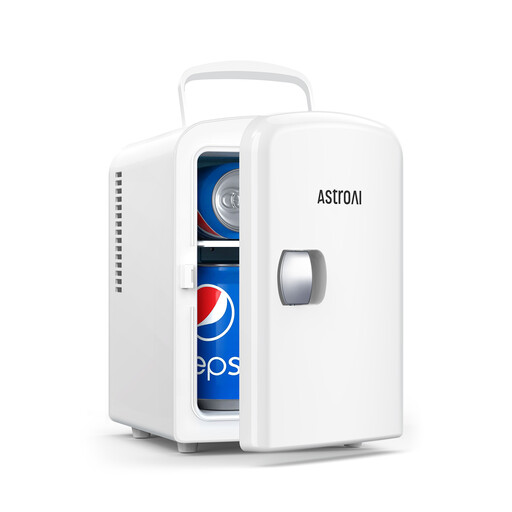
Why This Fits Their Persona: A compact choice for a student bedroom, desk or small office where the priority is personal storage rather than frozen food.
Its specification clearly states that thermoelectric cooling cannot freeze, helping prevent unsuitable food-storage expectations.
4-litre capacity, AC and 12V DC cables, cooling up to 20°C below ambient temperature and warming up to 66°C.
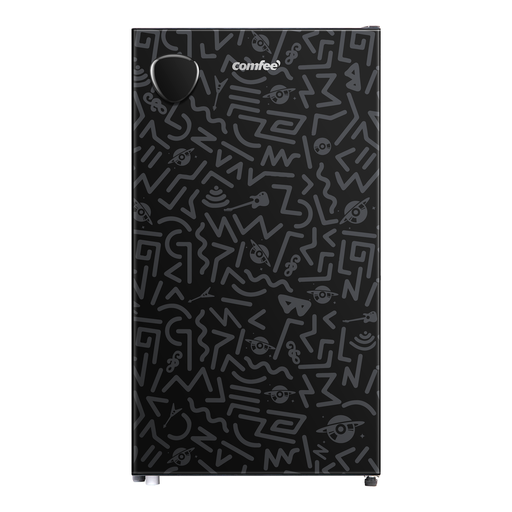
Why This Fits Their Persona: A practical household appliance for a studio flat, home office or bedroom where organised fresh-food storage matters more than portability.
Its 88-litre capacity and listed dimensions make it easier to plan installation than relying on a vague “compact” label.
Removable glass shelves, crisper drawer, reversible door, interior light and energy class E.
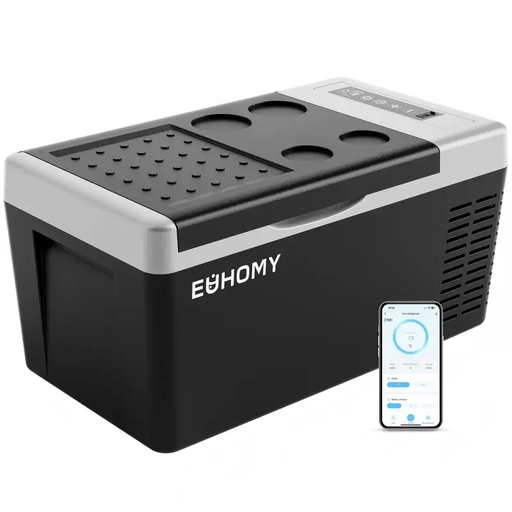
Why This Fits Their Persona: Designed for campers, caravan users, boat owners and longer road trips requiring more capacity and freezer functionality.
Its compressor system and stated -20°C to +20°C range distinguish it from portable thermoelectric coolers that cannot freeze.
18-litre capacity, 12/24V DC and 100–240V AC operation, three-stage battery protection and app control.
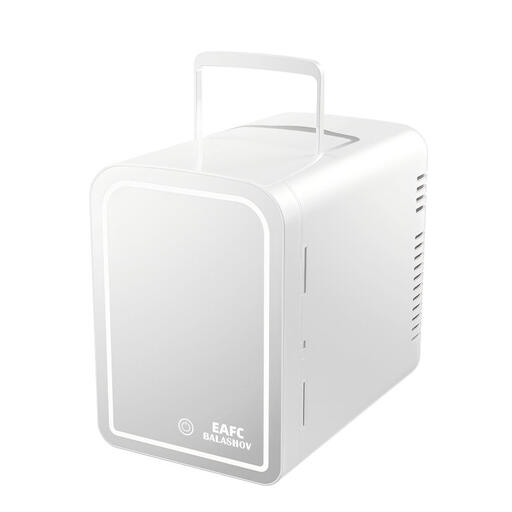
Why This Fits Their Persona: A travel-friendly option for cosmetics, personal care items and small meals, particularly where a mirror and 12V vehicle use are useful.
The listed requirements cover stable placement, unobstructed vents, correct 12V connection and switching off to reduce vehicle battery drain.
6-litre format, thermoelectric cooling, heating function, LED mirror and compatibility with 12V vehicles.
We have compiled a complete, real-time list of products that fully satisfy these strict selection criteria and UK safety regulations.
Yes, provided the model has suitable noise information, adequate ventilation and a stable surface. Thermoelectric units are often compact for bedside or desk use, while compressor models may offer stronger cooling but should be checked for operating noise. Do not place any fridge inside a sealed cupboard or directly against bedding and soft furnishings.
Only if the product uses a compressor and specifies a freezer-capable temperature range. A thermoelectric cooler and warmer may cool below room temperature, but it cannot freeze. Always follow the manufacturer’s temperature and food-storage instructions.
Consumption varies according to technology, capacity, thermostat setting, room temperature and usage. For a household model, use the stated annual kWh figure to estimate cost: multiply it by your electricity tariff per kWh. Portable AC/DC models may state wattage rather than annual consumption, so usage time and vehicle power conditions also affect the total.