
24/7 Customer Support

Free returns

Same-day & Next-day Delivery

Quality Guaranteed

Unlock Your Welcome Offers: FREE Delivery | Up to 80% OFF | Free 30-day JoyPlus trial
Download the APP
A mini fridge freezer can solve a genuine space problem, whether you live in a student room, manage a small flat kitchen, need extra storage in a garage or want chilled food on a camping trip. However, compact refrigeration products vary considerably. A small refrigerator for drinks is not automatically suitable for freezing food, while a portable fridge freezer may require very different power and ventilation arrangements from a domestic appliance.
The practical approach is to match the design with your intended use rather than choosing solely by capacity or appearance.
Many small thermoelectric coolers reduce the internal temperature compared with the surrounding air but do not provide true freezer performance. They may be suitable for drinks, snacks or skincare products but not for storing frozen food.
If you need frozen storage, look for a compressor-based system, a stated sub-zero temperature range or a recognised freezer rating. A product described only as a cooler, warmer or personal mini refrigerator should not be treated as a chest freezer.
A quoted capacity does not tell you whether the appliance will fit beneath a worktop, beside a cabinet or through a narrow doorway. Check the full external dimensions, door or lid clearance and ventilation space.
Top-opening models also need room above them to open fully. A compact chest freezer may save width but be awkward if placed beneath shelving.
The UK energy label provides a useful comparison but annual consumption depends on room temperature, usage, thermostat settings and ventilation. Likewise, a stated decibel figure is measured under particular conditions and may not reflect every operating cycle.
Use the annual kWh figure where available and leave the manufacturer’s recommended clearance around vents. An energy-efficient fridge freezer that cannot release heat properly may run more frequently.
For one person, a mini refrigerator around 40–50 litres may provide useful space for drinks, vegetables and everyday food. A chest-style small freezer between 95 and 141 litres is more appropriate for bulk frozen storage but its top-opening layout is less convenient for frequently used items.
Consider the shape of your food as well as the litre figure. Adjustable shelves, bottle racks, removable baskets and separate compartments can make a smaller appliance more usable than an undivided cavity.
For a camping fridge freezer or vehicle appliance, check whether it supports both 12V/24V DC and mains electricity. Some models require a separate AC adapter, while others include both AC and DC cables.
Look for the stated energy efficiency class and annual consumption in kWh. For example, the 43-litre Comfee’ compact refrigerator listed below specifies 110 kWh per year, while the 95-litre AUCMA convertible chest freezer specifies 165 kWh per year.
Noise matters in bedrooms, studio flats and caravans. A stated operating level around 38–42 dB may be preferable for quieter surroundings, although compressor cycling can still be audible.
For safe installation:
The following options cover different UK living arrangements and use cases. Product specifications can vary by listing, so check the current product page before ordering.
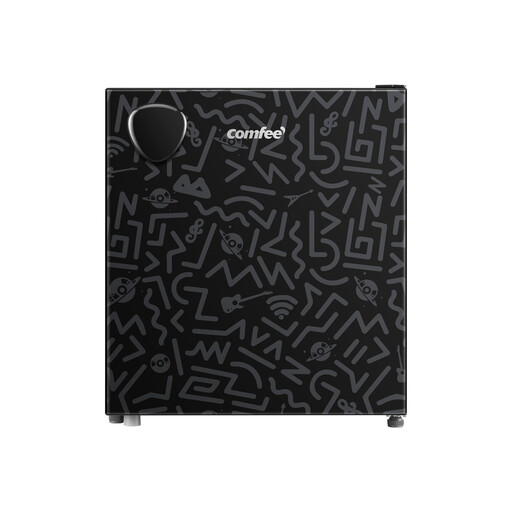
Why This Fits Their Persona: A practical choice for students, renters and people living alone who need chilled food storage without taking up much floor space.
Its product information clearly presents it as a compact refrigerator rather than a full freezer, helping buyers avoid confusing cooling with freezing.
43L capacity, 445mm width, three temperature settings, removable handle and stated annual consumption of 110 kWh.
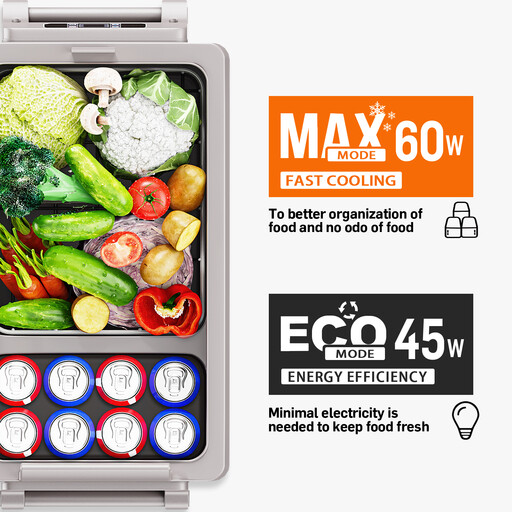
Why This Fits Their Persona: Suitable for motorhome owners, boat users, frequent travellers and households wanting one portable unit for both home and vehicle use.
It states a -20°C to 20°C control range and uses compressor cooling, making its refrigerator/freezer function more clearly defined than a basic thermoelectric cooler.
Supports 12V/24V DC and 240V AC, has two storage areas, battery protection settings and a stated 40 dB operating noise level.
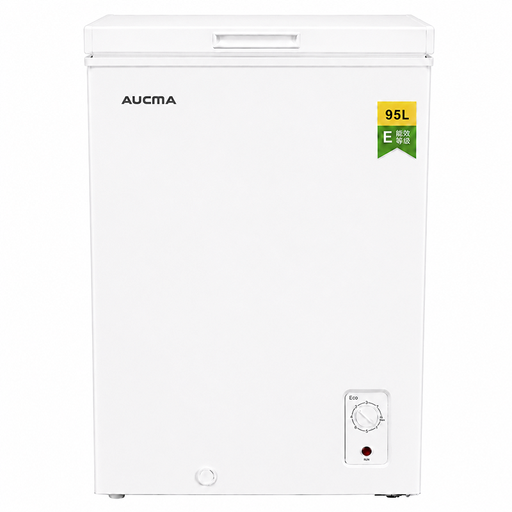
Why This Fits Their Persona: A useful option for garages, small cafés, larger households and flat residents needing additional frozen or chilled capacity.
The switchable refrigerator/freezer mode makes the intended function explicit, while the removable basket and defrost drain address everyday access and maintenance.
95L capacity, seven-level thermostat, 4-star freezer rating, 38 dB stated noise level and 165 kWh annual consumption.
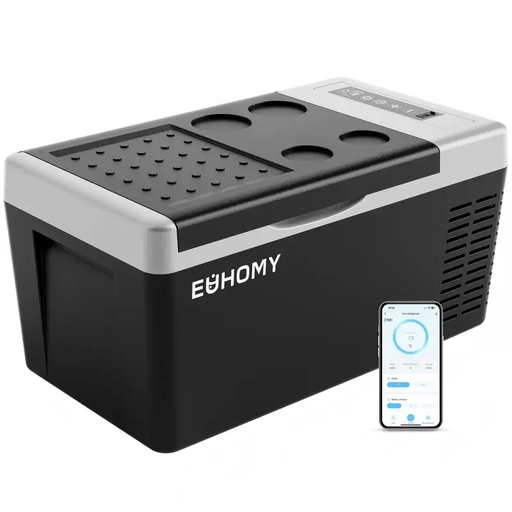
Why This Fits Their Persona: Its smaller format suits car journeys, campervans, boats and short camping trips where portability matters more than household capacity.
Unlike a simple 12V car fridge using thermoelectric cooling, this model specifies compressor operation and a -20°C to 20°C temperature range.
18L capacity, 12V/24V DC and 100–240V AC compatibility, three-stage battery protection and app control.
We have compiled a complete, real-time list of products that fully satisfy these strict selection criteria and UK safety regulations.
Running cost depends on annual electricity consumption and your tariff. Multiply the appliance’s stated annual kWh figure by your electricity price to estimate a yearly cost. Actual use can increase in warm rooms, with frequent opening or poor ventilation.
Many compressor models support 12V DC, while some also accept 24V systems for larger vehicles. Check the socket rating, cable supplied and battery-protection settings. Do not assume the appliance will continue running after the ignition is switched off, as this depends on the vehicle’s accessory circuit.
Lifespan depends on construction, ventilation, transport and maintenance. Keep condenser areas unobstructed, avoid overloading, clean spills promptly and follow the manufacturer’s instructions. For a chest freezer or portable compressor unit, careful handling during transport can also help protect the cooling system.