Recreational runners considering a pre-run snack
If a meal does not fit your schedule, you may want something small beforehand. UK Sports Institute parkrun guidance cautions against fuelling a short run as though it were a marathon.


Mini fudge is optional before a typical recreational 5k, not something you need to carry for the run: UK Sports Institute parkrun guidance says runners need not fuel as they would for a marathon, while the British Dietetic Association discusses during-exercise carbohydrate for hard exercise lasting longer than an hour. If a small sweet suits your meal timing, choose a portion you can identify on the label and try that product and timing in training; chocolate-coated fudge may feel too rich for some runners.
A small sweet is a choice to fit around a run, rather than a requirement of the 5k distance.
If a meal does not fit your schedule, you may want something small beforehand. UK Sports Institute parkrun guidance cautions against fuelling a short run as though it were a marathon.
Mini pieces are easier to compare when the label gives nutrition for a stated serving. Ocado lists a 25.5 g serving for Cadbury Fudge Minis, so you can check the amount you plan to eat rather than relying on a per-100 g figure.
Fudge and fudge-bite products differ in their coatings, cereals and allergy advice. Check the current pack for the exact product before choosing one, particularly if an ingredient or allergen affects what you can eat.
Start with whether a snack fits your meal timing; if it does, compare the portion you would actually eat and try it on a training day.
| Priority | What to check | Your needs |
|---|---|---|
| Need for a snack | Consider when you last ate and whether a snack solves a timing or hunger problem. UK Sports Institute parkrun guidance says you need not fuel as for a marathon. | My usual meal may be enough for a 5k; I would only take a sweet beforehand if it fits my schedule. |
| Practical portion | Compare carbohydrate for the number of pieces you would eat. Ocado lists 19 g per 25.5 g serving of Cadbury Fudge Minis; Tesco lists 8.8 g per Chocolate Fudge Mini Bite. These are different serving sizes. | I want to know what my actual portion contains, not just the figure per 100 g. |
| Timing and tolerance | Try the exact portion during training. UK Sports Institute guidance says many athletes eat one to three hours before running; the British Dietetic Association describes a low-fat, high-carbohydrate snack or light meal two to three hours before exercise. | A chocolate-coated or butter-rich sweet might not suit me close to a run, so I would test it before an event. |
| Ingredients and allergens | Read the current pack’s ingredient and allergen statement. Check the particular product for milk and any cereals, egg, soya, peanuts or nuts relevant to you. | I need to know whether this exact pack is suitable for me, rather than assuming all mini fudge has the same ingredients. |
A sweet bought for the run may serve no practical purpose if your usual eating schedule already suits you. UK Sports Institute parkrun guidance distinguishes this distance from marathon fuelling.
Consider your normal meals first. If timing or hunger makes a small pre-run snack useful, try it during training rather than treating it as essential during the 5k.
A single bite and a declared multi-piece serving are not equivalent portions. Tesco lists 8.8 g carbohydrate per Chocolate Fudge Mini Bite, while Ocado lists 19 g per 25.5 g serving of Cadbury Fudge Minis.
Use the current pack to compare carbohydrate, fat and allergens for the number of pieces you expect to eat.
Several of these products include chocolate coatings or dairy ingredients. Whether a particular portion feels comfortable before running varies between people.
Trial the product, portion and timing on an ordinary training day. If it does not suit you, stick with a familiar meal or snack instead.
Ingredients and allergy advice differ across fudge, biscuit clusters and brownie bites, so one product’s information cannot stand in for another’s.
Read the ingredient and allergen statement on the physical pack you are buying, particularly if milk, cereals containing gluten, egg, soya, peanuts or nuts matter to you.
These examples cover different kinds of sweet bite; a cake bite or coated cluster should not be mistaken for plain mini fudge.
Cadbury Fudge Minis are milk-chocolate-covered fudge pieces in a 100 g bag, with a 25.5 g serving stated on Ocado’s listing.
Tesco Chocolate Fudge Mini Bites are a coated bite product rather than plain fudge.
Thorntons Chocolate Fudge Brownie Mini Cake Bites combine brownie and fudge pieces; they are not plain mini fudge.
Waitrose Stem Ginger Crumbly Fudge has a declared two-piece serving, rather than an individually portioned mini-bite format.
M&S Sweet and Salty Pretzel Fudge Mini Bites come in a 225 g sharing tub.
Sainsbury’s lists the Thorntons Chocolate Fudge Brownie Mini Cake Bites discussed above; this is a retailer reference, not a separate Sainsbury’s own-label example.
This mini-fudge option is for runners who want to try a small sweet before a 5k. It is not a recommendation to eat fudge during every run.
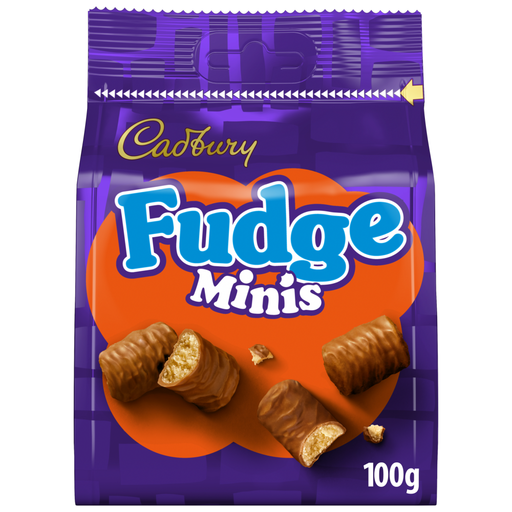 No image available
The mini pieces offer a countable sweet portion to try before a 5k, if a snack fits your schedule and you tolerate chocolate-coated fudge before running.
Ocado lists 19 g carbohydrate and 4.2 g fat per declared 25.5 g serving of Cadbury Fudge Minis. Check the current pack for nutrition, ingredients and allergens before relying on those figures.
Usually not for a typical recreational 5k. UK Sports Institute parkrun guidance says you need not fuel as if running a marathon, and the British Dietetic Association discusses a potential benefit from during-exercise carbohydrate for hard exercise lasting longer than an hour. Base your choice of a pre-run snack on your meal timing and what you have tolerated in training.
Try the exact product and portion during training, rather than for the first time on event day. UK Sports Institute guidance says many athletes eat one to three hours before running; British Dietetic Association guidance describes a low-fat, high-carbohydrate snack or light meal two to three hours before exercise. Fudge contains fat, and your tolerance of it may differ from someone else’s.
Read the current physical pack’s ingredients and allergen statement for the exact product. GOV.UK guidance says regulated allergens in prepacked food must be clearly identified in the ingredients list. These fudge and fudge-bite products differ: depending on the item, milk, cereals containing gluten, egg, soya, peanuts or nuts may be relevant.
Fudge can contribute carbohydrate, but consider the rest of your food after the run rather than treating a sweet as a complete recovery meal. UK Sports Institute guidance discusses both carbohydrate and protein after running; if recovery is a priority for you, choose food that provides both across your snack or meal.