Choose the format only after checking what the school allows and reading the label on the pack you will bring. Small bars and counted bite packs can make portions easier to plan, while fudge chunks are an ingredient for home baking. A mini size does not establish allergen suitability: several of the bite products described by Tesco, M&S and Sainsbury's carry nut or peanut warnings.
Who is choosing the fudge?
Organisers managing school allergy rules
Confirm the school’s arrangements before accepting a product, particularly where nuts or peanuts are restricted. For schools in England, the Department for Education says an allergy safety policy must set out arrangements to reduce contact with pupils’ known allergens.
Parents bringing a countable contribution
Small bars or packs with a stated serving count can help you plan portions. Keep the pack’s ingredient and allergen information available at the stall, and check that the exact product meets the organiser’s rules.
Home bakers adding fudge to a batch
Fudge chunks are an ingredient rather than a ready-to-sell mini sweet. Keep track of the ingredients and allergens in the finished bake, and agree its handling and presentation with the organiser.
What should you check before buying?
Start with the school’s allergy arrangements, then choose between portions ready for the stall and an ingredient that needs baking and serving.
Treat-size bars
Choose when: You want small, countable bars and the school accepts the exact product after an on-pack allergen check.
Trade-off: A treat-size name does not confirm individual wrapping or suitability under a nut-related rule.
Loose mini bites
Choose when: Volunteers can serve the pieces under the school’s handling plan and the product’s allergen statement is permitted.
Trade-off: Loose pieces need handling; Tesco Chocolate Fudge Mini Bites also state that they may contain peanuts and nuts.
Fudge chunks for baking
Choose when: The school accepts home-baked contributions and you can provide ingredient and allergen information for the finished batch.
Trade-off: Baking adds preparation and cross-contact considerations; chunks are not ready-to-sell mini sweets.
| Priority |
What to check |
Your needs |
| Allergen suitability |
Read the current pack’s ingredients and precautionary statements. Ask the organiser whether its wording meets the school’s rules. Keep the label available at the stall. |
I need a product the school will accept, not one assumed suitable because it is small or has no nuts in its name. |
| Portions |
Check the stated serving size or pack count. Confirm the number of pieces and whether they are wrapped if your stall plan depends on either. |
Countable portions would help me plan what to bring and serve without dividing food repeatedly. |
| Product format |
Distinguish a small bar from a loose bite, a brownie containing fudge pieces and a chunk intended for baking. Check what preparation each requires. |
If the stall needs ready-to-sell sweets, I do not want to arrive with an ingredient that still needs baking. |
| Stall handling |
Check whether the packaging can stay with the food. Agree serving utensils and separation arrangements with the organiser before opening or portioning products. |
I want helpers to have the ingredient information to hand and a clear plan for serving different foods. |
Common buying mistakes
-
Assuming a fudge product is nut-free from its name
Precautionary wording varies between products. Tesco Chocolate Fudge Mini Bites say they may contain peanuts and nuts; M&S says its Blond Fudge Bites are not suitable for people with nut or peanut allergy.
Check the current pack against the school’s rules. Do not describe a product as nut-free on the basis of its name or size.
-
Buying the wrong kind of bite
Fudge-related products include small bars, confectionery bites, brownies with fudge pieces and chunks for baking. They do not all fit the same stall plan.
Decide whether you need a ready-to-serve product or a baking ingredient before comparing pack sizes and serving information.
-
Separating portions from their allergen information
Removing food from its packaging can leave stall helpers without the manufacturer’s ingredient statement and adds handling. Anaphylaxis UK recommends clear allergen information and separate areas and utensils for allergy-friendly items.
Keep the original packaging available where practical. If you portion food, keep its exact ingredient and allergen information with it and follow the organiser’s handling plan.
Brand and product-line references
These examples show why the format and the exact product label matter more than the brand name alone.
Tesco
Tesco lists Chocolate Fudge Mini Bites as a ready-to-eat bite product and Fudge Chunks as a baking ingredient.
- The Mini Bites listing gives nutrition information for one bite, which can help with portion information.
- Tesco says the Mini Bites may contain peanuts and nuts. Check the current pack and the school’s rules before choosing them.
M&S
M&S Blond Fudge Bites are chocolate-coated bites rather than plain loose fudge.
- The product description identifies fudge centres coated in milk and blond chocolate.
- M&S says this product is not suitable for people with nut, peanut or egg allergy and advises checking the current label.
Waitrose
Waitrose Cooks' Ingredients Fudge Chunks are intended for adding to home baking, not for serving as a pack of finished mini sweets.
- The baking format gives contributors an ingredient option when the school accepts home-baked items.
- The chunks list milk in their ingredients. A separately listed seasonal cinnamon fudge blondie bite product says it may contain nuts; check each exact product rather than applying one label to the range.
Thorntons
Thorntons brownie-bite products contain fudge pieces but are cake-style bites, not plain fudge.
- Sainsbury's lists 10 servings for the Chocolate Fudge Brownie Mini Cake Bites pack, while Tesco lists 20 bites for the Golden Fudge variant.
- Both reviewed listings say the products may contain nuts. Confirm the allergens and serving details on the variant you intend to bring.
Mini fudge on Joybuy
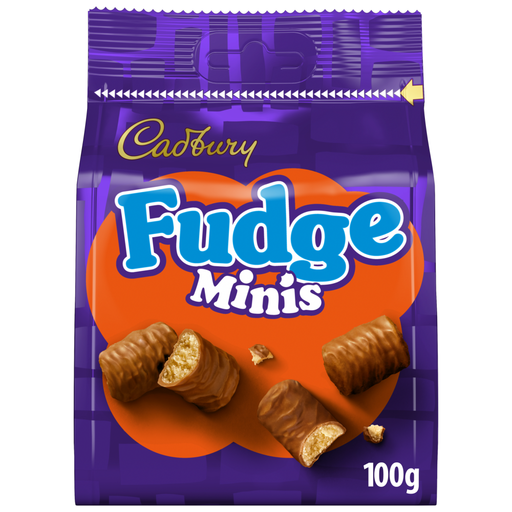
This mini-fudge option is relevant if you are considering ready-to-eat bites rather than fudge chunks for baking. Check the current pack and the school’s allergy arrangements before bringing it to a sale.
 No image available
Cadbury Fudge Minis 100g
A mini-fudge option to consider if the organiser accepts the exact product’s allergen information. The listing identifies milk and soya; check the physical pack for any nut or peanut statement. If your stall needs a set number of portions or individually wrapped pieces, confirm those details before buying.
View on Joybuy
School bake-sale questions
Does a mini size mean fudge is suitable for a nut-restricted sale?
No. Size says nothing about a product’s allergen statement. Tesco’s Chocolate Fudge Mini Bites say they may contain peanuts and nuts, while the reviewed Thorntons brownie-bite listings also carry nut warnings. Confirm the school’s rule and read the pack you will bring.
Should shop-bought fudge stay in its original packaging?
Keep the packaging available where practical so helpers can consult the manufacturer’s ingredient and allergen information. If you divide the food for serving, keep that information with it; Anaphylaxis UK recommends clear allergen information at bake sales.
How should different foods be arranged at the stall?
Follow the organiser’s allergy-handling plan and keep any items presented as allergy-friendly separate from products containing major allergens. Anaphylaxis UK recommends separate areas and serving utensils, with allergy-friendly bakes wrapped where possible.
What should I ask an England school before buying?
Ask the organiser which products and allergen statements the school will accept and how contributions should be labelled and served. The Department for Education says schools in England must publish an allergy safety policy setting out arrangements to reduce contact with pupils’ known allergens.


