Hosts serving a group
A pack with a stated number of bites helps you plan portions without cutting fudge outdoors. Check what those bites actually are: Thorntons fudge brownie bites listed by Ocado and Tesco are brownies containing fudge pieces.


Choose a pack with a stated piece count if passing portions around is your priority: the Thorntons 10-pack listed by Ocado contains brownie bites with fudge pieces, not plain fudge. If you want traditional fudge, choose a fudge bag and plan how to portion and serve it; check the pack’s ingredients, allergens and storage instructions before the picnic.
A pack with a stated number of bites helps you plan portions without cutting fudge outdoors. Check what those bites actually are: Thorntons fudge brownie bites listed by Ocado and Tesco are brownies containing fudge pieces.
A plain-fudge bag or traditional-style pack keeps the choice focused on fudge rather than cake bites. Thorntons lists an 85 g Vanilla Fudge Bag, while Waitrose lists clotted-cream and stem-ginger fudge; plan to portion a pack yourself if ready-made portions matter.
Read the exact pack before sharing it. Ocado’s listing for Thorntons 10-pack Fudge Brownie Bites declares egg, milk, soya and wheat and says the product may contain nuts; another recipe or product needs its own label check.
Decide whether the sweet must be plain fudge or simply easy to pass around, then check the pack’s portions and label details.
Choose when: You want a stated number of bites for a group; Ocado describes the Thorntons fudge brownie bites as a 10-pack.
Trade-off: They are chocolate brownies with fudge pieces, rather than plain fudge, and a piece count does not establish that each bite is individually wrapped.
Choose when: Fudge itself matters more than a stated bite count; Thorntons lists an 85 g Vanilla Fudge Bag.
Trade-off: A small bag does not, by itself, tell you how many pieces it contains or whether they are individually wrapped.
Choose when: You want more fudge to share and can arrange portions yourself; Thorntons lists a 300 g assorted pack.
Trade-off: Pack weight is not a serving plan, so decide how you will divide and offer it at the picnic.
| Priority | What to check | Your needs |
|---|---|---|
| Portions | Look for a stated piece or serving count. Check separately whether pieces are individually wrapped. | I want to pass sweets around without cutting a larger piece outdoors. |
| Product type | Read the full description: is it fudge, a brownie containing fudge pieces, or a product intended for baking? | If I’m bringing fudge, a fudge-containing cake bite is not the same choice. |
| Ingredients | Check the exact pack’s ingredients, emphasised allergens and any precautionary wording. | Someone in the group may need to check whether this particular product suits their dietary requirements. |
| Serving information | Check whether nutrition is given per piece, per stated serving or per 100 g; compare figures on the same basis. | I want to know what the label calls a serving rather than assume every mini piece has the same size. |
| Picnic handling | Read storage instructions and decide whether you need a clean container or a way to serve loose pieces. | A bag may be easy to carry, but I still need a practical way to offer its contents outdoors. |
A bite-size product can be a brownie containing fudge pieces. Tesco and Ocado describe the Thorntons brownie-bite products this way.
Read the product description, not just the search result or pack size, if traditional fudge is what you intend to bring.
An 85 g or 150 g pack weight tells you how much product is in the pack, not its piece count or wrapping.
Check for a stated count or individual wraps. Otherwise, portion the fudge before leaving or take a clean way to serve it.
The ingredients and precautionary wording that matter to a guest are those on the product being served. Tesco cautions that food recipes and allergen details can change.
Read the physical pack’s ingredients, allergen statements and storage instructions before offering it to the group.
These examples help distinguish fudge packs from fudge-containing bites; a brand name alone does not establish portion size or dietary suitability.
Thorntons lists an 85 g Vanilla Fudge Bag and a 300 g assorted-fudge pack on its own site. Retailers also list Thorntons fudge brownie bites as a separate product type.
M&S lists traditional-style fudge and a 300 g Plant Kitchen Vegan Salted Caramel Fudge.
Waitrose lists 150 g and 200 g clotted-cream fudge packs and a 150 g Stem Ginger Crumbly Fudge.
Tesco’s listing for Thorntons Golden Fudge Brownie Bites describes a 20-bite pack of chocolate-dipped brownies with fudge pieces.
This Joybuy option is a bag of mini fudge sweets to consider for picnic sharing. Check its portion and label details if you need a particular number of pieces or separately wrapped servings.
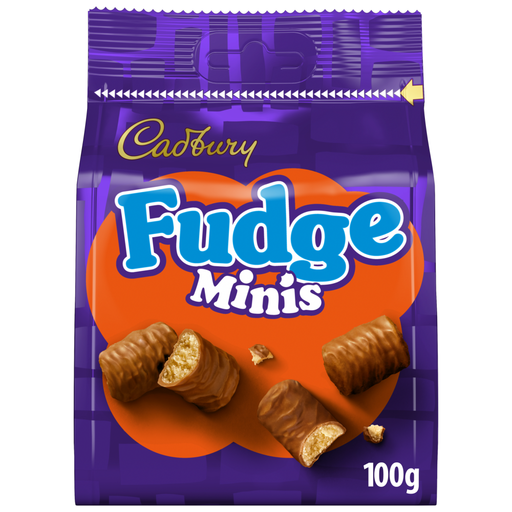 Image unavailable
A 100 g bag to consider if you want mini fudge sweets to share at a picnic. Check the current pack for the piece count, wrapping, ingredients, allergens and storage instructions before deciding how to serve it.
No. Ocado and Tesco describe the Thorntons bite packs as chocolate brownies containing fudge pieces. Their stated bite counts can help with sharing, but choose a plain-fudge product if fudge itself is the point of the picnic sweet.
Choose a bite pack with a stated count when planning portions is the priority; check whether it contains fudge or is another type of sweet. Choose a conventional fudge bag when you want traditional fudge, and arrange a clean way to portion or serve it.
A small pack weight does not establish that. Look for an explicit piece count or wrapping description on the exact product; if you need separate servings, do not rely on the word “mini” or the bag size alone.
Read the ingredients and allergen statements on the exact pack you will serve, including any “may contain” wording. Ocado’s listing for Thorntons 10-pack Fudge Brownie Bites declares egg, milk, soya and wheat and says it may contain nuts; those details should not be assumed for other products.
Start with the serving size stated on each pack, then check whether its nutrition figures are per piece, per serving or per 100 g. A piece count is useful for distributing a pack, but it does not mean pieces from different products are nutritionally identical.