People planning a short tea break
A smaller bag or a stated serving gives you a starting point for deciding how many sweets to put out. Rowntree's gives nutrition for seven Jelly Tots; Tesco gives a 21g reference portion for its Mini Jelly Beans.


Choose a small bag or a pack with a clear serving reference if you want to decide how much to put out for an afternoon tea break. Rowntree's describes its 42g Jelly Tots bag as bite-size, while Tesco gives a 21g quarter-bag reference for its 85g Mini Jelly Beans. If you are serving vegan guests or young children, check the exact product's ingredients and age guidance: small pieces alone do not establish dietary suitability or an appropriate serving.
A smaller bag or a stated serving gives you a starting point for deciding how many sweets to put out. Rowntree's gives nutrition for seven Jelly Tots; Tesco gives a 21g reference portion for its Mini Jelly Beans.
The exact product matters more than the fruit flavour. Rowntree's describes Jelly Tots as gelatine-free and suitable for vegans and vegetarians; Haribo and M&S make vegan-suitability statements for their Jelly Beans. M&S Jelly Babies, by contrast, list beef gelatine.
Check the warning on the particular pack rather than assuming small pieces are suitable for toddlers. M&S warns that its Jelly Beans and Jelly Babies are not suitable for children under 36 months because of a potential choking hazard.
Start with the amount you intend to serve, then check ingredients and any age guidance for everyone sharing the sweets.
| Priority | What to check | Your needs |
|---|---|---|
| Pack and portion | Check the bag size and whether nutrition is declared per piece, per serving or per 100g. Rowntree's gives a seven-sweets reference for its 42g Jelly Tots; Tesco gives a 21g quarter-bag reference for its 85g Mini Jelly Beans. | I want to put out an amount that suits a short break, rather than treating an open bag as one serving. |
| Sugars | Compare figures on the same basis and consider the amount you will serve. Nestlé lists 7.6g total sugars per seven Jelly Tots; Tesco lists 10.9g per 21g of Mini Jelly Beans. The NHS distinguishes label total sugars from free sugars, so these figures cannot simply be counted as daily free-sugars intake. | A few pieces may look like a small serving, but I want to check the nutrition for the amount going into the bowl. |
| Dietary suitability | Read the current ingredients and an explicit vegan or vegetarian statement for the exact product. Rowntree's states that Jelly Tots contain no gelatine, whereas M&S lists beef gelatine in its Jelly Babies. | If guests avoid gelatine, I need to choose the specific sweet with them in mind, not rely on its fruit flavour. |
| Allergens and recipe | Check the ingredients and allergen information on the pack you receive. Tesco cautions that ingredients, nutrition and dietary information for its Mini Jelly Beans may change. | For someone with an allergy or intolerance, I need the information for the pack being served, even if the brand is familiar. |
| Age guidance | Read the product-specific warning before serving children. M&S says its Jelly Beans and Jelly Babies are not suitable for children under 36 months because of a potential choking hazard. | When young children are present, a mini piece is not by itself a reason to put that sweet on their plate. |
Piece size does not tell you how many sweets will be eaten. Tesco lists 10.9g sugars for a 21g serving of Mini Jelly Beans, while Nestlé lists 7.6g for seven Jelly Tots.
Use the pack's serving declaration to decide how much to put out before opening the bag.
Recipes differ: Rowntree's says Jelly Tots contain no gelatine, while M&S Jelly Babies list beef gelatine.
Check the current ingredient list and any explicit dietary-suitability statement for the exact sweet and flavour you plan to serve.
A listing may not reflect the pack being served. Tesco cautions that ingredient and dietary information for its Mini Jelly Beans may change.
Read the received pack's ingredient and allergen information before serving, and ask the retailer or manufacturer if anything relevant is unclear.
M&S Jelly Beans and Jelly Babies both carry an under-36-month warning because of a potential choking hazard.
Follow the age guidance for the particular product rather than using piece size as a substitute for it.
These examples show why pack format, ingredients and nutrition need checking product by product; a brand name alone does not settle the choice.
Its 42g Jelly Tots bag is a bite-size option with nutrition declared for seven sweets, according to Nestlé Confectionery UK.
Tesco describes its 85g Mini Jelly Beans as assorted fruit-flavour mini sweets and gives a 21g quarter-bag reference portion.
Haribo describes its Jelly Beans as having six fruit flavours and being suitable for vegans.
M&S provides a useful product-level distinction: its Jelly Beans are labelled vegan-friendly, while its Jelly Babies list beef gelatine.
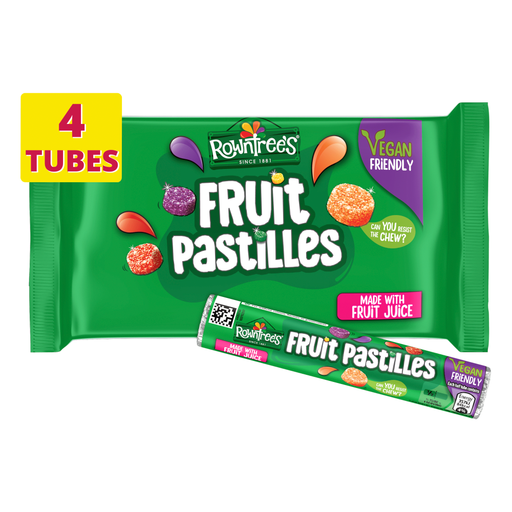
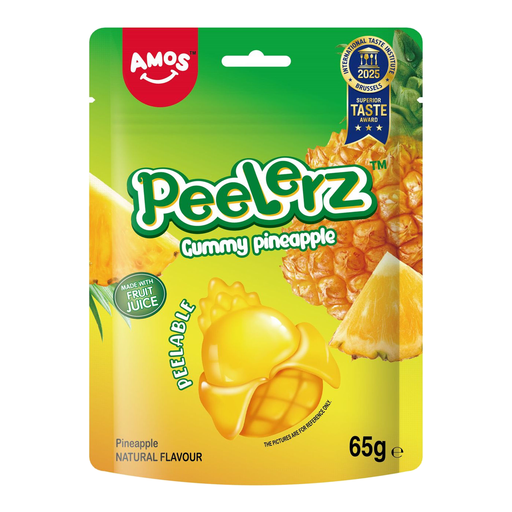
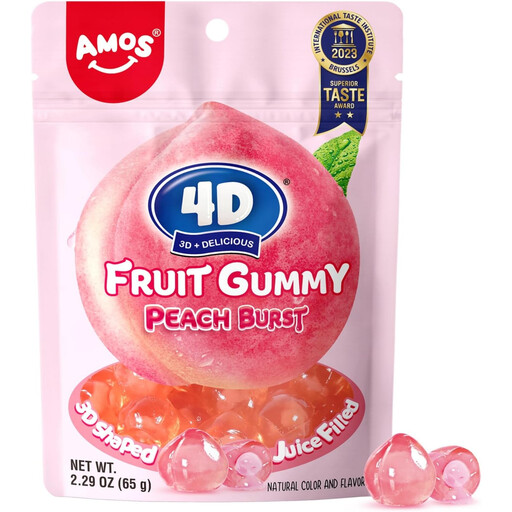
These options cover separate fruit-pastille pouches and small bags of fruit-shaped gummies. Check each pack for serving, ingredient and age information relevant to the people at your tea break.
 No image available
Four separate 41g pouches give you a way to divide the sweets between tea breaks; the individual sweets are not described as mini-sized. Check the current pack for dietary and allergen information. The listing warns that these sweets are not suitable for children under four.
 No image available
The listing describes miniature pineapple-shaped gummies in a 65g bag. It identifies pork gelatine, so this option does not suit guests avoiding that ingredient. Check the current pack for allergens and follow the listing's guidance to give the sweets only to children aged four and above who can chew and swallow, seated and supervised.
 No image available
The listing describes mini peach-shaped gummies in a resealable 65g bag. Gelatine is listed; check the current pack if its source, dietary suitability or allergens matter. The listing says the sweets are not suitable for children under four and advises that children eat them seated and supervised.
Not automatically: piece size does not set the number eaten. Decide how much to put out using the pack's reference portion where available. Tesco lists 10.9g total sugars per 21g of its Mini Jelly Beans, and Nestlé lists 7.6g per seven Jelly Tots; the NHS notes that label total sugars are not necessarily the same as free sugars.
Rowntree's states that Jelly Tots are suitable for vegans and contain no gelatine; Haribo labels its Jelly Beans suitable for vegans, and M&S calls its Jelly Beans vegan-friendly. Check the exact pack: M&S Jelly Babies list beef gelatine, so the same conclusion does not apply to every jelly sweet.
Read the ingredient and allergen information on the pack you will serve. UK Food Standards Agency and Food Standards Scotland guidance describes businesses' duties to provide information about the 14 allergens that must be declared when present as ingredients; Tesco also cautions that online product information may change.
Do not judge suitability by size alone. M&S warns that its Jelly Beans and Jelly Babies are not suitable for children under 36 months because of a potential choking hazard. Follow the warning on the exact product you intend to serve.