Watching on your own
A small bag gives you a pack amount to work with without opening a sharing pouch. Nestlé Confectionery lists seven sweets as a serving for its 42g Rowntree’s Jelly Tots bag, with 44 kcal and 7.6g sugars per serving.


Choose a small bag of mini jelly sweets if you want a defined amount beside you for one programme; a sharing pouch makes more sense when you plan to divide it between people or into bowls. Compare the nutrition figures for the amount you intend to eat, not just the bag size. If vegan suitability matters, check the current pack: Rowntree’s Jelly Tots and M&S Fruit Jellies are described as vegan, while the cited jelly-baby products contain gelatine.
A small bag gives you a pack amount to work with without opening a sharing pouch. Nestlé Confectionery lists seven sweets as a serving for its 42g Rowntree’s Jelly Tots bag, with 44 kcal and 7.6g sugars per serving.
Bite-size sweets can be divided into separate bowls before the film starts. ASDA Groceries lists approximately seven servings in the 150g Rowntree’s Jelly Tots pouch; its stated serving is 11 sweets, rather than the whole pouch.
Check the particular pack rather than judging by a sweet’s shape. Nestlé Confectionery describes Jelly Tots as vegan, and Marks & Spencer labels its Fruit Jellies vegan; the cited Haribo and M&S Jelly Babies list gelatine.
Start with the pack you expect to use on your TV night, then compare serving information, ingredients and any age warning on that product.
| Priority | What to check | Your needs |
|---|---|---|
| Pack and portion | Check the bag weight and stated serving. Nestlé Confectionery gives seven sweets as a serving for 42g Jelly Tots; ASDA Groceries lists approximately seven 11-sweet servings in the 150g pouch. | I want a small bag for myself, or enough sweets to put out in separate bowls for a group. Bite-size pieces alone do not define how much I will eat. |
| Nutrition figures | Compare sugars and energy for the amount you intend to eat. Nestlé Confectionery lists 7.6g sugars and 44 kcal per seven sweets in the 42g Jelly Tots bag, versus 11g sugars and 70 kcal per 11 sweets in the 150g pouch. Use per 100g figures when comparing differently sized products on the same basis. | Fruit flavour or fruit juice in the name is not enough for my comparison; I want to read the nutrition panel for the portion I plan to serve. |
| Ingredients | Look for a vegan statement and read the gelling-agent ingredients on the current pack. Marks & Spencer lists pectin in its vegan Fruit Jellies, while HARIBO lists gelatine in Jelly Babies. | If I avoid gelatine, I need confirmation for the exact sweets I am buying, not an assumption based on how similar products look. |
| Young children | Read the product’s age warning. Marks & Spencer states that its Fruit Jellies and Jelly Babies are not suitable for children under 36 months because of a potential choking hazard. | If young children may be present, I need to follow the warning on the particular pack rather than assume mini sweets are suitable for every age. |
ASDA Groceries lists approximately seven servings in the 150g Rowntree’s Jelly Tots pouch. Nestlé Confectionery gives nutrition figures for 11 sweets, not for the full bag, so eating straight from it makes your chosen amount harder to keep track of.
For one person, consider a smaller bag. If several people are sharing, divide the pouch into bowls before watching.
A fruit-flavoured sweet’s name does not tell you its sugar content. Marks & Spencer lists 65.9g sugars per 100g for its Fruit Jellies; Nestlé Confectionery lists 7.6g per seven-sweet serving for the cited 42g Jelly Tots bag.
Use the nutrition panel, and keep per-serving and per-100g figures distinct when comparing packs.
Nestlé Confectionery describes its core Jelly Tots range as made without gelatine, while HARIBO and Marks & Spencer list gelatine in their cited Jelly Babies. Similar-looking sweets can therefore have different ingredients.
Check both the dietary statement and ingredient list on the current pack, particularly when changing product or flavour.
These product-specific references help distinguish small bags, sharing packs and different gelling agents; a brand name alone does not establish the details of another product in its range.
Jelly Tots offer a bite-size format in the cited 42g bag and 150g sharing pouch. Nestlé Confectionery describes the core range as vegan.
The cited Fruit Jellies and Jelly Babies offer different ingredient choices: Marks & Spencer labels the Fruit Jellies vegan and lists beef gelatine in the Jelly Babies.
The cited Jelly Babies are an option if you want the jelly-baby format rather than miniature jelly dots.
These 65g mini fruit-shaped gummy bags fit a TV-night choice centred on smaller packs. Compare their ingredients as well as their shapes: the products do not all have the same gelling agent.
 No image available
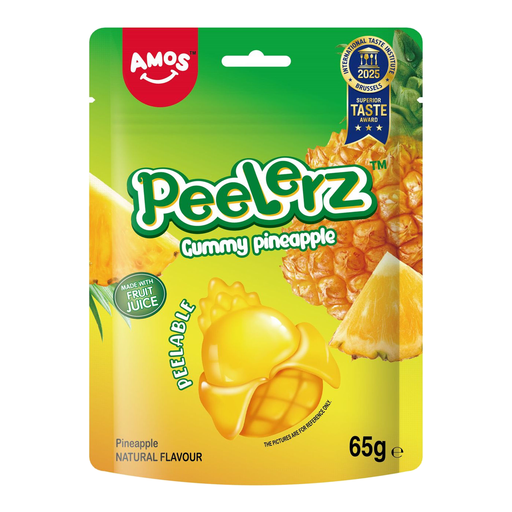
The 65g bag contains miniature pineapple-shaped gummies with a peelable outer layer and soft centre. Its ingredient information lists pork gelatine and says it may contain milk and sulphites, so it is not a vegan option. The product description advises against giving these sweets to children under four and calls for supervision while eating; check the current pack.
 No image available
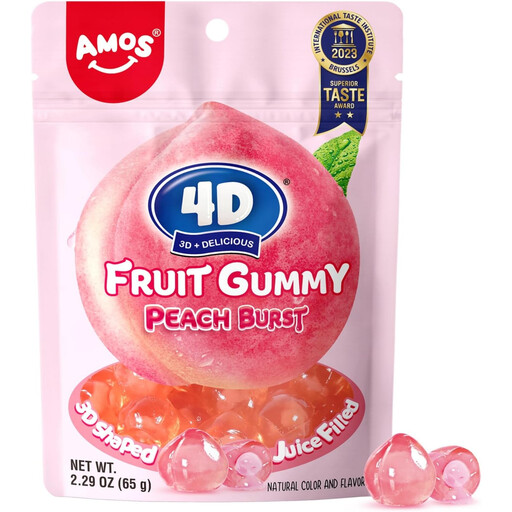
This 65g bag contains mini peach-shaped gummies with a peach-juice filling and a resealable pack. The ingredient information lists gelatine and says it may contain soy and dairy, so it is not a vegan option. The product description states that it is unsuitable for children under four and advises supervision while eating; check the current pack.
 No image available
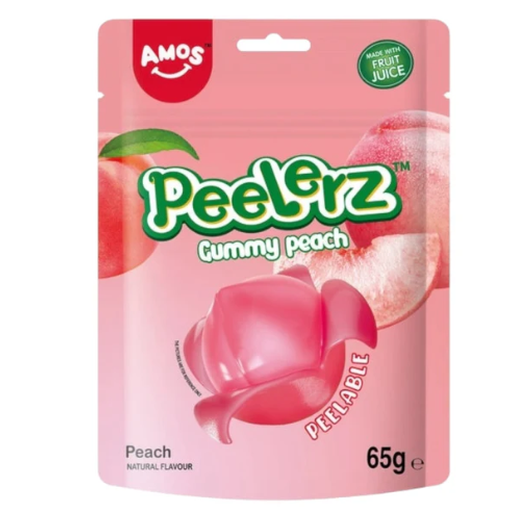
The 65g bag contains miniature peach-shaped gummies. Its ingredient information names pectin as the gelling agent; if vegan suitability matters, confirm it on the current pack rather than relying on that ingredient alone. Check the pack’s age guidance if buying for a household with young children.
Not by themselves: a small piece is not a serving. Nestlé Confectionery lists seven sweets as a serving for 42g Rowntree’s Jelly Tots, with 44 kcal and 7.6g sugars; its 150g pouch lists 11 sweets as a serving, with 70 kcal and 11g sugars. Choose your amount before opening a sharing pouch.
Nestlé Confectionery describes its core Jelly Tots range as vegan, and Marks & Spencer labels its Fruit Jellies vegan and lists pectin as the gelling agent. The cited HARIBO and M&S Jelly Babies list gelatine. Check the current pack for the exact product you choose.
Follow the warning on the particular pack rather than assuming small sweets suit every age. Marks & Spencer states that its Fruit Jellies and Jelly Babies are not suitable for children under 36 months because of a potential choking hazard; the cited Amos pineapple and peach-burst gummies carry under-four guidance in their product descriptions.
No general ban on buying jelly sweets follows from the cited promotion rules. Department of Health and Social Care guidance addresses promotion and placement restrictions for specified products by businesses operating in and selling to England. Welsh Government guidance addresses separate promotion and presentation restrictions in Wales, in force from 26 March 2026. Whether a particular product and retailer are covered depends on the applicable rules; these are not the same as school-food requirements.