Runners rehearsing long-run fuel
If you want to try supermarket sweets during training, start with a portion whose carbohydrate content you can calculate. Practise eating it during a run before deciding whether it fits your race plan.


Mini jelly sweets are an option to test on marathon-training runs if you can plan the carbohydrate per portion and comfortably eat them at running pace. A sealed bag is easy to pack but may provide only a small part of an hourly plan; counted sweets offer another way to portion carbohydrate, while a dedicated sports-fuelling format may suit a runner who does not want to carry or open several bags.
If you want to try supermarket sweets during training, start with a portion whose carbohydrate content you can calculate. Practise eating it during a run before deciding whether it fits your race plan.
Individual mini bags avoid repacking loose sweets. Check the carbohydrate per bag as well as how many bags you would need to carry and open.
The Rowntree's Jelly Tots sharing bag listed by Asda is labelled suitable for vegans. The Haribo Starmix Mini Bag and Tesco Jelly Babies products described by Tesco list gelatine, so check the exact product rather than relying on its sweet type.
Choose a portioning method, calculate its carbohydrate content, then try the amount and format during training. Science in Sport cites 60–90 g of carbohydrate per hour as an example of race-day fuelling when that intake is appropriate; it is not a target to assume for every runner.
Consider when: You want separate packs that can be carried without counting loose sweets.
Allow for: A small carbohydrate amount in each bag can mean carrying and opening several packs.
Consider when: You are happy to prepare portions from a larger bag using its declared serving.
Allow for: You must count and pack those portions before setting off.
Consider when: You want to compare gels, chews or drinks with the number of sweet portions your plan requires.
Allow for: The chosen format and intake still need to be practised during training.
| Priority | What to check | Your needs |
|---|---|---|
| Carbohydrate per portion | Use the declared carbohydrate per 100 g with the pack weight, or use a stated counted serving. Tesco lists 77 g per 100 g for a 16 g Haribo Starmix Mini Bag: about 12.3 g per bag. Compare that portion with your practised hourly plan. | I want to know how many bags or counted servings my plan calls for, rather than treating one mini bag as a full hour's fuel. |
| Eating while running | Try the sweet, portion size and timing at running pace, alongside the fluids you plan to carry. A nutrition label cannot establish how comfortable a particular sweet will be for you to chew or tolerate. | I need a format I can actually use on a long run, not just one whose carbohydrate figure looks convenient on the pack. |
| Ingredients | Read the current ingredients, allergen information and any dietary claim on the exact pack. Tesco lists gelatine in its Haribo Starmix Mini Bag and beef gelatine in Tesco Jelly Babies; Asda labels its listed Rowntree's Jelly Tots bag suitable for vegans. | If I avoid particular ingredients, I want to check the specific sweet I will carry before making it a repeat running portion. |
| Carrying portions | Compare carbohydrate per portion with the number and size of packs you would carry. Tesco lists 20.1 g per 25 g serving of its Jelly Babies; Asda lists 17.1 g per 11 Rowntree's Jelly Tots, which need portioning from a sharing bag. | Several hours of running could mean a lot to carry. I would rather work out the pack count or prepare counted portions beforehand. |
Tesco's 16 g Haribo Starmix Mini Bag works out at about 12.3 g of carbohydrate. Against Science in Sport's example of 60–90 g per hour for race-day fuelling, that would be roughly five to eight bags, if that range is appropriate to your plan.
Calculate carbohydrate per actual bag or counted serving before deciding how many portions to take. Rehearse carrying, opening and eating that amount on a run.
The researched Haribo Starmix Mini Bag and Tesco Jelly Babies list gelatine, while Asda labels its Rowntree's Jelly Tots sharing bag suitable for vegans. Those details belong to the specific products, not every sweet made by those brands.
Check the current pack's ingredients, allergen information and dietary wording for the exact variant you intend to use.
Eating several portions while running is different from checking their labels at home. Research published in Medicine & Science in Sports & Exercise found wide variation in carbohydrate intake across competitive endurance events; it does not establish how you will respond to a particular sweet.
Practise the product, amount, timing and planned fluids on training runs before relying on that combination in a marathon.
These references describe particular sweets or retailer listings; a retailer's listing does not make the sweet its own-brand product.
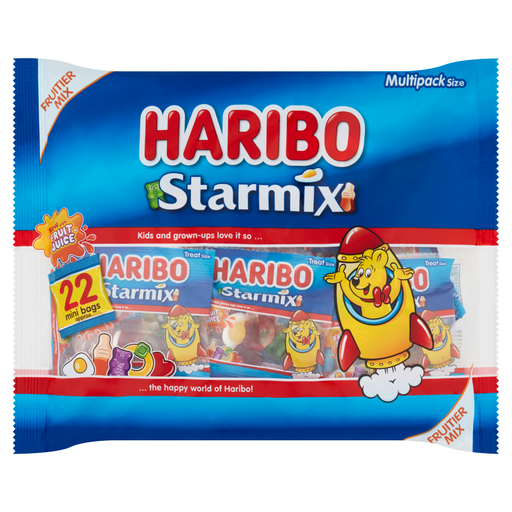
Tesco lists a 16 g Starmix Mini Bag, and Sainsbury's lists a multipack of approximately 22 individual 16 g bags.
Asda lists a 150 g Jelly Tots sharing bag labelled suitable for vegans, with a serving defined as 11 sweets.
Tesco lists its own-brand Jelly Babies in a 250 g bag, with nutrition stated per 25 g serving.
Sainsbury's lists a Haribo Starmix multipack containing approximately 22 individual 16 g packs.
Asda lists Rowntree's Jelly Tots with a counted carbohydrate serving and a vegan suitability claim.
M&S describes vegan-friendly items within its jelly-sweets range.
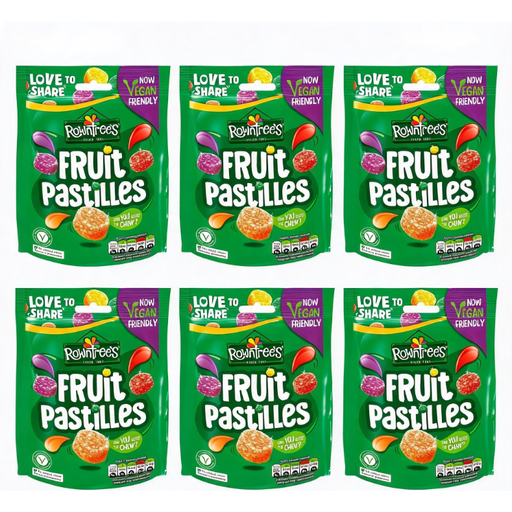
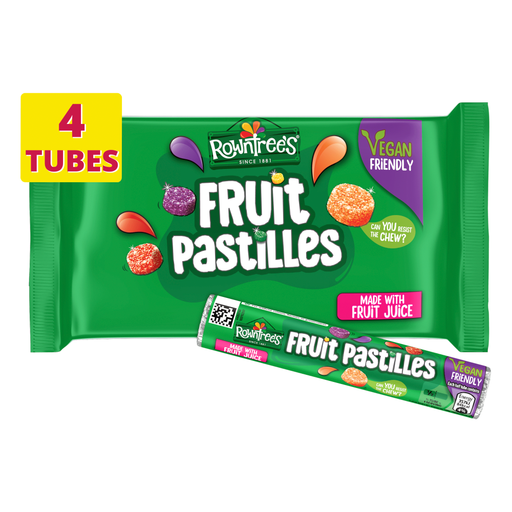
These options include sealed Starmix mini bags and Fruit Pastilles in larger bags or separate pouches. Compare the stated pack formats with the portions you plan to prepare and carry.
 No image available
The individual bags suit a plan built around sealed portions. Sainsbury's lists this Starmix multipack format as approximately 22 × 16 g; its 77 g carbohydrate per 100 g works out at about 12.3 g per 16 g bag. The listed ingredients include gelatine. Work out the bag count for your plan and try it during training.
 No image available
This format is for runners willing to prepare portions from larger bags, rather than carry sealed mini bags. Check the current pack's serving information, ingredients and allergen details when deciding what to count out, and test the portion during training.
 No image available
Four separate 41 g pouches offer a different carrying format from a sharing bag, but a pouch should not be assumed to equal your planned carbohydrate portion. Use the current pack's serving and allergen information to prepare a countable amount, then try it on a training run.
Not if your plan calls for the 60–90 g of carbohydrate per hour used as a race-day example by Science in Sport. Tesco lists 77 g carbohydrate per 100 g for its 16 g Haribo Starmix Mini Bag, or about 12.3 g per bag; reaching that example range would take roughly five to eight bags. Set and practise an intake appropriate to your own plan rather than assuming that range applies to you.
Asda labels its 150 g Rowntree's Jelly Tots sharing bag suitable for vegans. Tesco's listings for the Haribo Starmix Mini Bag and Tesco Jelly Babies specify gelatine. Check the current ingredients of the exact variant you buy; these statements do not apply to every product from the same brands.
Yes: rehearse the particular sweet, portion, timing and planned fluids while running before relying on that combination in a marathon. Science in Sport advises practising fuelling strategies, while endurance-event research published in Medicine & Science in Sports & Exercise reports substantial variation in athletes' carbohydrate intake.
Read the current pack's ingredients and allergen information for the exact sweet you intend to carry, rather than relying on an earlier retailer description or a brand name. The Food Standards Agency states that food businesses must provide allergen information under food-labelling rules.