People exercising soon
A small pack of bite-size sweets may suit someone looking specifically for a portable carbohydrate top-up close to exercise. It does not serve the same purpose as a snack that also provides protein.


Mini jelly sweets can be a convenient, countable carbohydrate snack shortly before exercise, but they are not a substitute for a more substantial snack. University College London Hospitals NHS Foundation Trust describes faster-acting carbohydrate for snacks 15–30 minutes before training; at 60–90 minutes, its guidance calls for carbohydrate and protein with minimal fat. Choose the format and portion for the timing, and check the pack’s nutrition and ingredients.
A small pack of bite-size sweets may suit someone looking specifically for a portable carbohydrate top-up close to exercise. It does not serve the same purpose as a snack that also provides protein.
Check the named product rather than assuming all jelly sweets have the same ingredients. Nestlé Confectionery UK describes its core Rowntree's Jelly Tots range as suitable for vegans and vegetarians; suitability can differ across products.
An individual bag or a serving expressed as a number of sweets makes portion planning more straightforward than eating from an open sharing bag. Nestlé Confectionery UK gives nutrition per seven sweets for its 42 g Jelly Tots bag, while ASDA lists an 11-sweet serving for the 150 g sharing bag.
Start with how soon you plan to exercise, then compare pack size with the serving information and ingredients on the product you intend to buy.
| Priority | What to check | Your needs |
|---|---|---|
| Timing | University College London Hospitals NHS Foundation Trust describes faster-acting carbohydrate for a snack 15–30 minutes before training. For 60–90 minutes beforehand, its guidance specifies carbohydrate and protein with minimal fat. | If I’m exercising soon and want a small carbohydrate snack, sweets may fit that purpose. If I have longer before training and need something more substantial, I’d choose a snack that also contains protein. |
| Portion | Compare the pack size with the stated serving, and look for nutrition per serving as well as per 100 g. A sharing bag need not be eaten as one portion. | I’d rather carry an individual pack or count out sweets before leaving than decide how much to eat from an open bag. |
| Ingredients | Read the current ingredients and dietary-suitability statement for the exact product. Do not use a vegan label as a substitute for checking its nutrition or serving size. | If I avoid particular ingredients, I need confirmation on the pack I’m buying, not an assumption based on the brand or the shape of the sweet. |
| Snack purpose | Decide whether you want a small carbohydrate top-up or a snack containing both carbohydrate and protein. Check the product’s serving information against that purpose. | When I need more than a few sweets before training, I’d choose a different type of snack rather than rely on a larger handful of sweets. |
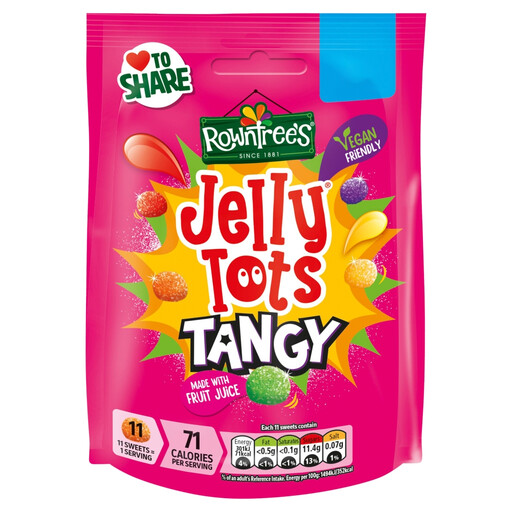
ASDA lists approximately seven servings in a 150 g Rowntree's Jelly Tots sharing bag, with 17.1 g carbohydrate and 11 g sugars per 11-sweet serving. The bag and the stated serving are different amounts.
Choose an individual pack if that format matters to you, or count out a portion from a larger bag.
University College London Hospitals NHS Foundation Trust distinguishes a faster-acting carbohydrate snack 15–30 minutes before training from a snack 60–90 minutes beforehand that includes carbohydrate and protein with minimal fat.
Match the snack to your timing and purpose rather than treating a larger portion of sweets as the earlier carbohydrate-and-protein option.
A vegan statement answers an ingredient-suitability question, not a portion or protein question. For example, HARIBO UK lists 66 g sugars per 100 g for its vegan Jelly Beans.
Check dietary suitability, nutrition and serving size separately on the product you choose.
Nestlé Confectionery UK describes its 42 g Jelly Tots bag as bite-size and its core Jelly Tots range as suitable for vegans and vegetarians.
HARIBO UK describes its Jelly Beans as suitable for vegans.
Tesco Groceries identifies an 85 g Tesco Mini Jelly Beans pack, a named mini-format option.
Marks & Spencer lists Jelly Beans 180 g and Fruit Jellies 200 g in its UK jelly-sweets range.
These options include small packs of fruit sweets and gummies alongside larger bags that you would need to portion yourself. Consider the pack format and current label if you want a small carbohydrate snack close to exercise.
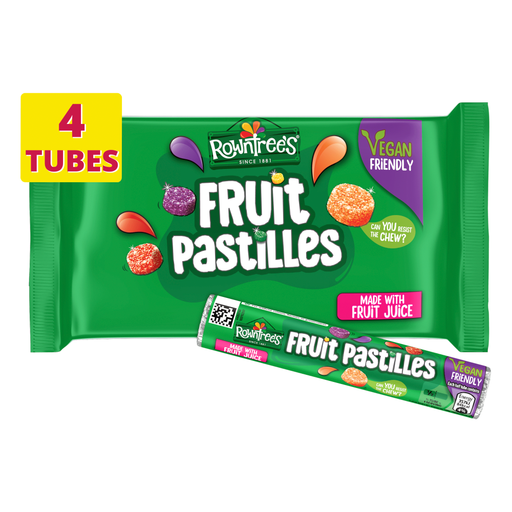 No image available
Four separate 41 g packs offer a smaller pack to carry rather than one large bag. Check the current label for the serving and carbohydrate amount you intend to use; the listing flags milk and possible other allergens, so check the pack if these matter to you.
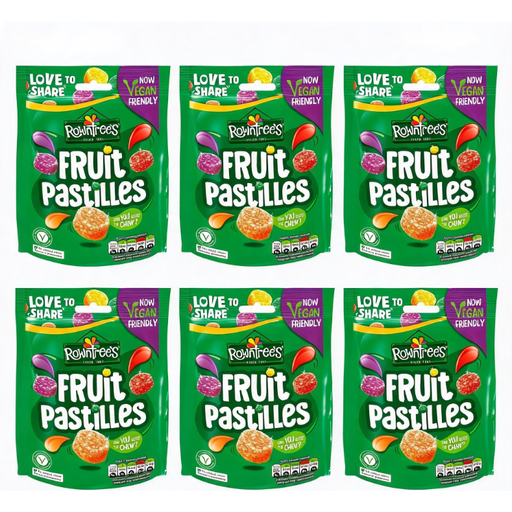 No image available
This six-bag multipack calls for portioning rather than taking a single mini pack. If vegan suitability matters, check the current ingredients and dietary statement on the bag as well as its serving information.
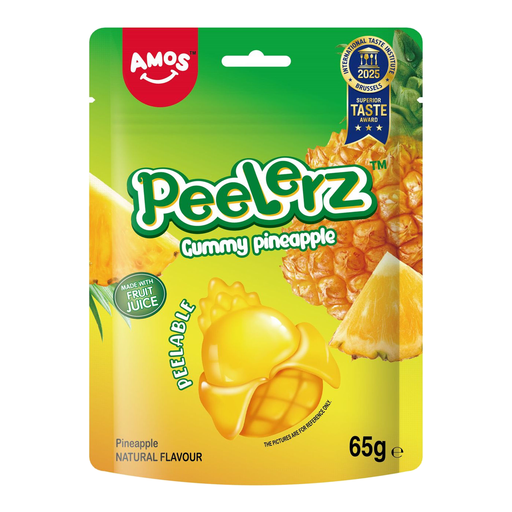 No image available
The 65 g bag is a compact format, but check its serving information before deciding how much to take. Its listed ingredients include pork gelatine, which matters if you avoid it.
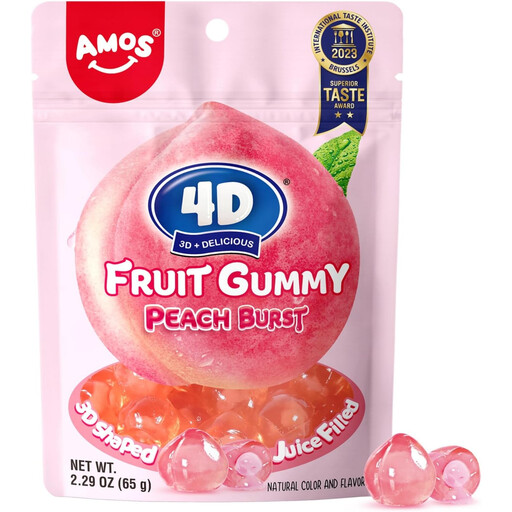 No image available
These peach-shaped gummies are an option if you prefer to portion out individual sweets. Check the current pack for serving information and ingredients; the listing identifies gelatine and says the product may contain traces of soya and dairy.
 No image available
The 140 g bag needs portioning if you want only a small amount before exercise. The listing describes it as suitable for vegetarians; check the current pack separately if you need confirmation of vegan suitability or a serving amount.
They can serve as a small carbohydrate snack close to exercise, rather than a complete pre-workout snack. University College London Hospitals NHS Foundation Trust describes faster-acting carbohydrate 15–30 minutes before training, but specifies carbohydrate and protein with minimal fat for a snack 60–90 minutes beforehand.
Use the serving stated for that product and count out the sweets rather than treating the whole bag as one serving. Nestlé Confectionery UK gives nutrition per seven sweets for its 42 g Jelly Tots bag; ASDA gives an 11-sweet serving for the 150 g sharing bag. The appropriate amount depends on your circumstances, so do not treat either serving as a universal pre-workout amount.
No single dietary statement applies to every jelly sweet. Nestlé Confectionery UK describes its core Jelly Tots range as suitable for vegans and vegetarians, and HARIBO UK describes its Jelly Beans as suitable for vegans. Check the ingredients and dietary statement on the exact pack you buy.
No general ban on buying jelly sweets follows from the cited rules. GOV.UK describes restrictions on promotion by location and volume price for qualifying products sold by businesses operating in and selling to England; whether a particular sweet falls within those rules requires a product-level assessment.