Parents planning an occasional school event
For a party or agreed class treat, separate mini bags make it easier to allocate one pack per child than an open sharing bag. Confirm the school’s arrangements before buying for the group.


Choose separate mini bags for an occasional event when each serving needs to be allocated before leaving home. A sharing bag can work when an adult will portion it at home and store the rest. Neither format makes sweets suitable for every school occasion: check the exact ingredients, allergens and sugar information, along with the school’s packed-lunch or class policy.
For a party or agreed class treat, separate mini bags make it easier to allocate one pack per child than an open sharing bag. Confirm the school’s arrangements before buying for the group.
Check the ingredients, allergen information and dietary statement on the exact pack. A familiar brand or similar-looking sweet does not establish that another product has the same formulation.
A mini pack gives you a defined amount to allocate, not a different type of food. The NHS identifies sweets as a source of free sugars, so consider how the proposed treat fits into the child’s usual routine.
Start with the occasion and the school’s rules, then compare pack format and the label on the exact product.
Consider when: an agreed event calls for a serving to be separated before it leaves home.
Bear in mind: individual wrapping adds packaging and does not change the sweets’ sugar content.
Consider when: an adult will divide occasional servings at home and put the remainder away.
Bear in mind: the bag itself sets no individual serving boundary.
Consider when: the school does not allow them or a relevant dietary restriction cannot be resolved for the proposed treat.
Instead: choose another option for school or save sweets for an agreed occasion elsewhere.
| Priority | What to check | Your needs |
|---|---|---|
| Portions | Check whether servings are in separate bags, the weight of each bag and how many are in the outer pack. | For a one-off event, I want an amount I can allocate without passing round an open bag. |
| Sugar information | Compare sugars per 100g on the exact products. Check the individual bag weight too: “mini” alone does not describe the amount served. | A smaller-looking pack is not enough for me to decide whether this should become a routine lunchbox snack. |
| Ingredients | Read the exact pack’s ingredients, emphasised allergens and any product-specific dietary statement. Check the gelling agent if it matters to your household. | I need to know whether this particular product meets a child’s allergy or dietary requirements, rather than relying on its brand. |
| School arrangements | Ask about the current packed-lunch, class-treat and allergy arrangements before buying sweets to take in. | If the treat is going to school, I want to know whether it is acceptable for that occasion before buying a multipack. |
| Age warnings | Read the age and choking warnings on the chosen product; they can differ between packs. | For younger children, I need the warning on the exact sweets being offered, not an assumption based on pack size. |
Small packaging helps divide sweets, but it does not establish their sugar content. For example, HARIBO UK lists 66g sugars per 100g for its Jelly Beans; that figure applies to that product, not every HARIBO sweet.
Compare the nutrition panel and individual-pack weight on the products you are considering, and decide whether the occasion calls for sweets at all.
Individual wrapping does not override a school’s packed-lunch or class-allergy arrangements.
Check with the school or class teacher before buying sweets for a lunchbox, party or group event.
Ingredients and dietary statements can differ between jelly-sweet products and formats from the same brand.
Read the ingredients, emphasised allergens and relevant dietary statement on the exact pack each time you buy it.
A sharing bag requires someone to decide the amount served and store what remains; it does not provide separate servings by itself.
For an agreed one-off event, compare separate bags with the number of servings needed. For home use, portion the sweets before serving.
These examples illustrate formats and label differences; a brand’s inclusion does not establish that every product in its range suits a school occasion.
HARIBO UK describes Mini Bags packed into an outer pack and publishes information for individual sweets.
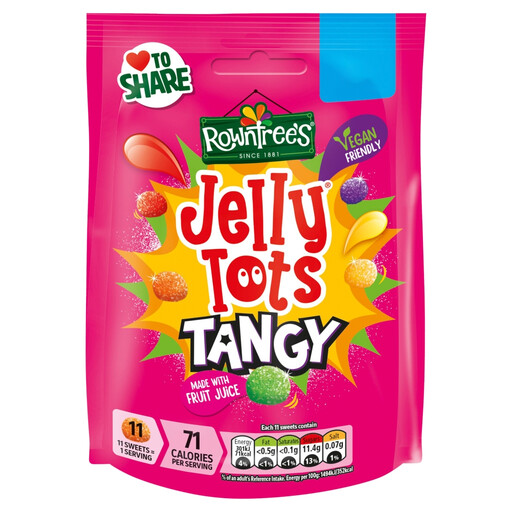
Rowntree’s Jelly Tots appear in UK grocery listings in formats including a sharing bag and a tube.
Tesco’s online jelly-and-chewy-sweets category includes sharing formats such as Rowntree’s Jelly Tots Sharing Bag 150g.
Sainsbury’s product pages include Rowntree’s Jelly Tots and Maynards Bassetts Jelly Babies in different pack formats.
M&S lists jelly sweets in larger packs and has described a Halloween product containing seven individually packed mini bags.
These options include a four-pouch multipack and bags that would need portioning if you want separate servings. Check the exact pack and the school’s arrangements before choosing sweets for a school occasion.
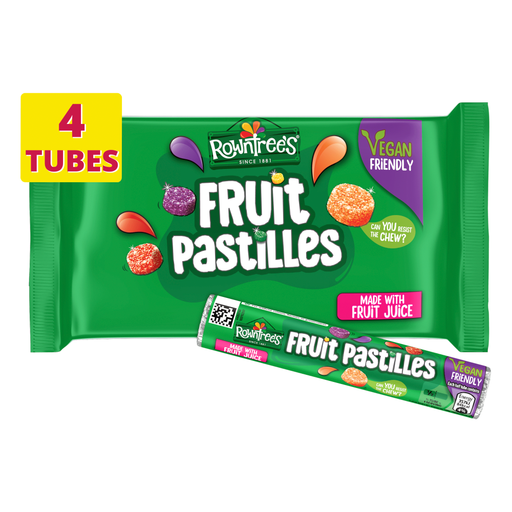 No image available
Four separate 41g pouches provide defined amounts for an occasional treat. Check the current pack’s ingredients and allergen statement: the product listing identifies milk and lists several possible other allergens. It also carries a choking warning for children under 4.
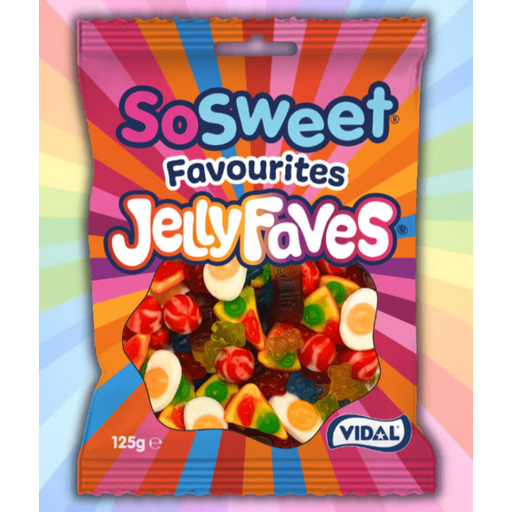 No image available
This 125g sharing bag suits an occasion when an adult will portion the sweets and store the remainder. Its listing says the sweets may contain milk and warns that small pieces can present a choking hazard; it states that the product is not suitable for children under 3. Check the current pack before offering it to a child.
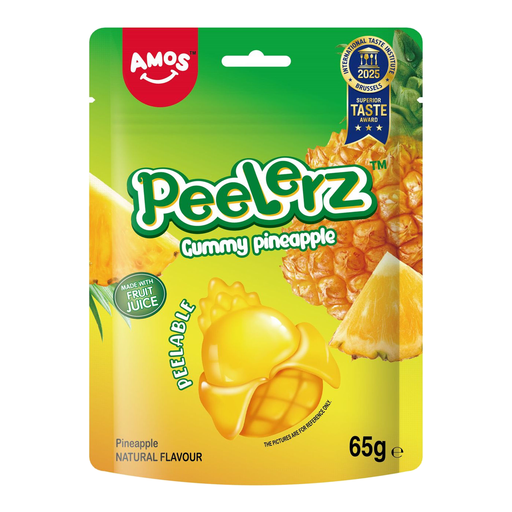 No image available
This 65g bag is not described as containing separate servings, so check its format if you need to allocate sweets individually. The listed ingredients include pork gelatine, and the listing says the product may contain milk and sulphites. Follow its age and choking warning, which calls for children aged 4 and above to be seated and supervised.
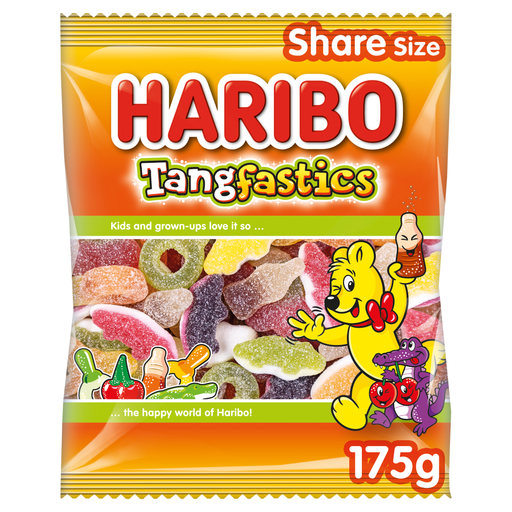 No image available
This 175g sharing bag needs portioning if the occasion calls for a defined amount. Its listed ingredients include gelatine; check the current pack’s ingredients and allergen information for dietary suitability.
 No image available
The 140g pack is an option when you can decide and prepare separate amounts yourself; check the pack format if pre-separated servings are required. Read its current ingredients and allergen statement before buying for a child with a dietary exclusion.
No. Separate wrapping can make an amount easier to allocate, but it does not override the individual school’s packed-lunch or allergy arrangements. Check those arrangements before packing sweets or bringing them to a class event.
Read the ingredients and emphasised allergen information on the exact pack each time you buy it. Do not rely on an earlier purchase or the brand name, and ask the school about its arrangements before bringing sweets for a group.
No. Mini packaging separates an amount; it does not establish a nutritional advantage. The NHS identifies sweets as a source of free sugars, so consider the eating occasion as well as the individual bag size and nutrition panel.
A sharing bag can suit an occasional treat at home when an adult will decide the amount served and put the rest away. If each child needs a separate pack for an agreed event, check a pre-separated format instead.
Follow the storage and best-before information on the exact pack. Decide the amount to serve before opening a sharing bag, then store the remainder according to its instructions.