
24/7 Customer Support

Free returns

Same-day & Next-day Delivery

Quality Guaranteed

Unlock Your Welcome Offers: FREE Delivery | Up to 80% OFF | Free 30-day JoyPlus trial
Download the APP
A mini LED torch can be useful for far more than finding a dropped key. It may sit in a coat pocket for evening walks, attach to a rucksack during camping trips, or provide backup lighting during a power cut. However, small torches vary considerably in brightness, power source, construction and ease of use.
Before buying, watch for three common pitfalls:
Brightness is usually stated in lumens, while beam distance indicates how far the light is projected under the stated conditions. A 20-lumen torch is suitable for nearby paths, cupboards and general navigation, whereas a higher-output LED torch may be more appropriate for outdoor routes or repairs.
Consider the task first. A soft, moderate beam may be more comfortable for reading or walking with children. A longer beam can be useful for checking a garden, shed or campsite, but it may use more power and can be uncomfortable if aimed towards someone’s eyes.
A battery-powered torch with included AAA batteries is convenient for gifting, party bags or emergency drawers. Check how many batteries it requires and whether spares are easy to obtain. Removing batteries during long-term storage can help reduce the risk of leakage.
A USB-C rechargeable torch or model with an integrated USB plug is convenient for commuters, cyclists and everyday carry. Look for a protective cover over the charging connection, particularly if the torch may be used outdoors. Rechargeable products still need regular charging checks before camping trips, long walks or expected power interruptions.
A lightweight torch is more likely to be carried regularly. Key measurements include overall length, body diameter and weight with the battery installed. A keychain torch weighing around 20g will feel very different from a larger household torch using D-cell batteries.
For outdoor use, look for a secure grip, lanyard, clip or magnetic base. A stated IP rating describes resistance to water or dust under specified test conditions; it does not mean a torch should be submerged unless the manufacturer says so. Keep charging covers closed and follow the care instructions.
Parents should also consider whether a kids’ torch has a simple switch, a comfortable body and no easily accessible small parts. Button batteries and loose components can pose serious risks, so follow the product’s age guidance and keep batteries away from young children.

Why This Fits Their Persona: Six assorted-colour torches suit families, party bags, shared emergency storage and households that want several compact lights for camping or evening walks.
The listing states the output as 20 lumens with a 15-metre range, making the intended nearby-use performance clearer than an unsupported brightness slogan.
38g per torch, simple ON/OFF button, lanyard and three AAA batteries included per torch.
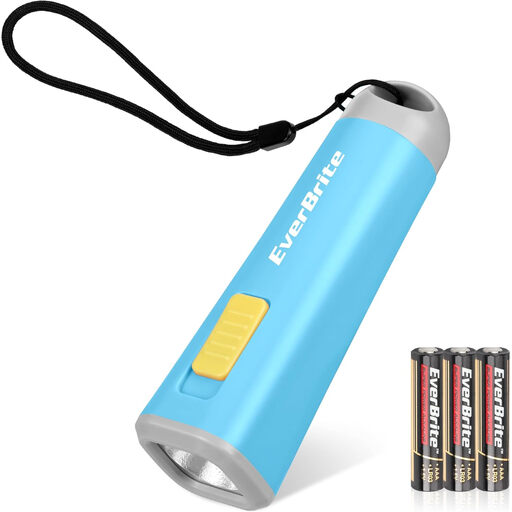
Why This Fits Their Persona: Its lightweight body, matte finish and soft yellow LED make it suitable for children’s reading, family camping and supervised emergency use.
The stated 46g torch weight and simple battery arrangement help parents assess handling and replacement needs before buying.
25–30-lumen output, three AAA batteries included and a non-slip matte surface.

Why This Fits Their Persona: A 20g aluminium keychain torch is designed for commuters, walkers and anyone who wants a compact everyday-carry light without disposable batteries.
The stated IPX6 rating, 1.5-metre drop rating and integrated USB-C plug provide concrete details for everyday outdoor carry.
80-lumen maximum output, 28-metre stated throw distance and magnetic hands-free attachment.
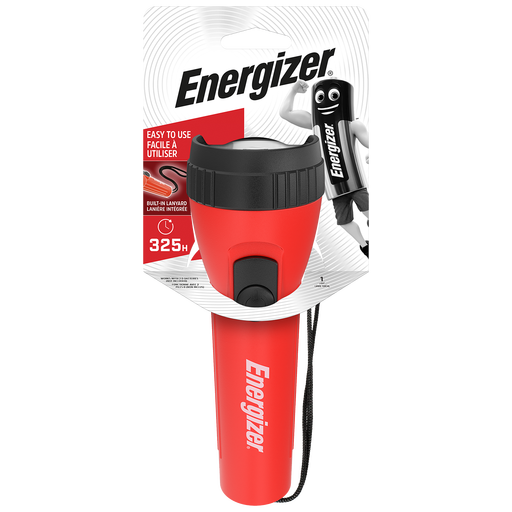
Why This Fits Their Persona: Its larger body and push-button design suit garages, sheds, household repairs, power cuts and general camping use.
The listing specifies 25 lumens, a 45-metre beam distance and the required two D batteries, which are not included.
Ribbed non-slip grip, push-button operation and stated runtime of up to 325 hours.
Never shine an LED torch directly into anyone’s eyes. Store loose batteries securely and observe the age warnings, especially when buying a kids’ torch. For emergency storage, check battery-powered models periodically and keep rechargeable torches topped up. Avoid leaving batteries inside a torch for prolonged storage, and keep outdoor models clean and dry according to the manufacturer’s instructions.
A mini torch is also more economical when matched to the job. Use a small 20–30-lumen model for close-range tasks, while a longer-reaching pocket torch may be more suitable for outdoor navigation. Comparing the battery type, stated runtime and replacement cost gives a more realistic view of ownership than the purchase price alone.
We have compiled a complete, real-time list of products that fully satisfy these strict selection criteria and UK safety regulations.
It can reduce the need to buy disposable batteries, particularly when used frequently. However, the torch must be charged and its battery capacity may decline over time. For occasional emergency use, a battery-powered torch with spare batteries may be more convenient.
Yes, provided its output, runtime and construction match the campsite conditions. A lightweight torch is useful inside a tent, while a model with a stated water-resistance rating, secure grip or magnetic base may be more practical outdoors. Always carry a backup light for longer trips.
Runtime varies according to LED output, battery type, temperature and how the torch is used. Treat quoted runtime as a guide rather than a guarantee. Check the product specification and carry spare batteries or a charged backup when lighting is important.