Daytime adventure-film viewers
If you watch with curtains open or lights on, check both screen brightness and reflections. RTINGS identifies these as separate factors in bright-room visibility.


Start with how well the exact TV handles reflections and remains visible in daylight, rather than choosing by panel type alone. Mini LED models with suitable bright-room performance are a sensible starting point when light regularly faces the screen; a bright OLED is worth considering if its reflection handling checks out and dark-scene contrast matters to you as well.
If you watch with curtains open or lights on, check both screen brightness and reflections. RTINGS identifies these as separate factors in bright-room visibility.
If cave, night and other dark scenes matter as much as daytime viewing, compare an individual Mini LED model with a bright OLED model. Check each one in conditions resembling your lounge rather than deciding from the panel label.
If you want a larger picture for a shared room, balance the chosen screen size against furniture or wall space and the exact model’s SDR and HDR energy figures. GOV.UK lists those energy-consumption figures separately for televisions.
For a bright lounge, establish daylight visibility first; then weigh film contrast and the practical fit of the size you want.
Consider it when: Windows or lamps regularly face the screen and daytime film viewing is a priority.
Check before choosing: Brightness, reflection treatment and local dimming vary by model and size; a Mini LED label alone does not establish bright-room performance.
Consider it when: You also watch after dark and value the contrast of self-lit pixels.
Check before choosing: Confirm brightness and reflection handling for the exact OLED model if your lounge receives strong light.
| Concern | What to check | Who this matters to |
|---|---|---|
| Daylight visibility | Check reflection handling alongside bright-room picture visibility; a peak-brightness figure alone cannot show how distracting a window reflection will be. | If daylight falls across my lounge, I need to follow the action without seeing the room reflected over it. Around 42% of consumers put glare resistance first. |
| HDR and dark scenes | Compare HDR highlights and dark-scene detail on the exact model; assess Mini LED local dimming or OLED contrast without treating either technology as a performance guarantee. | When a film moves from a bright landscape into a dark cave, I want both scenes to remain clear. For around 33% of consumers, film contrast and HDR are the primary concern. |
| Screen size and fit | Measure the intended space and stand or mount arrangement; compare the exact size’s SDR and HDR kWh-per-1,000-hours figures. | I want a larger screen for our shared lounge, but it still has to fit and make sense for how we use it. Roughly 25% of consumers place size and practical fit first. |
A small-area HDR peak figure does not tell you whether a window reflection will obscure the picture. RTINGS assesses reflection handling as a separate bright-room consideration.
Look for information on both reflections and visibility in a bright room, then consider HDR performance for film highlights.
Published brightness, dimming and glare-reduction features can vary by model or size. Panasonic identifies model-dependent glare treatments in its range.
Check the full model number, selected screen size and product information sheet before relying on a range-level claim.
A large screen may need a suitable route into the room, a compatible mounting arrangement and a separate plan for the old TV.
Confirm delivery access, installation tasks and whether the retailer will collect a disconnected or wall-mounted old TV.
GOV.UK television energy-label data distinguish on-mode consumption for standard dynamic range (SDR) and high dynamic range (HDR) content.
Compare both kWh-per-1,000-hours figures for the exact models and sizes you are considering.
These ranges offer different starting points for a bright-room search; assess the particular model and size, not the brand alone.
Sony positions BRAVIA 9 as a premium Mini LED range, offered in 65-, 75- and 85-inch sizes.
Samsung’s QN80H Neo QLED range offers a Mini LED route across several listed screen sizes.
LG positions its OLED evo G5 for viewers interested in self-lit-pixel contrast and bright-room use.
TCL offers Mini LED ranges that may interest viewers considering a larger screen and published HDR features.
Panasonic includes OLED and Mini LED options, with glare-reduction treatments on selected 2026 Mini LED models.
These TVs cover OLED, Mini LED and QLED options for film viewing. For any of them, check the exact model’s bright-room visibility and reflection handling against the light in your lounge.
 No image available
Consider this OLED option if dark-scene viewing matters alongside daytime use.
Check brightness and reflection handling for the S90F before choosing it for a lounge with direct sunlight.
 No image available
Its 75-inch size is worth considering if you have room for a larger adventure-film picture.
Measure the intended position and check daylight visibility and reflections for this exact model before buying.
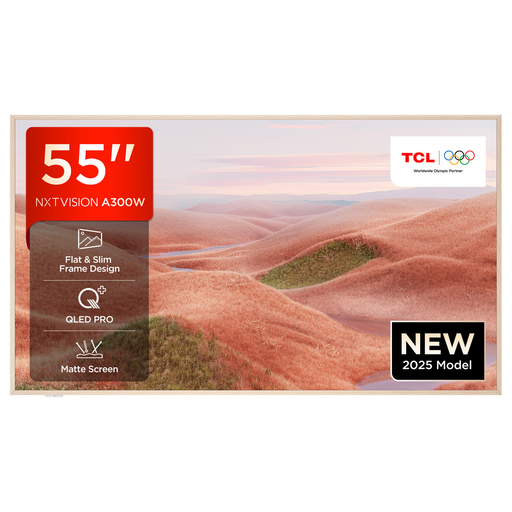 No image available
This 55-inch option may appeal if reflections are a particular concern: its product name specifies a matte anti-glare screen.
Confirm the delivered variant and check how well its screen and brightness work in a lounge with direct light.
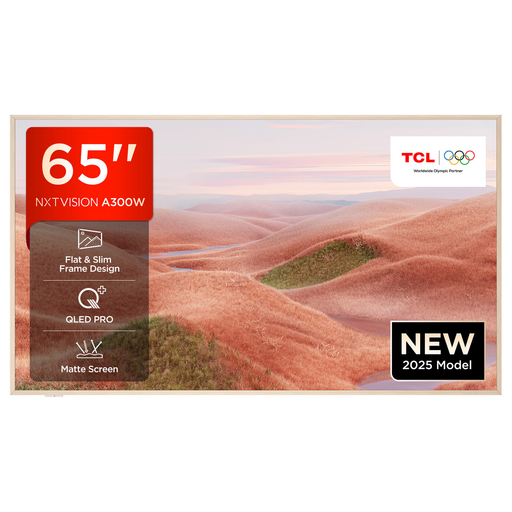 No image available
Consider the 65-inch variant if you want a larger screen and its stated matte anti-glare treatment suits your shortlist.
Check the delivered variant, physical fit and bright-room performance rather than assuming the screen treatment eliminates reflections.
 No image available
This 4K HDR model offers a 55-inch Mini LED option for viewers comparing film contrast with daytime visibility.
Check reflection handling and bright-room performance for the exact model, particularly if light faces the screen.
Check reflection handling as well as brightness. RTINGS notes that both affect bright-room viewing, so HDR support alone will not tell you whether a direct reflection will be distracting.
Not necessarily: compare particular models rather than ruling out OLED. A Mini LED with suitable daylight performance is a useful starting point where light regularly faces the screen; a bright OLED remains an option if its reflection handling meets your needs and you also value dark-room contrast.
Compare the SDR and HDR on-mode consumption figures, expressed in kWh per 1,000 hours, for each exact model and size. GOV.UK television energy-label data record them separately.
A retailer may provide collection, but check the arrangement before ordering. GOV.UK describes same-type electrical-equipment take-back requirements and notes that transport costs may apply to home collection; confirm separately whether disconnection or wall unmounting is offered.
Use dimensions for the exact screen size and intended stand position, then measure the available space and delivery route. For example, Sony UK lists its 75-inch BRAVIA 9 XR90 at approximately 166.7 × 103.4 × 39.7 cm with the stand positioned inside for a soundbar; other sizes and stand arrangements need their own measurements.