Daytime documentary viewers
If windows or room lights face your screen, you need to assess reflections as well as brightness. RTINGS treats reflected light as a distinct part of bright-room picture quality.


For nature documentaries in a bright lounge, consider a Mini LED LCD TV if daytime visibility is your main concern, or an OLED TV if dark-scene viewing after sunset also matters. Neither display label tells you how a particular screen will handle your windows and lamps, so check reflection performance, placement and streaming support before choosing.
If windows or room lights face your screen, you need to assess reflections as well as brightness. RTINGS treats reflected light as a distinct part of bright-room picture quality.
You want foliage, water and animal colours to look convincing, but also watch night, cave or underwater scenes after the lounge gets darker. Compare the exact TVs in both lighting conditions.
You rely on TV apps, so check the programmes and picture formats available through your usual services. If BBC iPlayer is among them, TV Licensing says you must be covered by a TV Licence to watch or download its programmes.
Start with the light falling on the screen, then weigh daytime visibility against the dark-scene viewing you do after sunset.
Consider it when: Daylight or lamps regularly light the lounge and daytime visibility is your priority.
Trade-off: RTINGS notes that Mini LED has no fixed definition; reflection handling, local dimming and viewing angles still need exact-model checks.
Consider it when: You also watch dark wildlife scenes in the evening and can avoid direct reflections on the screen.
Trade-off: Pixel-level black control does not settle how distracting a window or lamp reflection will be during daytime viewing.
| Concern | What to check | Who this matters to |
|---|---|---|
| Reflections and daytime visibility | Check the exact TV with light coming from the direction of your windows and lamps; compare reflection handling separately from brightness. | If windows or lamps face the screen, I want scenes to stay readable without darkening the lounge. Around 36% of consumers put reflection control first. |
| Brightness, HDR and colour | Confirm the TV’s supported HDR formats and whether your usual service offers the documentary in a compatible version. | For sunlit landscapes and colourful wildlife, I care most about how compatible HDR footage looks. Around 29% of consumers make brightness and colour their primary concern. |
| Evening contrast | Compare a dark scene on the exact models; on Mini LED TVs, look at light around bright objects against dark backgrounds. | When I watch after sunset, I want night and underwater scenes to retain convincing dark areas. Around 21% of consumers prioritise evening contrast. |
| Fit and streaming access | Measure the space and check the stand or mounting arrangement, required apps and applicable TV Licence requirements. | Before I settle on a picture type, I need the TV to fit and play the services I use. Around 14% of consumers put setup and streaming access first. |
A bright image can still show a window or lamp reflected in the panel, particularly during a dark scene. RTINGS assesses reflected light separately from other bright-room picture characteristics.
Note where light sources sit relative to the planned screen position, then check reflection handling for the exact model.
RTINGS notes that Mini LED has no fixed definition, so the label does not establish how a particular TV handles dimming or reflections.
Compare exact-model demonstrations or independent tests, including dark scenes and the viewing angles used in your lounge.
HDR viewing depends on the programme version, service and compatible TV. BBC Research & Development identifies HDR-HLG as the format used for iPlayer UHD on-demand content; that does not mean every iPlayer programme is UHD or HDR.
Check your usual documentary titles and apps, then confirm that the TV supports the formats they deliver.
A screen may suit the viewing distance but not the furniture, access route or intended mounting arrangement.
Measure the destination and route into the room, confirm the stand or mount for the exact size, and read the seller’s collection and cancellation terms before installation.
Sony’s UK BRAVIA 9 line is a Mini LED option to examine if daylight viewing is your priority; Sony lists 65-, 75- and 85-inch versions.
Samsung’s UK QN90F line is a Mini LED option if a manufacturer-described glare-control feature interests you.
LG’s UK G5 line is an OLED option for viewers who also place particular weight on evening documentary sessions.
These Mini LED, OLED and QLED TVs offer different starting points for nature documentaries. Compare each listing with your room’s light sources, evening viewing habits and available screen space.
 No image available
Consider this larger Mini LED option if daytime viewing is your priority and a 75-inch screen fits the room.
The listing names up to 2048 local-dimming zones and a 144Hz native refresh rate. Confirm the exact variant’s specifications and check how its screen handles light from your windows or lamps.
 No image available
Consider this OLED option if evening wildlife scenes matter as well as daytime viewing.
The listing identifies a 55-inch 4K OLED TV. Assess reflections from your usual seating position and check its performance in the lounge’s daytime light.
 No image available
This is a smaller Mini LED option to assess if daytime documentary viewing matters but a 75-inch screen will not suit the space.
The product name identifies VIDAA OS. Check reflection handling for this exact model and confirm that the apps and documentary formats you use are available.
 No image available
Consider this 75-inch candidate if screen size is part of your documentary-viewing decision.
Measure the furniture or mounting space, then check this exact model’s reflection handling and support for your preferred streaming apps.
 No image available
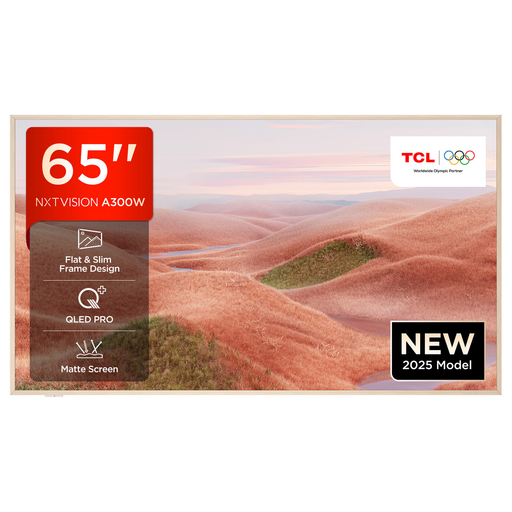
Consider this 65-inch QLED TV if you are comparing screen sizes and reflection-control options for the lounge.
Check whether the matte anti-glare screen option named in the listing applies to the exact variant being sold; the wording alone does not establish its reflection performance.
Yes. TV Licensing says you must be covered by a TV Licence to watch or download BBC iPlayer programmes on a TV or another device, whether you watch live or on demand.
Watching only on-demand programmes on services other than BBC iPlayer does not, by itself, require a TV Licence under TV Licensing’s guidance. You do need licence coverage if you watch live TV through a channel or streaming service.
No: the programme must be offered in a compatible HDR version, and the app and TV must support its format. BBC Research & Development identifies HDR-HLG for iPlayer UHD on-demand content, so check the particular documentary rather than assuming all programmes use it.
A faulty TV and a TV that simply does not suit your room are different return situations. GOV.UK sets out separate rules for faults and distance-sale cancellation; check the applicable cancellation conditions and the seller’s arrangements for collecting a large TV before installation.