Parents choosing food after school
If a child is hungry, choose a food snack rather than a mint. NHS-linked oral-health guidance suggests fruit, vegetable sticks, cheese and crackers, pitta with hummus, bread or toast in place of sugary snacks.


Choose food rather than mini mints when a child needs an after-school snack. The NHS advises against hard, gooey or sticky sweets for babies and young children because they pose a choking hazard. For an older child or teenager who can safely manage a mint, a sugar-free product may be considered for occasional breath freshening, but check the exact pack and do not treat it as a substitute for food.
If a child is hungry, choose a food snack rather than a mint. NHS-linked oral-health guidance suggests fruit, vegetable sticks, cheese and crackers, pitta with hummus, bread or toast in place of sugary snacks.
For an older child or teenager, the decision is whether the person can safely manage the mint and whether its ingredients and pack warnings suit them. A sugar-free label does not make a mint an after-school food snack.
Age and texture come before pack size. The NHS says babies and young children should not have boiled sweets or other hard, gooey or sticky sweets because they are choking hazards.
Start with the reason for offering something after school: hunger calls for food, while a mint is a separate, age-dependent choice for breath freshening.
| Priority | What to check | Your needs |
|---|---|---|
| Age and texture | Check whether the sweet is hard, gooey or sticky, and read the age and choking warnings on the exact pack. A mini format is not a safety assurance. | If I am choosing for a baby or young child, I need food they can safely manage instead of a hard mint. The NHS identifies these sweet textures as choking hazards for this age group. |
| Snack or mint | Decide whether the child needs food or only wants breath freshening. NHS-linked oral-health guidance suggests fruit, vegetable sticks, cheese and crackers, pitta with hummus, bread or toast instead of sugary snacks. | After school, I need something to eat if hunger is the reason for the choice; a mint serves a different purpose. |
| Sugars and serving | Compare declared sugars using the same quantity or serving basis. Sainsbury's lists 2.3 g sugars per 2.4 g Trebor Extra Strong mint; Tesco lists 0.5 g per three POLO Sugar Free mints and 0 g per 100 g for Trebor Mighties. | If I am considering an occasional mint for an older child or teenager, I want to read the sugar declaration without mistaking different serving sizes for a like-for-like comparison. |
| Pack information | Read the physical pack for ingredients, sweeteners, allergens and safety warnings. For Trebor Mighties, Tesco warns that the closure flap may detach and pose a choking hazard. | Where an ingredient restriction matters, I need the details for the exact variant in hand, not just the product name. |
Size does not remove the choking risk from a hard, gooey or sticky sweet. The NHS advises against giving these sweets to babies and young children; M&S also labels its Mint Imperials unsuitable for children under 36 months because of potential choking.
Choose an age-appropriate food snack instead, and check the texture and warnings of any sweet considered for an older child.
A mint is confectionery, not an after-school food snack. NHS-linked oral-health guidance advises replacing sugary snacks with foods such as fruit, vegetable sticks, cheese and crackers, pitta with hummus, bread or toast.
Choose food for hunger; consider a mint separately only for occasional breath freshening when age and safety are appropriate.
Sugar-free mints remain sweets with sweeteners. A sugar declaration does not answer whether the mint’s texture or packaging is suitable for the intended child.
Check the current pack’s ingredients and safety warnings as well as its sugars declaration.
A product name does not give every ingredient or safety detail needed for a particular child. The Trebor Mighties listing, for example, includes a warning about its closure flap.
Before offering a mint, read the exact physical pack for ingredients, allergens, warnings, pack condition and the best-before date.
Tesco lists POLO Sugar Free pressed mints in a tube multipack.
The listed range includes standard Extra Strong hard peppermint mints and a compact Mighties sugar-free pack.
M&S lists Mint Imperials in a 225 g pack rather than a mini carry format.
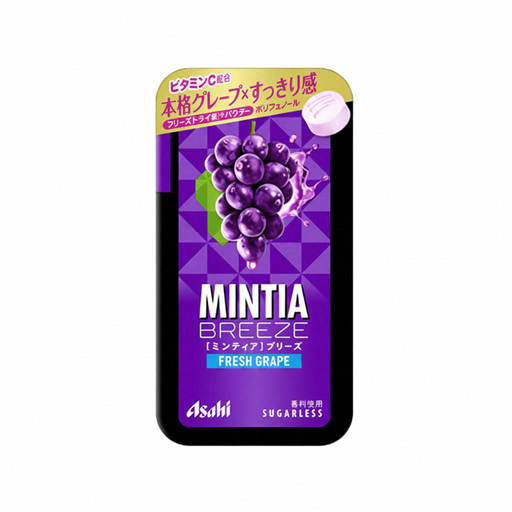
This compact mint is an option to examine for occasional breath freshening, not a replacement for an after-school food snack. Check the physical pack before considering it for a child.
 No image available
For occasional breath freshening rather than hunger. This is a 22 g pack of sugar-free grape mints; check the physical pack for the individual mints’ texture, age or safety warnings, sugars declaration, ingredients and allergens before offering them to a child.
Choose food when a child is hungry rather than using mints as a snack. NHS-linked oral-health guidance suggests fruit, vegetable sticks, cheese and crackers, pitta with hummus, bread or toast in place of sugary snacks.
Do not give them hard mints. The NHS says babies and young children should not have boiled sweets or other hard, gooey or sticky sweets because they are choking hazards; making a sweet smaller does not establish that it is safe.
No: sugar-free describes its sugar content, not its suitability as food or for a particular child. If an older child or teenager wants occasional breath freshening, check the exact mint’s texture, sugars declaration, ingredients and pack warnings before choosing it.
Read the ingredients and allergen information on the exact physical pack before offering the mints, particularly when an allergy or ingredient restriction matters. Check its age and safety warnings at the same time.