Small households serving children’s tea
Compare the weight of each naan and the number in the pack with the portions you expect to serve. Opened-pack and freezing instructions matter if some pieces will be kept for another meal.


Choose between a mini naan and half a larger one by the amount your child will eat and your plan for the remainder: a mini naan is a separate piece, but “mini” does not specify its weight. Check the pack’s storage instructions, the salt in the planned serving and its allergen information before deciding.
For a child’s tea in a smaller household, the useful starting point is the serving size and what you can do with the bread left in the pack.
Compare the weight of each naan and the number in the pack with the portions you expect to serve. Opened-pack and freezing instructions matter if some pieces will be kept for another meal.
Check the actual pack rather than relying on “plain” or “mini”. The cited conventional naans contain wheat, while their stated salt amounts per piece differ.
Compare the portion you intend to serve, then check whether the remaining bread can be stored as the particular pack directs. A larger naan can be divided, but cutting it does not change its ingredients.
| Priority | What to check | Your needs |
|---|---|---|
| Portion and pack size | Compare weight per piece and pack count, not just “mini” on the label. Tesco lists four 47g mini naans; Waitrose lists two 75g mini naans and, separately, 130g plain naans. | I’d rather serve a piece my child is likely to eat. If I cut a larger naan, someone else needs to use the remainder or I need to store it as directed. |
| Ingredients and allergens | Read the ingredients and allergy advice on the pack. The cited conventional products contain wheat; Sainsbury’s also warns that its cited mini naan is unsuitable for people with a milk allergy because of manufacturing methods. | If my child must avoid an ingredient, a smaller portion does not solve that problem. For a school lunchbox, I’d also check the school’s own allergy arrangements. |
| Salt in the serving | Compare salt for the piece or portion being served, alongside other parts of the meal. Tesco states 0.34g per 47g mini naan, Sainsbury’s 0.43g per mini naan and Waitrose 0.50g per 75g mini naan. | I want to know what the bread contributes to the meal, particularly if I’m adding a salty topping or dip. The NHS gives age-specific daily salt guidance for children. |
| Storage and preparation | Follow the exact pack’s opened-pack, freezing and heating directions. Waitrose says to keep its cited mini naans refrigerated below 5°C; the cited Tesco and Sainsbury’s packs specify cool, dry storage. | I need a pack that fits the space I have and a practical plan for unused pieces before I open it. |
Tesco’s cited mini naan weighs 47g per piece, while Waitrose’s cited mini naan weighs 75g. The name alone cannot tell you how much bread you will serve.
Compare the weight per naan, pack count and storage directions before choosing.
Cutting a wheat-containing naan does not remove its wheat or gluten. Sainsbury’s cited mini naan also carries a milk-allergy warning related to manufacturing methods.
Read the purchased pack’s ingredients and allergy advice, including precautionary statements, before serving or packing it.
Asda’s online entry for its cited mini naans gives per-piece and per-100g salt figures that conflict, so those figures should not be used together to compare products.
Check the physical pack or ask the retailer to clarify the figures before making a salt-based comparison.
These details describe the specific retailer products cited here, not every naan sold under each brand.
Tesco’s cited plain mini naans come as four pieces in a 188g pack.
Sainsbury’s cited plain mini naans come as four pieces in a 188g pack.
Waitrose’s cited chilled packs allow a comparison between two 75g mini naans and two 130g plain naans.
M&S lists four mini plain naans in a 188g pack.
Asda’s cited mini plain naans come in a four-pack.
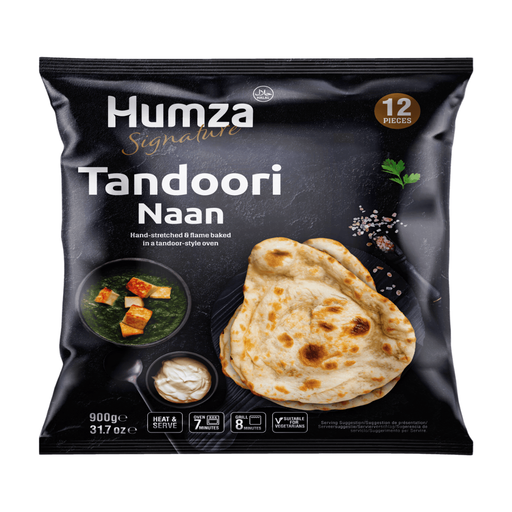
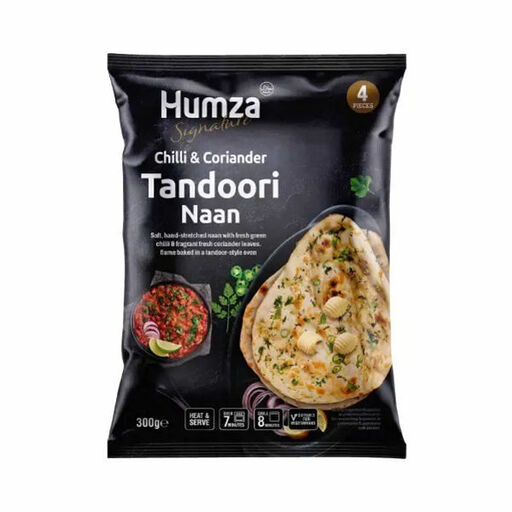
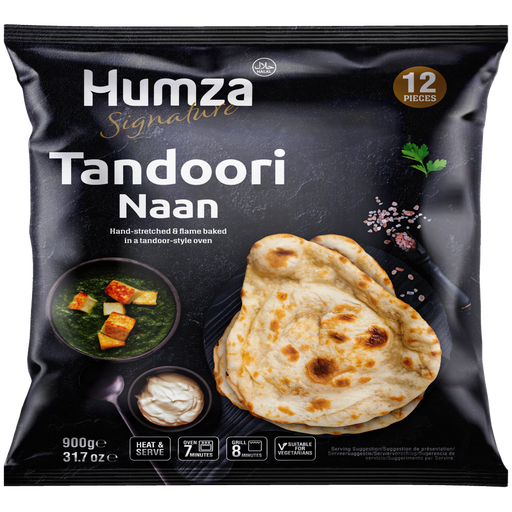
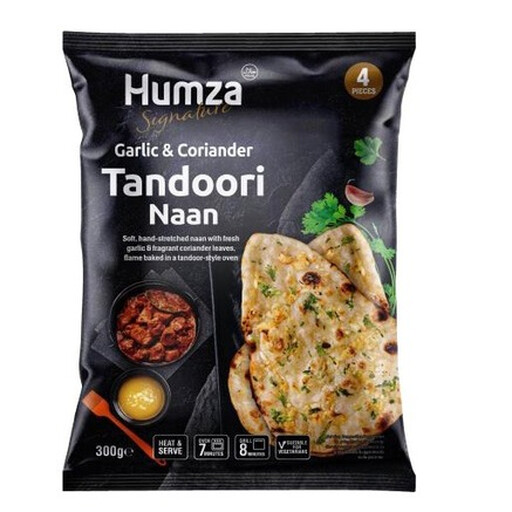
These Humza options include plain and garlic-and-coriander naans in four-piece and 12-piece packs. Compare the pack count with the portions your household will use; these products are not the retailer-branded naans discussed above.
 No image available
Four separate plain naans let you choose how many pieces to prepare for tea. Check the pack’s serving, salt and storage information before using the remainder; this product contains wheat.
 No image available
This four-piece pack is a flavoured option rather than a plain naan. Check whether the flavour suits the planned meal, and read the pack’s salt, wheat-allergen and storage information.
 No image available
The 12-piece plain pack calls for a plan for more unused naans than a four-piece pack. Check the freezing and storage directions against your available space and expected use; it contains wheat.
 No image available
Consider this flavoured 12-piece pack only if your household has a use and storage plan for that many naans. Check the purchased pack’s salt information and allergen advice; it contains wheat.
Follow the freezing directions for the particular pack. Check when it must be frozen and how to defrost and reheat it; instructions for one retailer’s naan should not be applied to another.
No. The conventional naans cited here contain wheat, regardless of portion size. If a child must avoid gluten, choose an appropriately labelled alternative and avoid contact with gluten-containing bread during preparation.
Check the child’s dietary needs, the naan’s ingredients and the school’s own allergy policy first. The Department for Education’s guidance concerns school allergy arrangements in England; it does not establish a single lunchbox rule for every UK school.