Small-snack shoppers
If one full-size naan is more than you want at elevenses, compare mini naans with the portion you would take from a larger bread. Pack count and storage directions matter if you will not eat the rest straight away.


Choose a mini naan if a smaller bread suits your elevenses; choose wholemeal naan if wholemeal flour is the deciding ingredient, and compare fibre per 100g on the labels. Asda’s white-and-wholemeal option discussed here is a chapatti, not a naan, so it suits you only if you are happy to change bread type. A full-size plain naan is another option if you plan to divide it and can follow its storage directions.
If one full-size naan is more than you want at elevenses, compare mini naans with the portion you would take from a larger bread. Pack count and storage directions matter if you will not eat the rest straight away.
If wholemeal flour matters to you, read the ingredients as well as the fibre figure per 100g. Added wheat fibre and wholemeal flour describe different formulations.
If you specifically want white and wholemeal flour together, Asda labels its six-pack chapattis as a mixed-flour product. Consider them only if a chapatti meets your intended use.
Start with the bread type and the amount you expect to eat, then compare the ingredients, nutrition and storage directions of the particular packs.
| Priority | What to check | Your needs |
|---|---|---|
| Flour and fibre | Read the flour ingredients separately from fibre per 100g. Sounas lists wholemeal flour and 6.2g fibre per 100g; Ocado lists 4.8g per 100g for M&S mini naans made with added wheat fibre. Asda’s mixed-flour chapattis contain 17% wholemeal wheat flour and list 2.2g fibre per 100g. | I want to know whether the bread contains wholemeal flour, added fibre or both. If the flour blend itself is decisive, I need to distinguish a chapatti from a naan. |
| Snack portion | Compare bread count and pack weight: Ocado lists six M&S mini naans in 282g, while Sainsbury’s lists two plain naans in 260g. Check per-bread nutrition if you expect to eat a whole naan. | One smaller bread may fit my break; otherwise, I can divide a larger naan and plan when to use the remainder. |
| Ingredients and allergens | Check the current pack’s ingredients and allergen information. The M&S mini naan lists wheat; Sainsbury’s BFree naan listing describes a gluten-free product with a precautionary statement for mustard and sesame. | If I avoid an ingredient, I need information for the exact bread I buy rather than judging it by its colour or name. |
| Storage and heating | Follow the pack’s heating and opening instructions. The M&S mini naan listing says to use it within two days of opening; Sainsbury’s plain naan listing specifies refrigeration and use within one day of opening. | For a short break, I want a heating method I can use and a pack size I can finish within its storage directions. |
Asda calls its white-and-wholemeal product a chapatti. Its ingredients do not establish the formulation of any naan.
Choose the chapatti only if that bread type works for your elevenses; otherwise, check the ingredients of the naan you intend to buy.
Ocado’s M&S mini naan listing includes added wheat fibre and a fibre figure, but does not list wholemeal flour.
Compare the flour ingredients and fibre per 100g as two separate pieces of label information.
The Sainsbury’s plain naan listing requires refrigeration and use within one day of opening; the M&S mini naan listing gives different storage directions.
Decide how many breads you will use, then follow the chosen pack’s opening, freezing and heating instructions.
These examples illustrate different bread types and pack details; a figure for one product does not describe every naan sold under the same brand.
A wholemeal naan option for shoppers choosing by flour ingredient.
Its six-pack of mini plain naans offers a smaller bread format.
Its two-pack of plain naans offers a larger bread to divide if preferred.
Its mixed-flour chapattis are an alternative for shoppers willing to change bread type.
Its 220g two-pack is a plain naan option.
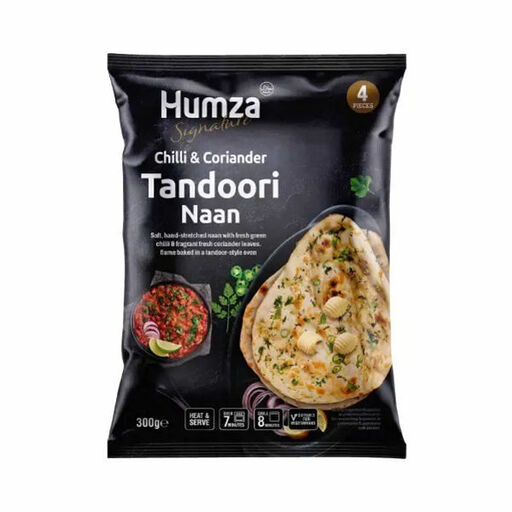
These Humza packs are options for choosing a plain or garlic-and-coriander naan and deciding how many breads to keep for later elevenses. Compare their current labels if wholemeal flour or fibre per 100g is central to your choice.
 No image available
Consider this garlic-and-coriander option if you want a flavoured naan for elevenses. The 300g pack contains four pieces; check its current flour ingredients and fibre per 100g if either affects your choice.
 No image available
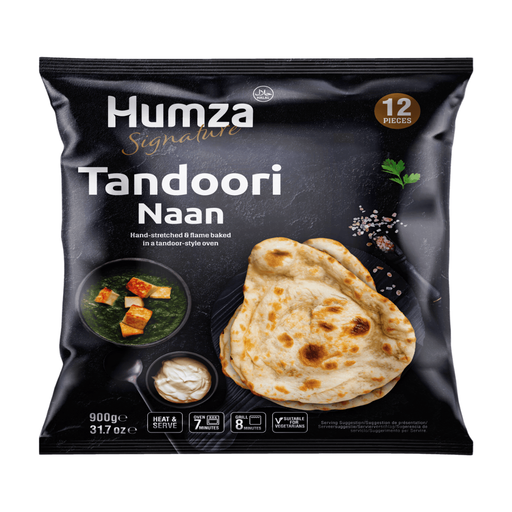
This plain option suits a preference for naan without the garlic-and-coriander flavour of the other four-piece pack. It contains four pieces in 300g; check the label for its flour ingredients, fibre figure and storage directions.
 No image available
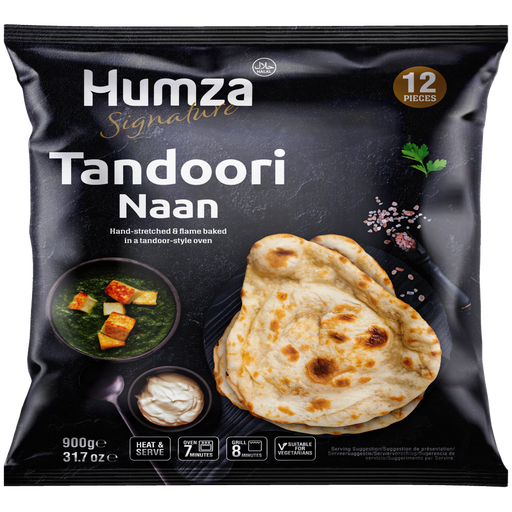
A 12-piece pack makes more sense if you have a plan for the breads beyond one elevenses break. It contains 900g of plain naan; check the pack’s storage and freezing directions, along with its flour ingredients and fibre per 100g.
No. Ocado’s M&S mini naan listing names added wheat fibre but not wholemeal flour, while Sounas lists wholemeal flour in its naan. Check the ingredients and fibre per 100g separately for the product you choose.
The M&S mini naans listed by Ocado and Sainsbury’s plain naans both have grill directions as well as oven directions. Follow the heating instructions on the particular pack you buy.
Follow the chosen pack’s storage and opening directions: the M&S mini naan listing specifies cool, dry storage and use within two days of opening, while Sainsbury’s plain naan listing specifies refrigeration and use within one day of opening. GOV.UK explains that a best-before date concerns quality, whereas a use-by date concerns safety.
Check the current pack’s ingredients list and any relevant precautionary information. Food Standards Agency guidance for UK food businesses says allergens present as ingredients must be emphasised in the ingredients list of prepacked food; do not rely on the bread’s colour or an older online description.