Hosts cooking several batches
If one tray will not hold the broccoli you plan to serve, usable tray space and the option of cooking on two levels matter more than the stated cavity volume alone.


Choose a mini oven for party broccoli by the tray space available for an uncrowded batch and the worktop space needed to use the appliance safely, not by litre capacity alone. A multi-level countertop oven is worth considering for several trays, an air-fry mini oven for smaller successive batches, and a mini kitchen with hotplates when the rest of the menu calls for them; check the cooking mode, tray dimensions and setup requirements of the exact model.
If one tray will not hold the broccoli you plan to serve, usable tray space and the option of cooking on two levels matter more than the stated cavity volume alone.
An air-fry or fan-assisted mode may be relevant if you want crisp edges and can leave space between florets. A smaller tray may still mean cooking batches in sequence.
Check the appliance footprint, door-opening room and the exact model's ventilation instructions before planning where it will sit during the gathering.
Start with how much broccoli must be ready together, then decide whether browning, a workable kitchen setup or easier serving is your next priority. Compare actual trays and cooking modes before using litre capacity to narrow the choice.
| Concern | What to check | Who this matters to |
|---|---|---|
| Batch capacity and timing | Compare usable tray dimensions and check whether the intended cooking mode permits more than one level. | If I need enough broccoli ready for guests at once, I want fewer consecutive batches without crowding the tray. Around 36% of consumers put batch capacity first. |
| Browning and crispness | Check for an air-fry, convection or fan-assisted mode and the model's stated temperature range. | For a side dish with browned edges, I would rather leave room for hot air to circulate than fill every part of the tray. Browning is the primary concern for around 29% of consumers. |
| Worktop fit and safe setup | Measure the appliance and door-opening space; follow the exact manual's surface and ventilation instructions. | When kitchen space is tight, I need to know where a hot oven can stand safely while guests and other dishes are around. Around 21% of consumers prioritise the worktop setup. |
| Cleanup and serving | Check which trays and racks are included and how they must be cleaned; plan how cooked food will be served. | With several dishes to manage, I want to move between batches and clear up without delaying the meal. Serving and cleanup come first for around 14% of consumers. |
A stated cavity volume does not give the flat tray area available for an uncrowded layer of florets. Even a two-level oven only helps if its intended mode supports cooking on both levels.
Check the supplied tray and rack dimensions, then work out how many batches your serving will need.
The appliance also needs room to open and the ventilation space specified for its model. Russell Hobbs instructs users of the 26680 to leave 150 mm around that unit; this is not a clearance rule for other ovens.
Measure the intended worktop, including door access, and follow the exact model's manual for its surface and clearance requirements.
Manufacturer comparisons for particular foods and test conditions do not establish the time, energy use or texture of your own tray of broccoli.
Try your intended tray loading before the party and allow for another batch if the florets need more space.
A programme name does not show the temperature of the cooked broccoli. For food businesses, GOV.UK guidance says hot food that is not served straight away should be held at or above 63°C, subject to its stated time allowance for holding below that temperature.
If hot holding is part of your serving plan, check the food with a clean probe thermometer and follow the guidance applicable to your event.
The Ninja DT200UK is a reference point for a larger countertop oven when cooking on two levels is useful.
Its named models illustrate two different choices: a 20-litre air-fry mini oven and a 30-litre mini kitchen with hotplates.
The Smart Oven Air Fryer XL is another larger countertop format to consider if convection and air-fry modes matter to your menu.
These countertop choices cover a compact air-fryer oven, an oven with hotplates and a larger air-fryer toaster oven. For party broccoli, compare their usable trays and worktop requirements rather than treating stated capacity as a batch-size guarantee.
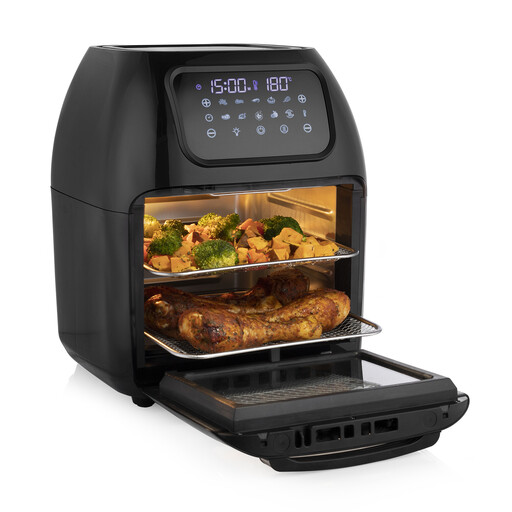 No image available
Consider this air-fryer oven if you can cook the party side dish in smaller batches and value removable parts described as dishwasher-safe. Check the tray area and the model's worktop requirements before planning those batches.
The product title specifies 1800W, ten programmes and a touch screen.
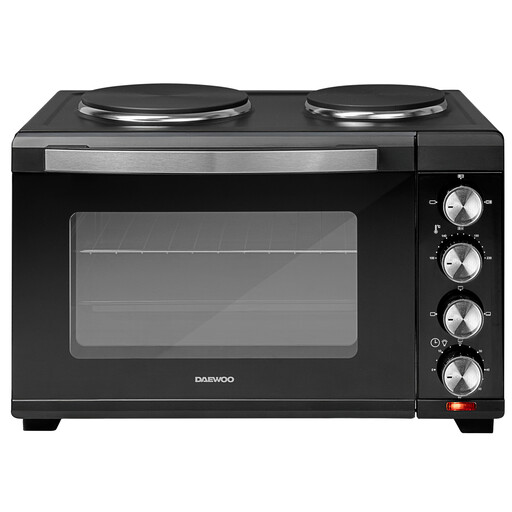 No image available
Consider this format when the party menu calls for hotplates as well as an oven. Confirm that its usable tray and the full worktop setup suit the amount of broccoli you need to cook.
The product title specifies a 32L oven and 3000W.
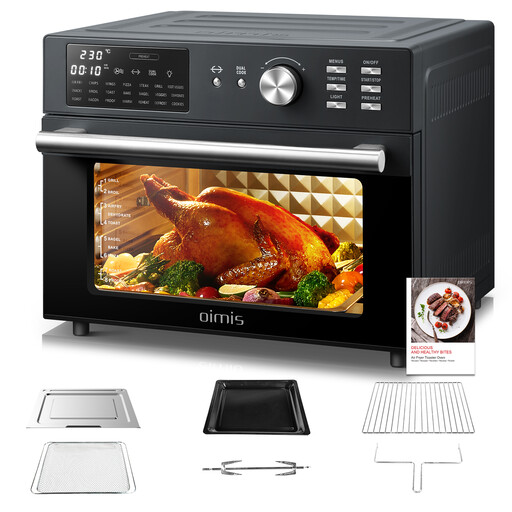 No image available
Consider this larger air-fryer toaster-oven format if you want to assess a 30L option for the gathering. Check the usable tray area before deciding how many broccoli batches it can accommodate.
The product title specifies 21 presets, rotisserie and dehydrator functions, space for a 13-inch pizza, and 1800W.
Choose by the amount you need ready at once and the usable tray space, not litres alone. Check whether the intended cooking mode works on two levels if you plan to use more than one tray; otherwise allow time for successive batches.
It is a reasonable format to consider if browned edges are your priority and you can avoid crowding the tray. Test your preparation and tray loading before the party rather than assuming an advertised cooking result will apply to your batch.
Follow the manual for the exact model. Russell Hobbs specifies 150 mm around its 26680 and calls for a stable, level, heat-resistant surface; do not apply that clearance figure to a different appliance without checking its instructions.
Plan to serve it promptly or check its temperature if you need to hold it hot; a keep-warm setting alone does not establish the food temperature. For food businesses, GOV.UK says hot food not served straight away should be kept at or above 63°C and sets conditions for a limited period below that temperature.