Buffet batch planners
If you need to replenish several rounds of flatbreads, compare the usable tray size with your breads before relying on stated oven capacity. Shelf arrangements and a timer also matter to the serving schedule.


Choose a mini oven by checking whether its usable tray fits your flatbreads and whether its baking arrangement suits the number of rounds you need to serve. Litre capacity is only a starting point; for repeated batches, also check the recipe’s temperature and cooking mode, timer, counter clearance and electrical load.
If you need to replenish several rounds of flatbreads, compare the usable tray size with your breads before relying on stated oven capacity. Shelf arrangements and a timer also matter to the serving schedule.
If you can bake smaller rounds, check the oven’s footprint and required clearance alongside tray fit. A compact cavity may suit the counter without meeting a larger batch target.
If you value repeatable settings, compare the recipe’s required temperature and method with the oven’s modes and timer. A larger litre figure alone does not establish more suitable baking controls.
Start with bread fit and the pace of replenishment, then check baking controls and whether the oven can be placed and powered safely.
| Concern | What to check | Who this matters to |
|---|---|---|
| Batch size and bread fit | Compare usable tray width and depth with your finished flatbread size; check which shelf arrangements the baking mode permits. | If I need to replenish flatbreads quickly, I need enough usable tray area for each round. Around 37% of consumers put batch fit first. |
| Heat and baking control | Match the recipe to the stated temperature range, cooking mode and timer; consult the manual for rack placement. | When a recipe calls for a particular heat setting or baking method, I want controls that let me follow it across rounds. Roughly 27% of consumers prioritise baking control. |
| Counter and electrical setup | Measure the worktop with the model’s required clearances; check its electrical rating and avoid overloading sockets or extension leads. | With little worktop space, I need a place for the oven that also meets its clearance and electrical requirements. Around 18% of consumers make setup their primary concern. |
| Other uses and upkeep | Check the functions and supplied accessories you would use, plus the cleaning instructions and relevant support terms. | If the oven will cook other buffet food as well, I want its functions and upkeep to suit those jobs. About 18% of consumers chiefly prioritise versatility and maintenance. |
Capacity describes cavity volume, not the usable width and depth of the supplied tray or how a chosen baking mode performs across shelves.
Compare the tray or rack measurements with your finished breads before deciding how many to plan for each round.
The Tower T14044 and Igenix IG7130 are listed with two hotplates, but that feature alone does not establish how their heating elements can be used together.
Check the model manual for simultaneous-use instructions and total electrical demand before planning oven and hotplate work at the same time.
Electrical Safety First warns that overloaded extension leads and sockets create a fire risk. The space around a hot oven also needs to meet its placement instructions.
Follow the model’s clearance guidance, keep flammable items away and check the rating of any socket or extension lead used.
A temperature specification tells you which settings are available, not how a particular flatbread will brown or bake in that oven.
Screen models against your recipe, follow the manufacturer’s rack and mode guidance, and try a small batch before the buffet.
The Optimo OF445840 is a compact, 19 L example for hosts who can replenish smaller batches.
The T14044 is a larger stated-capacity example to examine for repeated buffet rounds.
The IG7130 offers a 30 L example with two hotplates for a counter used for several cooking tasks.
The SOV860BSS is a 22 L option to examine if programmable timing matters more than stated cavity size alone.
The DT200UK is a multifunction countertop-oven example for households considering uses beyond flatbreads.
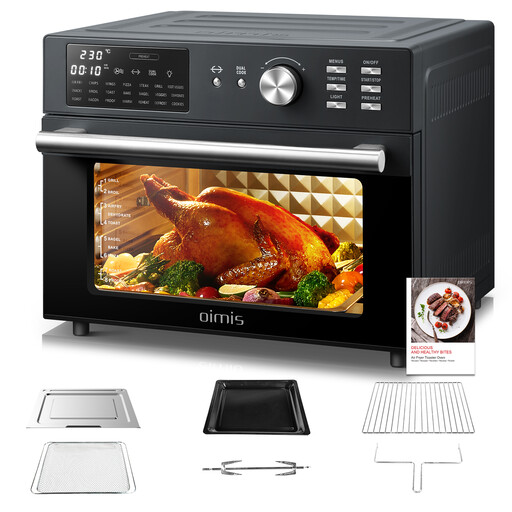
This 30 L countertop oven is a product to consider if you want to assess a larger stated cavity for repeated flatbread rounds; check its usable tray size before planning each batch.
 No image available
Consider this countertop oven if you are planning repeated rounds and can check that its tray fits your flatbreads.
The product name lists a 30 L capacity, 21 presets, 1800 W, a rotisserie and a dehydrator. Confirm the usable tray dimensions, recipe temperature and timer controls before planning buffet service.
Check the required countertop clearance and the appliance’s plug and electrical instructions before use.
No. Litre capacity does not tell you the usable tray width and depth or how many of your flatbreads will fit. Compare the finished bread size with the model’s tray measurements and check the permitted shelf arrangement.
Check the lead’s rating and the combined load before using one. Electrical Safety First warns that overloading an extension lead or socket creates a fire risk; follow the oven’s electrical instructions and do not chain extension leads.
Check that the appliance and its location meet the model’s instructions before use. Electrical Safety First advises that a plug-in oven needs a UK three-pin plug and fuse; also follow the manufacturer’s countertop-clearance guidance and keep flammable items away.
No. A timer can help organise repeated rounds, but it does not replace supervision. Electrical Safety First advises never leaving food cooking unattended in an oven or grill.