Family-batch scone bakers
If you want to serve a batch together, start with the tray you intend to use. Check its fit on the rack, the space above it and the available shelf positions rather than choosing by litres alone.


Choose a mini oven by checking its usable rack and tray dimensions against the cheese-scone batch you want to bake; cavity volume alone cannot tell you whether your tray will fit. A compact 14–19 L oven may suit smaller or occasional batches, while a larger or multifunction countertop appliance may be more useful for other parts of a family meal. Whichever route you take, check the baking controls, worktop clearance and suitable cookware for the exact model.
If you want to serve a batch together, start with the tray you intend to use. Check its fit on the rack, the space above it and the available shelf positions rather than choosing by litres alone.
A compact conventional oven may make sense if cheese scones are an occasional bake and worktop space is tight. De'Longhi lists a 14 L model with bake and fan-convection functions, while Tefal lists a 19 L Optimo with a baking mode; either still needs a tray-fit check.
If the appliance will also prepare other parts of a family meal, cooking modes and rack arrangements may matter alongside scone baking. Check that those features are useful for the meals you actually make and that the appliance fits its intended worktop position.
Start with tray fit and a baking setting that covers your recipe. Then consider where the oven can sit safely and whether you will use its other functions.
| Concern | What to check | Who this matters to |
|---|---|---|
| Batch size and tray fit | Measure your tray and confirm the exact oven's usable rack dimensions and clearance above the chosen shelf. | If I need to serve the family's scones together, I want to know whether my tray fits without splitting the bake. Around 36% of consumers would put usable batch space first. |
| Baking control | Compare the bake or convection mode and temperature range with your recipe; check how you will monitor browning. | When I bake cheese scones regularly, I need controls that let me follow my recipe and watch the colour as they cook. For roughly 29% of consumers, baking control would be the primary concern. |
| Worktop setup | Check external dimensions, the manufacturer's clearance instructions and the electrical load of the intended socket arrangement. | In a small kitchen, I need a place for the oven that leaves the required space around it and can be powered safely. Worktop setup would come first for around 21% of consumers. |
| Use beyond scones | Look at the cooking modes and rack arrangement you would use for other meals, plus cleaning and repair arrangements. | If this appliance will help prepare more than scones, I care about its everyday cooking functions and upkeep. Around 14% of consumers would prioritise that wider use. |
A 14 L, 19 L, 20 L or 30 L figure describes cavity volume, not the width and depth available to your baking tray. An unsuitable tray could mean finding another one or baking in more than one batch.
Measure your preferred tray, then check the exact model's rack dimensions, shelf positions and door clearance before ordering.
Extra programmes make an appliance more versatile, but a function name does not establish how your recipe will turn out on a particular tray or shelf.
Check for a usable bake or convection mode and suitable temperature controls. Follow the model's instructions for tray placement and monitor browning during the bake.
Electrical Safety First warns that ovens and grills can overload extension leads when used with other large appliances. An oven also needs the clearances specified in its siting instructions.
Check the appliance rating and the total load on any extension equipment; do not daisy-chain extensions, and fully unwind a cable reel. Keep flammable items away and follow the manufacturer's placement instructions.
Crumbs and cheese residue make cleaning part of regular ownership. Removable parts and repair arrangements differ by model, so a feature listed for one oven should not be assumed for another.
Check the exact model's cleaning instructions, removable parts, warranty terms and route for obtaining replacement parts.
Tefal offers both the conventional Optimo OF445840 mini oven and Easy Fry oven formats relevant to countertop baking.
The EO14902.W is a compact conventional mini-oven option for buyers considering a smaller worktop appliance.
The 22780 Mini Kitchen is relevant when a larger countertop oven and additional hotplates suit the intended meal preparation.
The Smart Oven Air Fryer is relevant to buyers who want digital controls and cooking functions beyond baking.
These options cover a multifunction air-fryer oven with a bake function and a combination microwave with convection baking. They are different from a simple conventional mini oven, so check the cooking mode, tray fit and cookware instructions that apply to the one you choose.
 No image available
Consider this oven if you want a bake function for cheese scones as well as modes for other meal components.
The listed 9-in-1 functions include Bake, Air Fry, Grill and Roast. Tefal describes three cooking levels for the FW556DG0; check the usable rack and baking-tray dimensions against your intended batch, and confirm that its temperature settings cover your recipe.
 No image available
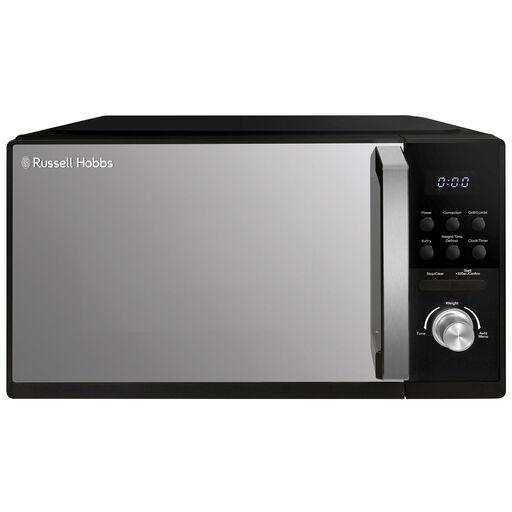
Consider this countertop combination microwave if you also want its convection-baking option for scones, rather than a conventional mini oven alone.
Check the convection-baking temperature range and whether a suitable tray fits before choosing it for your family batch. Follow the manual's cookware instructions for each mode; cookware permitted for convection baking should not be assumed suitable for microwave-only cooking.
Choose by the tray and batch you intend to bake, not by litres alone. Measure your tray and compare it with the exact model's usable rack width, depth and shelf clearance. A compact 14–19 L oven may suit smaller batches, while larger models may provide more cooking levels, but neither capacity range guarantees a particular scone count.
A fan setting circulates heat, but it does not guarantee the same browning across different ovens, trays and recipes. Use your recipe's temperature and timing as a starting point, follow the oven manual's tray-placement advice and watch the scones as they bake.
Do not assume an extension lead can safely carry the oven and other appliances at the same time. Electrical Safety First advises checking the lead's maximum rating and warns that ovens may overload a lead shared with other large appliances. Check all simultaneous loads, avoid daisy-chaining extensions and fully unwind cable reels; if you are unsure about the setup, seek advice from a qualified electrician.
Let the oven cool fully, then follow its manual for cleaning the tray, cavity and any removable crumb collector. Parts differ by model: Tefal describes a removable crumb tray for its 15 L Easy Fry, but you should check the cleaning instructions for the exact oven you choose.