For small batches of cheese straws, start with a bake-capable mini oven whose rack and tray fit the pastry you plan to make, rather than choosing by litre capacity alone. A larger oven makes more sense if you need room for bigger batches or will regularly use its other cooking functions, provided it fits the shared worktop and electrical setup.
Who might use a mini oven?
Occasional shared-kitchen bakers
If you mainly make small batches of cheese straws, a compact oven with a bake setting is a starting point. Which? identifies shared accommodation as a setting for mini ovens; check the usable tray dimensions before choosing a model for your own batch.
Repeat batch bakers
If you bake regularly for flatmates or events, look at the usable rack area before moving to a larger oven. A 23L-class model may offer a more suitable format, but its stated capacity alone cannot establish how many cheese straws will fit.
Multi-task kitchen users
If the appliance also needs to handle hob cooking, grilling or roasting, consider a multi-function model. Allow for its worktop space and electrical requirements: Electrical Safety First warns against overloading extension equipment and blocking appliance ventilation.
What matters when choosing?
Check tray fit and a safe operating position first. Then decide whether you need space for repeat batches or cooking functions beyond baking.
Compact bake-focused oven
Choose when: You mainly bake one small batch at a time and need to preserve shared worktop space.
Trade-off: A compact cavity may not take your preferred tray or a larger batch.
23L mini oven
Choose when: Repeat baking calls for more oven space, without adding hotplates.
Trade-off: It takes up more room than a compact format, while tray fit still needs checking.
Oven with hotplates
Choose when: You will regularly use hob cooking as well as the oven in the shared kitchen.
Trade-off: Hotplates add footprint, cleaning and electrical demands without establishing a better cheese-straw result.
| Concern | What to check | Who this matters to |
|---|
| Tray and batch fit |
Measure your baking tray, then confirm the internal rack width and depth and the supplied tray dimensions. Check that the door closes with the tray in place. |
If I lay cheese straws flat, I need enough rack area for my intended batch, not just a quoted oven volume. Around 42% of consumers put tray fit first. |
| Shared space and electrical setup |
Check the worktop position against the manual’s clearances and the appliance’s electrical requirements. Electrical Safety First warns against overloading extension equipment. |
With other people using the kitchen, I need a place to operate the oven without blocking ventilation or crowding an already busy socket arrangement. Safe placement is the main concern for around 33% of consumers. |
| Extra cooking functions |
Check whether you will use hotplates or a rotisserie, and whether the manual permits the functions you want to use together. |
If this appliance must cover meals beyond pastry, hob cooking may matter more to me than a simpler oven layout. Around 25% of consumers primarily want those additional cooking functions. |
Mistakes to avoid
-
Choosing by litre capacity alone
Cheese straws lie flat, so cavity volume does not tell you whether your tray or intended batch will fit.
Measure the tray you plan to use and confirm the oven’s internal rack dimensions and supplied tray size before ordering.
-
Buying hotplates just for pastry baking
Hotplates and a rotisserie serve other cooking tasks; neither establishes that an oven will bake cheese straws more suitably.
Choose those functions if you expect to use them regularly. For pastry, check tray fit, the recipe’s required temperature range and the oven’s controls.
-
Using an overloaded extension setup
Electrical Safety First warns that overloading extension equipment can cause overheating and a fire risk.
Use an appropriate wall socket where possible. If an extension device is needed, check its marked current rating against the combined connected load, fully unwind cable reels and do not daisy-chain extensions.
-
Treating the oven as extra worktop storage
Items placed on an appliance can obstruct ventilation. In a shared kitchen, its operating position also affects other users’ access to the worktop.
Agree where the oven will be used, follow its manual’s clearance instructions and move it into storage only when it is cool and unplugged.
Relevant brands to consider
Russell Hobbs
The Express Mini Oven 26090 represents a compact option for someone mainly seeking a bake-capable countertop oven.
- Russell Hobbs lists a 12.6L capacity, 1500W convection technology and Bake, Grill, Toast and Keep Warm settings for the 26090.
- Confirm the internal rack and supplied tray dimensions against your cheese-straw batch before choosing it.
Tower
The T14043 is a 23L dial-controlled mini oven to consider for repeat baking without hotplates.
- Tower lists a 90–230°C adjustable thermostat, a 90-minute timer, a baking tray and a wire rack for the T14043.
- Check its worktop footprint and usable tray area; the 23L figure does not establish the layout of a particular batch.
Morphy Richards
A 28L model is relevant when the appliance needs to cover cooking tasks beyond cheese straws.
- The product information lists a fan-assisted oven, two hobs, a grill and a rotisserie, alongside a 100–220°C range and 2850W rating.
- Those functions are optional for pastry baking. Check the model’s tray fit, space requirements and electrical arrangement before choosing it.
Joybuy products for broader cooking
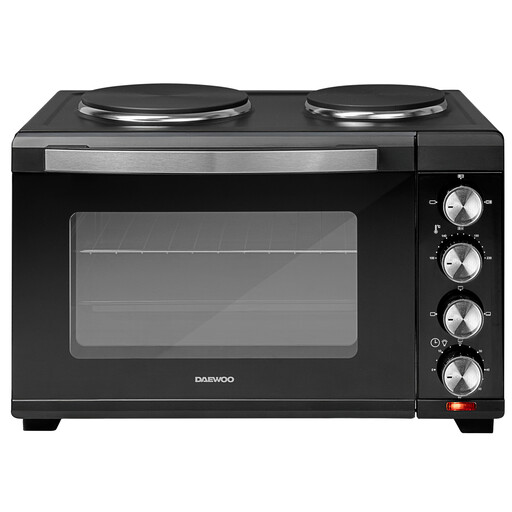
This countertop oven is relevant if you want to bake cheese straws and also expect to use hotplates for other shared-kitchen cooking. Check whether its tray area and operating requirements suit your kitchen before choosing it.
 No image available
DAEWOO SDA1609GE 32L oven with dual hotplates, 3000W
Consider this oven if hob cooking is a recurring need alongside baking cheese straws. Its stated capacity is 32L, and its title specifies 3000W; confirm usable tray dimensions, required ventilation clearances and electrical requirements for your intended use.
View on Joybuy
Common questions
Is a compact mini oven enough for cheese straws?
Yes, if it has a bake setting, can reach the temperature your recipe requires and has enough usable tray area for your batch. Measure the tray and check the internal rack dimensions rather than relying on cavity capacity alone.
Can I plug a mini oven into an extension lead?
Check the extension device’s marked current rating and the combined load of everything connected before using one. Electrical Safety First advises against overloading extension leads and daisy-chaining them; a cable reel must be fully unwound to achieve its rated current capacity.
Where should a mini oven sit in a shared kitchen?
Choose a position that meets the oven manual’s clearance requirements, leaves its ventilation unobstructed and keeps it away from wet areas and flammable items. Agree the position with other kitchen users, and do not leave the oven operating unattended.
Should I check the house rules before adding a mini oven?
Yes, particularly where worktop space and cooking facilities are shared. Arun District Council’s shared-kitchen standards illustrate that layout and facilities can matter in an HMO; check the rules for your own property and speak to the landlord or manager before bringing in a sizeable countertop appliance.


