Small-batch enchilada cooks
If you usually bake a smaller tray for one or two people, start with dish fit, a usable baking setting and enough space around the oven on your worktop.


Choose a mini oven around the outside dimensions of your enchilada dish, then check that the dish fits on the rack without touching the door or heating elements. A compact oven may suit a small tray and limited worktop space; a larger or two-level model makes more sense if you need a family-sized dish or want to cook sides too. Whichever you choose, follow the recipe or packet instructions and check that the chicken filling is cooked through.
If you usually bake a smaller tray for one or two people, start with dish fit, a usable baking setting and enough space around the oven on your worktop.
For a larger tray or a main dish and sides, consider rack layout and worktop depth as well as capacity. Two-level cooking is useful only if the dishes fit and their cooking times work together.
If you need to heat sauce or a side while the enchiladas bake, an oven with hotplates is another option. Check placement and electrical requirements before using the cooking functions together.
Start with your baking dish and recipe, then decide whether faster starts or cooking a side dish matters enough to shape the appliance you choose.
| Concern | What to check | Who this matters to |
|---|---|---|
| Dish fit and portions | Measure the dish including its handles; compare it with usable rack space and door clearance, not just litre capacity. | If I want to keep using my enchilada dish, it needs to fit safely without cutting down the portion. Around 33% of consumers put dish fit first. |
| Baking control and chicken doneness | Check the baking setting, recipe temperature and timer; plan how you will check the filling is cooked through. | When the topping browns before I can judge the filling, I need controllable baking and a way to check the centre. For around 27% of consumers, that is the primary concern. |
| Quick starts and energy use | Read the conditions behind speed or energy claims and compare them with the dish and cooking routine you actually use. | For frequent small meals, I would value a quick start, but would not assume a saving measured with another food applies to enchiladas. This is the main priority for around 20% of consumers. |
| Cooking a full meal | Decide whether you need hotplates or two rack levels, then check cookware fit, placement and electrical requirements. | If I need to prepare sauce or a side alongside the tray, having those cooking options in one setup matters most. Around 20% of consumers put full-meal flexibility first. |
Capacity does not tell you whether a rectangular dish, its handles and the required clearance will fit on a particular rack.
Measure the dish’s full outside dimensions and compare them with the oven’s usable internal measurements before buying.
The topping can brown while the centre still needs cooking; undercooked chicken poses a food-safety risk.
Follow the recipe or packet instructions and check that the centre is steaming hot. GOV.UK also advises checking chicken at its thickest part for no pink meat and clear-running juices.
Russell Hobbs bases an energy comparison for its 26680 mini oven on cooking 400g of frozen French fries at 213°C, not an enchilada tray.
Consider your own preheating and cooking routine rather than treating that comparison as a result for this meal.
Electrical Safety First warns that ovens and grills can overload an extension lead when used with other high-power appliances. Oven heat also makes clear placement important.
Follow the model’s clearance instructions, keep combustible items away and check the appliance’s electrical requirements and any extension lead’s rating.
Its mini-oven range includes a compact baking option and a larger oven with hotplates.
The DT200UK is a larger countertop option for cooks considering a family tray or cooking on two levels.
Tower offers dial-controlled mini ovens, including a compact 23L model and a 32L oven with hotplates.
These choices cover an oven with hotplates for preparing a side alongside enchiladas and a smaller air fryer oven for cooks whose dish fits its rack. Check the usable space against your own baking dish before choosing either one.
 No image available
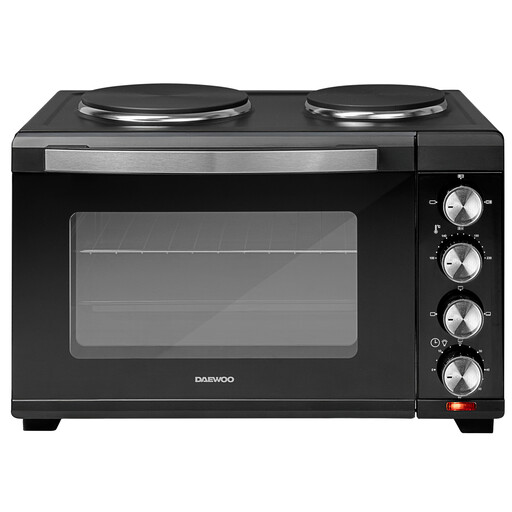
Consider this model if you need an oven and hotplates for sauce or a side dish, provided your enchilada dish fits. Its stated power is 3000W; check the appliance’s electrical requirements and placement instructions before use.
 No image available
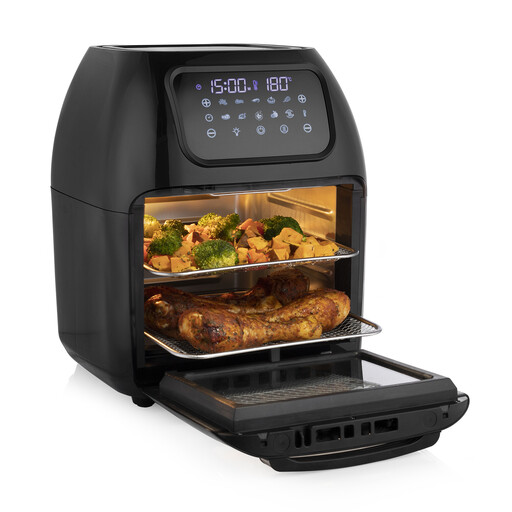
Consider this smaller-capacity option only if your enchilada dish fits its usable rack space and its baking settings suit your recipe. The model is rated at 1800W and lists ten programmes; neither the 10L capacity nor the programme count establishes dish fit.
Choose by your filled dish’s outside dimensions rather than a litre rating. A 20–23L oven may suit a smaller tray, while a larger model gives you another size option; neither capacity figure confirms that your particular dish and its handles will fit.
Follow the recipe or packet instructions and check the centre, not just the browned topping. GOV.UK gives a standard core-temperature target of 70°C for two minutes in its cooking guidance; its consumer guidance also advises checking the thickest part of chicken for no pink meat and clear-running juices. Use a clean food thermometer where practical.
Check the oven’s power requirement against the extension lead’s rating before doing so. Electrical Safety First warns that cooking appliances can overload extension leads, particularly alongside other high-power appliances; do not connect extension leads together, and seek advice from a qualified electrician if you are unsure about the electrical setup.
No: prioritise a suitable baking setting, temperature range and dish fit. An air-fry function may be useful for other cooking, but it does not replace checking that the chicken filling is cooked through.