One-dish shared-kitchen cooks
If you usually bake one enchilada dish, prioritise its fit on the rack and a clear place to operate the oven. The litre figure alone cannot settle either question.


Start with the enchilada dish and the space available on the shared worktop, rather than choosing by oven capacity alone. A 30-litre countertop oven is a sensible starting point for one dish if its usable rack area fits the dish; consider a larger cavity for regular batches or hotplates if hob access is limited, but check placement and electrical load before choosing either. If the enchiladas contain raw chicken, check the food with a thermometer rather than relying on the oven dial.
If you usually bake one enchilada dish, prioritise its fit on the rack and a clear place to operate the oven. The litre figure alone cannot settle either question.
An oven with hotplates may be useful when shared hob space is scarce, provided the kitchen rules, worktop position and electrical arrangement permit its use.
A larger cavity is worth considering for repeated or larger batches only if the appliance and its required clearances still leave the shared worktop usable.
Measure your baking dish first, then check where the oven can safely sit. Capacity, cooking controls and cleaning arrangements help distinguish models once those essentials are settled.
| Concern | What to check | Who this matters to |
|---|---|---|
| Placement and electrical load | Check the model’s ventilation clearances and whether the socket or extension arrangement can handle the connected appliances’ combined load. | I need room to use the oven without crowding other cooks or overloading a shared socket; around 31% of consumers put safe placement and electrical load first. |
| Dish fit and batch size | Compare the dish’s outside dimensions, including handles, with the exact model’s usable rack area and door opening. | If I want to bake my enchiladas in one dish, I need to know it will go in and come out safely; roughly 25% of consumers make dish fit and batch size their primary concern. |
| Cooking control | Check for suitable baking controls and plan to measure the chicken’s temperature with a food thermometer. | I want to control the bake without mistaking browned sauce for cooked chicken; about 25% of consumers chiefly prioritise cooking control and chicken safety. |
| Cleaning and separation | Check which accessories can be removed and how the manual says to clean the oven between uses. | When several people use the same trays, I need a workable cleaning routine and to avoid unwanted food residue; around 19% of consumers put cleaning and separation first. |
Cavity volume does not tell you whether a rectangular dish, its handles or a lid will clear the rack and door.
Measure the actual dish and compare it with the exact model’s internal or rack dimensions. De’Longhi’s 31 cm round-plate figure for the EO14902.W, for example, is not a rectangular-dish measurement.
Cheese and sauce can look done before the chicken filling is heated through. The Food Standards Agency’s 2026 review discusses heating chicken all the way through to 70°C or more; the oven setting is not the food temperature.
Use a food thermometer to check the chicken throughout, and adjust the cooking time according to the food temperature rather than its appearance alone.
Other appliances may already be drawing power from the same extension device. Electrical Safety First warns against exceeding its marked maximum current rating.
Check the combined connected load against that rating before using the oven. Avoid daisy-chained leads and fully unwind any cable reel.
A larger appliance still needs its specified clearances and a position away from water and clutter. A crowded worktop can make everyday use difficult for everyone sharing it.
Agree where the oven will sit before buying, check the exact model’s clearance instructions and do not leave it operating unattended.
These model lines illustrate different sizes and functions; the brand name alone does not establish whether your dish fits or the oven can be placed safely.
Its IG7131 and IG7161 illustrate 30-litre and 60-litre tabletop oven options.
The 22780 Mini Kitchen is an option to examine when hob access matters as well as oven space.
The 14-litre EO14902.W is a compact model to examine for a smaller dish.
The SDA1608 offers a 23-litre oven example between the smaller and 30-litre models discussed here.
The Smart Oven Pro BOV820BSS is a 21-litre fan mini oven for cooks considering programmable controls.
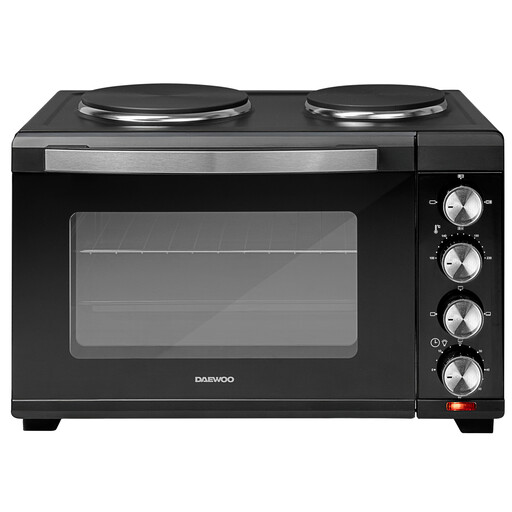
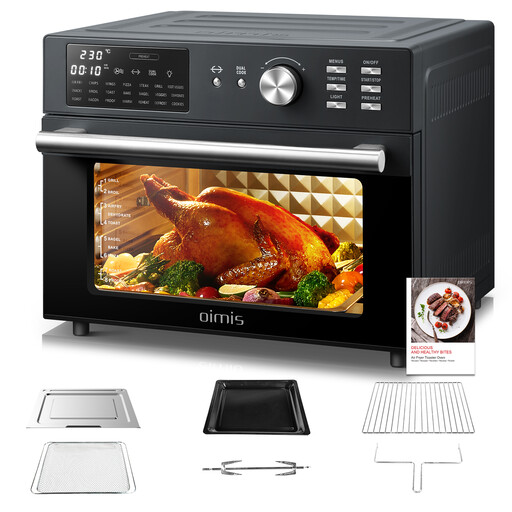
These two countertop models cover different ways to bake a single enchilada dish: one includes hotplates for limited hob access, while the other is an air-fryer toaster oven. For either one, confirm dish fit and a suitable position in the shared kitchen before buying.
 No image available
Consider this oven if access to the shared hob is limited and hotplate use is permitted. Its stated total power is 3000W, so check the socket and any other connected loads; confirm that the baking dish fits the usable rack area rather than relying on the 32L capacity.
 No image available
Consider this countertop oven for a single-dish bake if its rack accommodates your enchilada dish. The product name states 1800W and a fit for a 13-inch pizza, but that pizza measurement does not confirm rectangular-dish fit; check the model’s baking controls, accessories and required clearances before buying.
Measure the dish’s outside width, depth and height, including handles and any lid, then compare them with the exact oven’s internal or rack dimensions. Allow room to put the dish in and take it out safely; litre capacity alone cannot confirm fit.
Check that the chicken is heated all the way through to 70°C or more. The Food Standards Agency’s 2026 review discusses this temperature for reducing bacteria in chicken; use a food thermometer rather than treating the oven’s thermostat setting as the chicken’s temperature.
Use an extension lead only if it is suitable for the appliance and the combined connected load stays within the lead’s marked maximum current rating. Electrical Safety First warns against overloading extension devices; avoid daisy-chaining leads and fully unwind a cable reel.
Let the oven cool and follow the exact model’s instructions for cleaning its interior, tray and rack. Agree who will remove spills and wash shared accessories between uses, particularly when another cook needs to avoid food residue.