Shared-kitchen oat-bar bakers
You mainly need an oven for tray-baked bars, but the appliance must fit an agreed worktop space and a kitchen where sockets and cleaning duties are shared.


For occasional oat-bar trays, start with a mini oven that has a bake setting, adjustable temperature and a timer; consider hotplates or additional cooking functions only if the shared kitchen will regularly use them. Check your tin against the usable rack dimensions, measure the allocated worktop and plan for the appliance’s electrical load and cleaning routine before choosing a model.
You mainly need an oven for tray-baked bars, but the appliance must fit an agreed worktop space and a kitchen where sockets and cleaning duties are shared.
You want to use the same worktop appliance for oat bars and other regular tasks, such as reheating, grilling or simple meal preparation. Extra functions are worth considering alongside the space they occupy and the cleaning they add.
If someone eating the bars has an allergy, or you prepare them as a food business, ingredient information and control of cross-contact matter as well as oven choice. Food Standards Scotland notes that cooking does not remove allergens.
Begin with the baking controls and the fit of your actual tin. Then check whether the shared kitchen can accommodate the oven’s placement, electrical load and cleaning routine before paying attention to extra functions.
| Concern | What to check | Who this matters to |
|---|---|---|
| Baking control | Check for a bake setting, a temperature range covering your recipe and a timer you can use as intended. | If oat bars are my main use, I want to set the recipe temperature and keep track of each bake without relying on extra modes. Around 36% of consumers put baking control first. |
| Worktop and tin fit | Measure the allocated worktop and your tin; confirm the exact model’s usable rack width and depth and follow its placement instructions. | A crowded shared worktop leaves little room for an oven that cannot take my usual tin. For around 29% of consumers, space and tin fit are the primary concern. |
| Shared-kitchen safety and cleaning | Check the appliance load against the socket or extension-lead rating and other simultaneous loads. Agree cleaning duties and any necessary allergen controls. | When others use the same socket, trays and preparation area, I need a routine everyone can follow safely. Shared electrical use and cleaning come first for around 21% of consumers. |
| Use beyond oat bars | Name the other jobs you will regularly do, then compare the relevant functions with the appliance’s footprint and cleaning requirements. | If the oven will also handle everyday meals, I need those additional functions to justify its place on the worktop. Around 14% of consumers prioritise broader use. |
Cavity capacity does not tell you whether a square or rectangular oat-bar tin will sit on the rack. An oven’s external dimensions answer a different question: whether the appliance fits the worktop.
Measure the outside of your tin, confirm the exact model’s usable rack or tray dimensions and check the space allocated to the oven.
Electrical Safety First warns that ovens and grills used alongside other large appliances can overload an extension lead, creating a fire risk.
Check the oven’s stated wattage, the lead or socket rating and what else will run at the same time. Do not daisy-chain extension leads; follow the appliance instructions.
Food Standards Scotland says cooking at high temperatures does not remove food allergens. Residue on shared trays, utensils and preparation surfaces can still matter.
Where someone has an allergy, agree how ingredients and equipment will be kept separate and cleaned. For food-business preparation, follow the applicable allergen-information and cross-contact guidance rather than relying on the oven alone.
More functions can mean more parts and surfaces to manage in a shared kitchen. Good Housekeeping UK also reported that the Ninja DT200UK interior was tricky to clean in its testing.
Agree who will clean the rack, tray, door and worktop after use. If oat bars are the only regular task, weigh that routine against the benefit of additional functions.
These models illustrate different ways to equip a shared kitchen; a brand’s inclusion does not establish that every model in its range has the same features.
The IG7131 is an oven-only option for someone whose main task is baking oat bars. The product information lists a 30-litre capacity, 1,500 W rating and adjustable 100°C–220°C temperature control.
The 22780 Mini Kitchen combines a 30-litre fan-assisted oven with double hotplates. Russell Hobbs lists an adjustable 60°C–230°C thermostat, oven tray and grill rack.
Ninja lists 10 functions, including Bake, for the DT200UK and describes it as supporting two-level cooking. It is relevant when the worktop oven will regularly do more than bake one tray of bars.
These countertop ovens are relevant if you want to bake oat bars and also expect to use the appliance for other cooking tasks. Compare their stated functions with your tin size, available worktop space and shared electrical arrangements.
 No image available
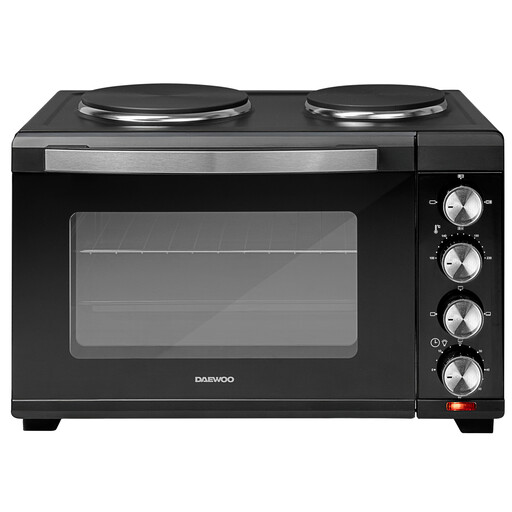
Consider this oven if the shared kitchen needs a countertop appliance for baking and hob cooking. Its stated capacity is 32L, it has two hotplates, and its stated total power is 3000W.
Confirm that your oat-bar tin fits the usable rack and check the appliance instructions and electrical load before use alongside other equipment.
 No image available
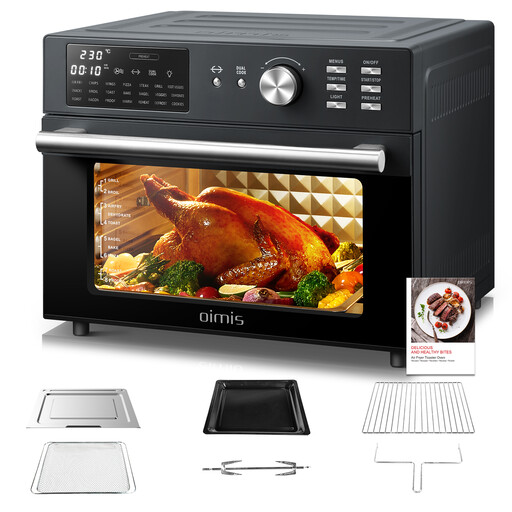
Consider this model if you want a countertop oven for several cooking tasks as well as oat bars. Its name specifies 21 presets, rotisserie and dehydrator functions, a 30L capacity and 1800W power.
Before relying on it for your bar recipe, confirm the temperature and timer controls, whether a suitable tray or rack is included, and whether your tin fits.
Measure your tin, the allocated worktop and the space needed to place and use the oven as its instructions require. Confirm the exact model’s usable rack or tray width and depth: a capacity stated in litres cannot establish whether your tin fits.
Only use one when the appliance instructions permit it and the oven and other simultaneous loads are within the lead’s rating. Electrical Safety First warns that ovens and grills can overload an extension lead when used with other large appliances; it describes a single socket as typically rated at 13 A, or about 3,000 W.
No: cleaning the oven alone cannot establish an allergen-free claim. Food Standards Scotland says cooking does not remove allergens, so ingredients, storage, utensils, trays, racks and preparation surfaces also need appropriate controls when preparing food for someone with an allergy.
If you operate as a food business, you must provide applicable allergen information and manage allergens during preparation. GOV.UK food-business guidance covers both prepacked and non-prepacked food; the labelling requirements depend on how the bars are packaged and sold, so follow the guidance for your particular product and sales arrangement.