Small-batch shared-kitchen bakers
If you bake carrot muffins occasionally and need to keep the communal worktop clear, a 19–20L oven is worth considering once you have confirmed that your tin fits.


Choose a mini oven only after checking that its rack or supplied tray will take your muffin tin and that the appliance can sit safely in the shared kitchen. A 19–20L model may suit small batches and limited worktop space; a 30–32L oven offers more capacity and may add hotplates, but those features are worth having only if you will use them and can accommodate the appliance.
If you bake carrot muffins occasionally and need to keep the communal worktop clear, a 19–20L oven is worth considering once you have confirmed that your tin fits.
A 30–32L oven may appeal if you want more tray room or will use features such as hotplates when the main cooker is busy. Check where the larger appliance can be placed and stored.
If you expect to use digital temperature settings and multiple cooking functions regularly, a 22L countertop oven is another route. Check the stated tray capacity against your own muffin tin.
Start with your muffin tin and the available worktop, then compare baking controls and any extra functions you would actually use.
| Concern | What to check when buying | Who this matters to |
|---|---|---|
| Muffin-tin fit and batch size | Measure the tin’s full outer dimensions, including handles, and compare them with the usable rack or tray dimensions. Litres alone do not establish fit. | If I already have a muffin tin, I need to know it will fit before choosing an oven by capacity. Around 31% of consumers put tin fit and batch size first. |
| Worktop space and placement | Check external dimensions, door opening and the exact model’s ventilation and placement instructions. | In a shared kitchen, I need enough preparation space left for everyone and a safe place to run the oven. For around 25% of consumers, shared-space fit is the primary concern. |
| Baking controls | Confirm that the temperature range covers your recipe, and check the timer, baking mode and rack-position guidance. | When I bake regularly, I want controls I can follow consistently rather than extra capacity I will not use. Baking control comes first for around 25% of consumers. |
| Extra functions and cleaning | Decide whether you will use hotplates or additional cooking modes; check the supplied accessories and cleaning instructions. | If the appliance will also handle other meals, those functions matter to me, provided I can manage the extra surfaces and cleaning. Around 19% of consumers primarily value that flexibility. |
Oven volume does not tell you the usable shelf width, tray shape or door clearance. Your existing muffin tin may need more room than the supplied tray provides.
Measure the tin’s outer dimensions and check them against the exact model’s rack or tray measurements before ordering.
Hotplates can help with other meals, but they add exposed hot surfaces and cleaning tasks in a space used by several people.
Choose an oven with hotplates if pan cooking is a regular need and everyone using the kitchen has an agreed place for the appliance.
A mini oven and its door can become hot. Nearby flammable materials or obstructed ventilation can make a shared worktop unsuitable.
Follow the exact model’s clearance and ventilation instructions, and keep paper, curtains and other flammable items away.
Carrot-muffin ingredients vary, and shared trays, utensils and surfaces can create allergen cross-contact.
Clean shared equipment and tell anyone eating the muffins what ingredients you used. For food-business use in England, Wales or Northern Ireland, follow the Food Standards Agency’s allergen-information and allergen-management guidance.
The Mini Kitchen 22780 is a 30L countertop route for households that would use both an oven and integrated hotplates.
The T14044 is a 32L oven with two hotplates for a shared kitchen that also needs pan cooking.
The 19L Optimo OF445840 is a compact convection route with a baking mode.
The 22L SOV860BSS4GUK1 is an option for frequent bakers who will use digital controls and several cooking functions.
The 20L Mini Oven and Grill is a simpler route for small batches where worktop dimensions matter.
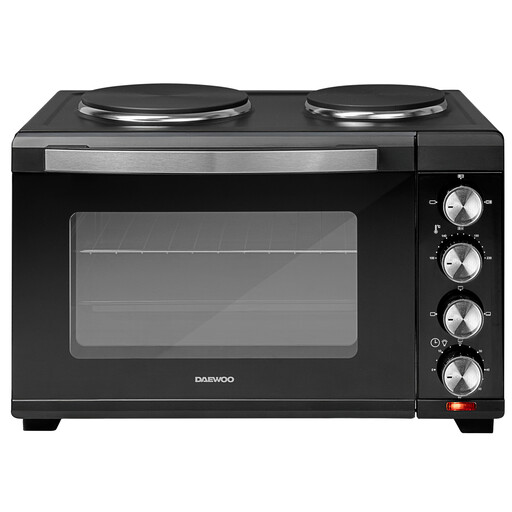
This 32L countertop option is most relevant if the shared kitchen needs pan cooking alongside an oven for muffins. Check its fit and safe placement before choosing it for a muffin-focused task.
 No image available
Consider this model if you need an oven for muffins and expect to use the hotplates for other meals.
The product name states 32L capacity and 3000W power. Check your muffin tin against the usable rack or tray dimensions, and follow the model’s placement instructions before using it on a shared worktop.
Choose by the fit of your muffin tin, not by litres alone. Measure the tin, including its handles, and compare it with the oven’s usable rack or tray dimensions before deciding whether a compact or larger model suits your batch.
A convection setting may be useful if you bake regularly, but it does not guarantee the same result as a full-size oven. Russell Hobbs describes fan assistance on its Mini Kitchen 22780, while Tefal specifies convection and baking modes for the Optimo OF445840; follow the chosen model’s instructions and your recipe when making a first batch.
You can use one if the person responsible for the kitchen permits it and you can follow the exact model’s electrical, placement and ventilation instructions. Agree where it will sit so other users do not block its vents or place flammable items nearby.
For personal baking, tell the people eating your muffins which ingredients you used and take care with shared equipment. If you supply muffins through a food business in England, Wales or Northern Ireland, the Food Standards Agency says food businesses must provide allergen information and manage allergens during preparation; seek guidance applicable to Scotland if that is where the business operates.