Small-batch cottage cooks
If the cottage already has a usable hob, an oven-only model lets you focus on a tray of sweet potatoes without adding cooking zones you do not need. Compare the oven’s exterior dimensions as well as its stated capacity.


For a small batch of sweet potatoes, a simple countertop oven is the more direct choice if the cottage already has a usable hob. An oven with hotplates makes more sense if you also need to cook sides, while a larger oven gives you more stated cavity space; either choice needs enough worktop room, suitable electrical provision and the host’s permission before use.
If the cottage already has a usable hob, an oven-only model lets you focus on a tray of sweet potatoes without adding cooking zones you do not need. Compare the oven’s exterior dimensions as well as its stated capacity.
If you need to roast sweet potatoes while preparing toppings or sides, a mini oven with hotplates could cover both tasks. Check how the appliance’s electrical rating and required space fit the cottage before relying on the extra functions.
A larger stated oven cavity may help when planning bigger portions or more of a meal, provided the appliance and its required clearances fit the worktop. The Tower T14045, for example, has a stated 42L capacity and model-specific clearance instructions.
Decide whether you need only an oven tray or separate hob cooking too. Then check where the appliance can sit and how it can be powered before comparing roasting controls.
| Concern | What to check | Who this matters to |
|---|---|---|
| Worktop fit and capacity | Measure usable width, depth and door-opening room, then allow for the exact model’s ventilation instructions. A litre figure alone cannot establish whether your tray or the appliance will fit. | If I have little preparation space, the oven needs to accommodate my planned batch without taking over the worktop; around 29% of consumers put fit and capacity first. |
| Electrical and fire-safe use | Check the appliance rating, the available socket and the host’s rules. Follow its placement instructions, avoid overloaded or daisy-chained extensions and remain present while cooking. | When the socket arrangement is unfamiliar, I need to know the oven can be placed and powered appropriately before considering extra functions; roughly 29% of consumers make safe use their primary concern. |
| Cooking a fuller meal | Check whether you need hotplates alongside the oven and whether the model permits the functions you plan to use together. | If the cottage cooker cannot handle sides or toppings, I want another cooking zone as well as a roasting tray; about 18% of consumers prioritise meal versatility. |
| Roasting controls | Look for a stated roast or bake function, adjustable temperature and a suitable tray or rack; check what is supplied with the exact model. | For sweet potatoes without a more elaborate meal, I would rather have straightforward oven controls than functions I will not use; around 24% of consumers put simple roasting first. |
A larger cavity also needs a suitable place to stand. The 42L Tower T14045 is listed as 55.5 cm wide, while its Joybuy instructions call for at least 20 cm clearance around the appliance.
Measure the available surface and surrounding space, then follow the clearance instructions for the exact model you intend to use.
The oven-only Igenix IG7131 is listed at 1500W, while the Morphy Richards 28L oven-with-hob is listed at 2850W. Those model ratings make socket and shared-load checks particularly important when considering the hob format.
Check the appliance rating and the cottage’s socket arrangement. Electrical Safety First advises against overloading or daisy-chaining extension leads.
Guidance for holiday-let owners in England concerns their responsibilities; it does not establish permission for a guest to use a personally supplied appliance in a particular cottage.
Check the booking terms and ask the host before bringing or using a countertop oven.
A timer does not replace supervision. Electrical Safety First advises against leaving food cooking unattended in ovens and grills.
Use the timer as a reminder, stay present while the oven is running and turn it off after use.
These brands have relevant countertop-oven models to compare; the features and limitations below concern the named models, not every oven each brand makes.
The IG7131 is an oven-only option for a cottage that already has a usable hob; Igenix also has mini-oven formats with hotplates.
The researched 28L model combines a fan-assisted oven and two hobs for meals that need more than a roasting tray.
The T14045 is a 42L oven-and-hotplate option to consider when more stated cavity space is needed.
The 22780 Mini Kitchen combines a 30L convection oven and double hotplate for cooking sides alongside a roast.
This oven-with-hotplates format is relevant if you want to roast sweet potatoes and need cooking zones for sides. Confirm that its size, electrical requirements and use are suitable for the cottage before choosing it.
 No image available
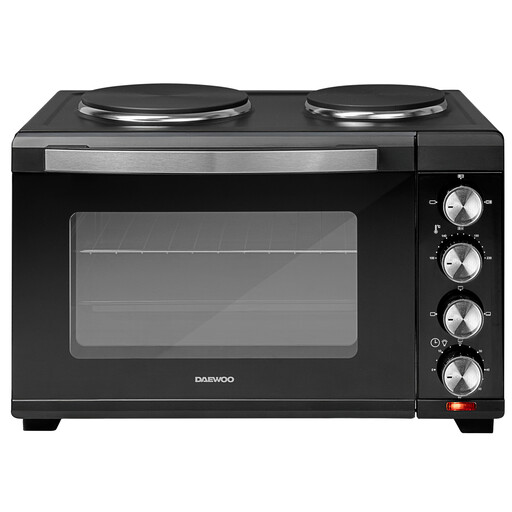
Consider this countertop oven-and-hotplate format if your cottage meal calls for a roasting tray and separate cooking zones for sides.
The product name states a 32L capacity and 3000W rating. Before use, check the exact instructions for placement and simultaneous-function requirements, and confirm that the host permits the appliance.
For a small batch when the cottage already has a usable hob, a 28–30L model is a starting point for comparison. If you need more stated cavity space, consider a larger model, but measure its exterior and check your tray and the required clearances rather than choosing by litres alone.
Only use an extension arrangement if it is correctly rated for the load and permitted for the appliance and property. Electrical Safety First warns that ovens and grills can overload extension leads, particularly when other high-load appliances share them; do not overload or daisy-chain leads.
Follow the instructions for your exact model rather than applying another oven’s clearance figure. The Joybuy instructions for the Tower T14045 specify at least 20 cm around that appliance, including above, behind and to the sides.
An owner should check the applicable fire- and electrical-safety requirements for their property and equipment. Government guidance for self-catering holiday homes in England addresses those responsibilities and directs owners of qualifying small paying-guest accommodation to the relevant fire-safety guide; it does not establish a blanket rule for guests’ own ovens.
No: a timer is a reminder, not a substitute for attending the appliance. Electrical Safety First advises against leaving food cooking unattended in ovens and grills; turn the oven off after use and let it cool before cleaning it according to its instructions.