Layer-cake bakers short on worktop space
If you want to make a coffee cake in a small kitchen, start by measuring your tin and available worktop. A compact oven may be workable if one layer fits and you are happy to bake the layers separately.


Choose a mini oven by checking your cake tins against its usable rack space, not by comparing litre capacities alone. Good Food’s coffee-and-walnut cake recipe uses two 20 cm tins at 180°C conventional or 160°C fan: a compact oven may suit you if you can bake the layers separately, while a larger, two-level oven is worth considering for frequent baking only after you have checked tin fit, worktop space and electrical requirements.
If you want to make a coffee cake in a small kitchen, start by measuring your tin and available worktop. A compact oven may be workable if one layer fits and you are happy to bake the layers separately.
If you also use a countertop oven for roasting, grilling or reheating, a larger multifunction model may justify its footprint. Check whether its rack positions accommodate your cake tins before relying on two-level cooking.
If the mini oven will be a regular appliance, check its plug, power requirements, ventilation clearances and position in the kitchen. Electrical Safety First advises particular care with plug-in ovens and grills and overloaded extension leads.
Good Food’s coffee-and-walnut cake recipe calls for two 20 cm tins and specifies 180°C conventional or 160°C fan. Check tin fit and the appropriate baking setting before deciding how much worktop space you can give the appliance.
| Concern | What to check | Who this matters to |
|---|---|---|
| Cake-tin fit | Compare your tin, including its clasp or handles, with usable rack width, depth and height. Check whether the rack layout takes one tin or two. | I want to know whether my cake layers will fit before choosing an oven by its litre capacity; around 42% of consumers put tin fit first. |
| Baking control | Check for a suitable baking mode and a thermostat range covering your recipe’s conventional or fan setting. Follow the model’s rack and preheating instructions. | If I bake sponge regularly, I need a mode and temperature setting I can use for the recipe; roughly 33% of consumers make baking control their primary concern. |
| Space and electrical setup | Measure the appliance and door-opening space, then check the manual’s clearances, power requirements and plug arrangement. | A small kitchen or limited socket arrangement makes the oven’s placement and power demands decisive; about 25% of consumers put these practical constraints first. |
A stated volume does not show the rack’s usable width, depth or height. Good Food’s coffee-and-walnut recipe uses two 20 cm springform tins, which may need to be baked separately in a compact oven.
Measure the tins, including their clasps, and compare them with the exact oven’s rack dimensions. Unless two-tin fit is established, plan for sequential baking.
A larger oven can offer more cooking options but needs room around and in front of the appliance. SharkNinja UK lists the Ninja DT200UK at 50.5 cm deep.
Measure the full footprint and door-opening space, and follow the model’s clearance instructions. If you bake cakes only occasionally, consider whether baking layers separately in a smaller oven suits your space better.
Electrical Safety First warns that plug-in ovens and grills can place substantial demand on an electrical connection, particularly when an extension lead is shared with other large appliances.
Check the oven’s power requirements and UK plug and fuse, and avoid an overloaded extension arrangement. Stop using the appliance if its plug or socket shows scorching or overheating.
Its DT200UK is a large multifunction countertop oven for people who want to bake alongside other cooking tasks.
Its EO12012 is a 12-litre compact oven to consider if you are prepared to bake cake layers separately.
Its countertop-oven range includes a 25-litre electric mini oven and grill for people considering a mid-size appliance.
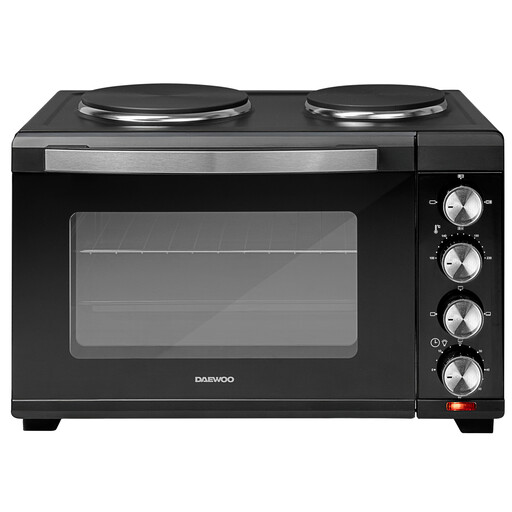
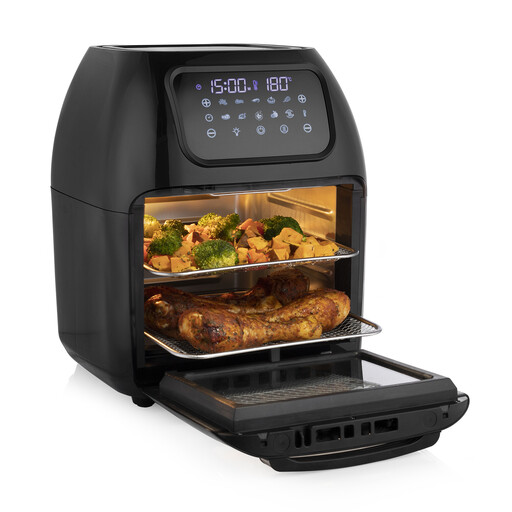
These countertop appliances offer different formats for someone considering a coffee-cake oven: a Daewoo oven with hotplates and a Tristar air fryer oven. Before choosing either, check the cake-tin clearance and baking instructions for the exact model.
 No image available
Consider this countertop format if you also want hotplates, but check that your cake tin fits the oven’s usable rack space. The stated 3000 W is for the oven and hotplates together, not an oven-only power figure; check the plug, installation clearances and electrical requirements before use.
 No image available
If you are considering an air fryer oven for a single cake layer, check that its baking instructions and usable rack space suit your tin. This 10 L model has a stated 1800 W rating, touchscreen controls and 10 programmes; follow its clearance and electrical instructions when placing it.
Choose by usable rack dimensions rather than litres alone. Good Food’s coffee-and-walnut recipe uses two 20 cm springform tins; compare their full width and height with the oven’s rack space, and plan to bake the layers separately unless both tins are confirmed to fit.
The setting depends on the recipe and the oven mode: Good Food’s coffee-and-walnut recipe specifies 180°C conventional or 160°C fan. Check that the model’s thermostat covers the setting you intend to use, then follow its instructions for mode, rack position and preheating.
A 12-litre oven may work for one layer if the tin and risen cake have enough clearance. De'Longhi lists a 26 cm maximum round plate and a 100–220°C thermostat range for its EO12012, but those figures do not establish that two 20 cm cake tins fit together.
Check its power requirements, plug and fuse, and follow its installation clearances. Electrical Safety First says plug-in ovens and grills must have a UK three-pin plug and fuse; avoid overloading an extension lead with other large appliances, and stop use if a plug or socket shows scorching or overheating.