For browser-based cycle-route planning and occasional QGIS work, start with a mini PC whose supplied operating system supports your mapping tools. If limited sockets are the main constraint, check whether the exact computer accepts USB-C Power Delivery (PD) input and what charger it requires; a USB-C port alone does not establish that it can power the PC. Raspberry Pi 5 is a compact Linux-based alternative if you are willing to configure the desktop, but it still needs a suitable power connection.
Who these setups suit
Browser-route planners with a crowded desk
You mainly plan routes in a browser, save GPX files and need room for a display and everyday peripherals. A compact desktop is worth considering, but its size does not tell you how many power connections the whole desk needs.
Occasional QGIS and offline-map users
You want to work with route-related map data locally as well as plan in a browser. Check operating-system compatibility and the chosen configuration’s memory and storage against the files and applications you expect to use.
Linux tinkerers prioritising compact hardware
You are comfortable configuring a Raspberry Pi-based desktop, including its power supply and any storage accessories you need, rather than buying a preconfigured conventional PC.
What matters when choosing
Decide which mapping software you will use, then plan power for the PC and monitor together before comparing ports and storage.
| Concern |
What to check |
Who this matters to |
| Power and sockets |
Check the exact power input, any required PD wattage, the included supply and how the monitor is powered. |
If my desk has few free sockets, I need to know whether a charger already in use can power the computer without overlooking the monitor. Roughly 40% of consumers put the power arrangement first. |
| Mapping software |
Confirm the supplied operating system, memory and storage configuration, particularly if the unit is barebone. |
When I move from browser routes to editing local map data, I need a computer that runs my chosen software and accommodates my working files. For roughly 30% of consumers, mapping capability is the primary concern. |
| Desk connections |
Count the display and USB connections your devices need; check storage expansion if you expect local files to grow. |
I need my display, input devices and route-file storage connected without making the desk harder to use. Connections and storage are the first priority for roughly 30% of consumers. |
Buying pitfalls
-
Assuming every USB-C port accepts power
USB-C may be used for data, display output or power input, depending on the model. MINISFORUM UK explicitly specifies 65–100W PD input for the M1 Lite; the connector shape alone cannot establish the same capability on another PC.
Check the exact model’s PD-input wording, accepted wattage, included charger and whether PD use affects another port you need.
A separately obtained compatible charger may be needed for your planned setup.
-
Counting the computer’s plug but not the monitor’s
A compact PC can still sit alongside a separately powered monitor, storage device or charging phone. Extra display and USB ports help with connections, not necessarily with socket availability.
Draw up the complete desk arrangement, including PC and monitor power, before deciding whether a different power input solves your socket bottleneck.
-
Treating processor power ratings as electricity use
A processor rating or power-supply specification is not a measured wall-power figure for a complete mapping setup. Ofgem also notes that household electricity unit rates vary by location.
If electricity use affects your choice, look for wall-power measurements of the exact configuration and assess them against your own tariff.
-
Assuming a barebone unit is ready to use
A barebone configuration may require you to supply and install components or an operating system. The MINISFORUM M1 Lite listing includes an option without an OS licence; Raspberry Pi M.2 storage expansion requires an additional HAT or adapter, according to Raspberry Pi.
Compare complete working setups, including the operating system, memory, storage, power supply and any required case or cooling.
Installation and assembly also take time if you need a working mapping desk straight away.
Brands to consider
GEEKOM
The Air12 Lite is an example of a Windows mini PC to assess for browser route planning and lighter desktop work.
- GEEKOM UK lists Windows 11 Pro, two 4K display outputs and six USB ports for the Air12 Lite.
- Check whether its selected memory and storage configuration fits your local map files; display connectivity does not resolve monitor power.
MINISFORUM
The M1 Lite is relevant when a specified USB-C power input or later memory and storage expansion affects the choice.
- MINISFORUM UK lists 65–100W USB-C PD input, two M.2 slots and memory support up to 96GB for the M1 Lite.
- Check the exact configuration before ordering: its barebone option does not include an OS licence, and the intended charger must meet the input requirements.
Raspberry Pi
Raspberry Pi 5 is a compact Linux-oriented route for people prepared to assemble and maintain their own desktop setup.
- Raspberry Pi specifies USB-C power for Raspberry Pi 5 and documents an M.2 HAT for adding M.2 storage through its PCIe connector.
- It still needs suitable power; check the storage, case, cooling and peripherals required for your intended setup.
Joybuy product choices
These choices include Windows-labelled SOYO mini PCs and an ASUS desktop with NVIDIA DGX OS. Compare the software and power arrangements of the exact configuration with your route-planning desk before choosing.
 No image available
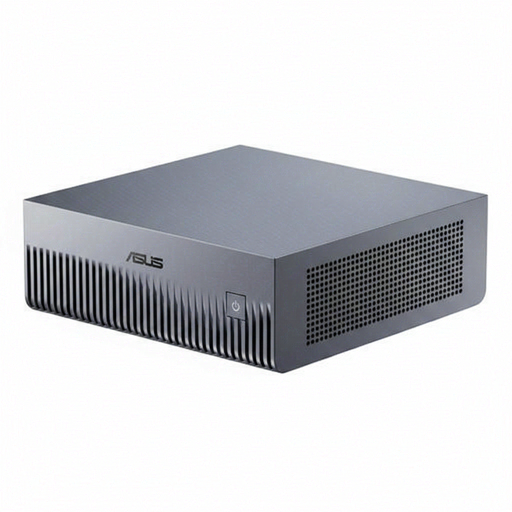
ASUS Ascent GX10 NVIDIA GB10, 128GB, 1TB, NVIDIA DGX OS
Consider this desktop only if its NVIDIA DGX OS setup supports the mapping software you intend to use and you have a reason for its AI-focused configuration.
The title specifies NVIDIA GB10 Grace Blackwell, 128GB unified memory and a 1TB NVMe SSD.
If you plan to use USB-C power, confirm the required charger and whether a compatible supply is included; account separately for monitor power.
View on Joybuy
 No image available
SOYO S5Air AMD Ryzen 5 7535HS, 16GB, 512GB, Windows 11 Pro
This Windows-labelled mini PC is a choice to assess for browser route planning and optional QGIS use.
Its title specifies a Ryzen 5 7535HS processor, 16GB LPDDR5 memory and a 512GB NVMe SSD.
Check its power input and included supply before relying on a shared charger or allocating desk sockets.
View on Joybuy
 No image available
SOYO S4PLUS Ryzen 7 H 255, 24GB, 512GB, W11
If you expect to keep mapping software, browser tabs and local route files open together, compare this configuration with the demands of those applications.
The title specifies 24GB LPDDR5 memory, a 512GB PCIe 3.0 SSD, six USB 3.2 ports and a 2.5G LAN connection.
Confirm the supplied operating-system version, power input and included supply for your intended setup.
View on Joybuy
 No image available
SOYO M5 AMD Ryzen 4300U, 16GB, 512GB, Win11
This Windows-labelled model is worth assessing if your route-planning desk needs several display connections.
Its title specifies 16GB LPDDR4 memory, a 512GB SSD and HDMI 2.0, Type-C and DisplayPort 1.4 display connections.
Do not assume the Type-C connection accepts power: check the exact power input and included supply before planning socket use.
View on Joybuy
Common questions
Can a mini PC run QGIS for cycle-route mapping?
Yes, if its operating system and configuration meet the requirements of the QGIS version and mapping work you intend to use. QGIS provides Windows and Linux downloads and describes its Long Term Release as intended for users who value stability over the newest features; check your own datasets and plugins before choosing hardware.
Can any USB-C mini PC run from a USB-C charger?
No: the exact model must specify USB-C PD input, and the charger must meet its requirements. MINISFORUM UK lists 65–100W PD input for the M1 Lite, but a USB-C or USB4 port on another model does not establish power-input support.
Does Raspberry Pi 5 eliminate the need for a plug socket?
No. Raspberry Pi specifies 5V/5A USB-C power for Raspberry Pi 5 and recommends a suitable supply, such as its 27W USB-C supply. Plan a reliable power connection for the board and check the monitor’s power separately.


