What matters when choosing?
Start with the Linux setup you intend to use, then decide whether your main priority is a straightforward installation, capacity for local labs or room to change the hardware. For Ubuntu Desktop, Canonical specifies at least 25 GB of storage for installation; that figure is a starting floor, not a capacity target for virtual machines or project files.
| Concern |
What to check |
Who this matters to |
| Linux compatibility |
Check the exact configuration against Ubuntu Certified listings. Otherwise, boot a live USB and try the hardware you need, including networking, display and audio. |
I want to spend my first sessions learning Linux rather than resolving hardware problems. Around 31% of consumers put compatibility certainty first. |
| VM and container capacity |
Confirm the installed RAM and SSD capacity, available expansion slots and the firmware settings needed for your planned virtualisation setup. |
If I will run several local services or virtual machines, I need enough resources for that workload. Capacity is the primary concern for around 31% of consumers. |
| Home-lab expansion |
Check whether the unit is barebone or complete and which CPU configuration supports the storage layout you want. |
I want to select components and add drives as my lab develops, even if setup takes more work. Around 23% of consumers prioritise expansion. |
| Simple desktop practice |
Confirm what memory and storage are installed and whether you have suitable installation media. Canonical recommends a flash drive of at least 12 GB for its Ubuntu installation workflow. |
For terminal practice and one installed desktop, I would rather start with a complete machine than plan a larger lab. Simplicity comes first for around 15% of consumers. |
Joybuy products for this topic
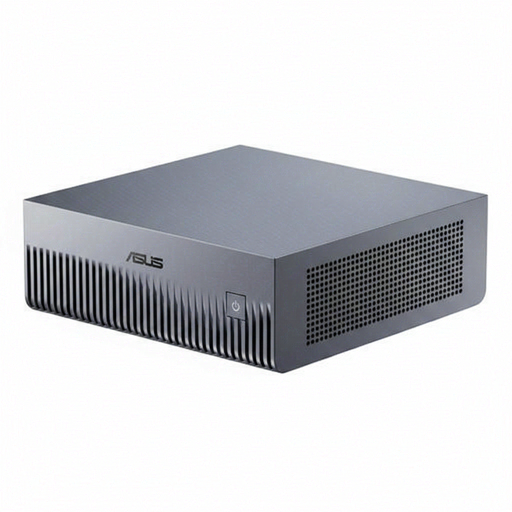
The ASUS system below is a specialised Linux-based AI-development desktop to consider if that environment is part of your learning plan. Check its software and power requirements before treating it as a substitute for a conventional first Ubuntu installation.
 No image available
ASUS Ascent GX10 1TB, NVIDIA GB10 Grace Blackwell
Consider this system if your Linux practice specifically involves NVIDIA DGX OS and AI-development tools, rather than assuming it will suit a general desktop course.
The named configuration has 128 GB unified memory, a 1 TB NVMe SSD and NVIDIA DGX OS. Confirm that your intended distribution, course software and applications work with this platform.
Before ordering, confirm the supplied power arrangement is suitable for UK use and meets the stated 180 W EPR USB-C requirement.
View on Joybuy
Frequently asked questions
How can I check a mini PC before installing Linux?
Check whether the exact configuration appears in Canonical’s Ubuntu Certified listings, then use a live Ubuntu USB to try the hardware that matters to you. Canonical says the live session does not change the computer’s existing configuration; its installation guide recommends a flash drive of at least 12 GB.
Is 25 GB enough storage for learning Linux?
It meets Canonical’s stated minimum storage space for an Ubuntu Desktop installation, but it is not a target for a VM or container lab. If you plan to keep project files, multiple systems or snapshots locally, compare the installed SSD capacity and available expansion with those plans.
What should I check when choosing a barebone MS-A1?
Check every component included in the selected configuration before treating the Minisforum MS-A1 as a complete Linux machine. Minisforum describes a barebone option without a CPU or operating-system licence, and its four-NVMe-drive layout depends on the CPU architecture.
Does a pre-installed Windows system establish Linux support?
No. A Windows installation does not establish Ubuntu certification or how the exact hardware will behave with Linux. Check Canonical’s configuration-specific listings where applicable, or try the unit from a live USB before changing its installed system.
What should I check for a UK delivery?
Confirm the delivery region, the supplied power arrangement and the product’s applicable electrical-compliance information with the seller. UK government guidance addresses electrical equipment for Great Britain and Northern Ireland separately, so do not assume that a conclusion for one applies unchanged to the other.


