Shared-office observation reviewers
People opening plant images, labelling records and using browser or cloud classification tools need a workstation that connects to their displays, network and input devices.


For reviewing and labelling plant images through browser or cloud tools, start with a configured office mini PC that fits the shared workstation. A configurable kit suits an IT team that needs to choose its own operating system, memory and storage; an AI-oriented system is worth considering when classification must run locally and the chosen software can use its hardware. Test the intended model and representative images before treating any processor or AI specification as sufficient.
People opening plant images, labelling records and using browser or cloud classification tools need a workstation that connects to their displays, network and input devices.
People running a classification model on the mini PC need to check memory, software compatibility and performance with their own images and workload.
Those deploying a shared workstation need to plan operating-system setup, access to stored records, network connections, physical placement and eventual disposal.
Establish whether classification happens in a browser, in the cloud or on the mini PC. That decision determines which software, configuration and deployment checks matter most.
Consider when: The office mainly reviews and labels images or uses browser and cloud tools, and wants an operating system already installed.
Trade-off: An installed operating system reduces initial setup, but processor, memory and storage still vary by configuration.
Consider when: IT needs to select the operating system, memory and storage for a managed shared workstation.
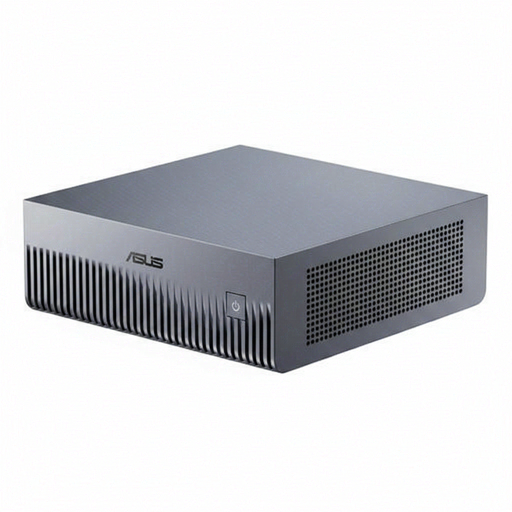
Trade-off: A kit may need components and installation before anyone can use it; ASUS lists its NUC 15 Pro+ without an operating system, memory or storage at shipment.
Consider when: Classification must run locally, or the planned work calls for additional storage and network connections.
Trade-off: AI hardware specifications do not establish whether the chosen plant-classification software can use that hardware or meet the required processing time.
| Concern | What to check | Who this matters to |
|---|---|---|
| Local classification | Confirm the model and runtime’s supported CPU, GPU or NPU path; test representative images and simultaneous tasks. | If classification must run on the device, I need it to handle my actual images rather than rely on an AI label. Around 33% of consumers put local processing first. |
| Shared workstation connections | Check the exact model’s display outputs, peripheral ports and wired-network connection against the desk setup. | When colleagues share screens and image-ingestion equipment, I want each session to start without reconnecting devices. Shared-workstation connections come first for around 27% of consumers. |
| Access and data handling | Check operating-system support, account controls and the planned protection of locally stored records. | If several people use the PC, I need to know who can open observation files and how access is managed. Around 20% of consumers prioritise controlled shared use. |
| Configuration and expansion | Confirm what the exact variant includes and whether its memory or storage options match expected needs. | I would rather choose the components the office will use than mistake a barebone kit for a configured PC. Configuration and expansion are the primary concern for around 20% of consumers. |
An NPU specification cannot tell you whether your classification application will use it. AMD’s Ryzen AI documentation describes distinct software paths for its NPU and integrated GPU.
Confirm the application’s supported runtime and hardware backend, then test the intended model with representative plant images.
ASUS lists the NUC 15 Pro+ without an operating system, memory or storage at shipment, while MINISFORUM lists both barebone and configured AI X1 Pro-470 variants.
Check the exact variant’s contents and plan any required components, operating-system installation and support before ordering.
A compact computer does not resolve screen positioning, input-device placement or cable routing. The Health and Safety Executive says employers must assess workstations for qualifying display-screen-equipment users.
Plan the monitor, keyboard, mouse, seating and device placement together, and complete the applicable workstation assessment.
Whether photographs or linked records are personal data depends on how they are used and whether people can be identified, as the Information Commissioner’s Office explains.
Set access permissions and local-storage rules before deployment; decide who manages encryption recovery keys and seek organisational data-protection advice where records may identify people.
These ranges illustrate different configuration approaches; check the exact model and variant against the office workload.
Business-oriented mini PCs and kits for offices selecting their own connections and configuration.
Mini PCs with local-processing and expansion options for buyers who can specify their software requirements.
Preconfigured mini PCs for offices considering a Windows-based starting point.
These compact computers cover different starting points for a shared office, from a listed Windows configuration to systems worth examining for local processing. Check the intended classification software and workstation requirements before choosing a configuration.
 No image available
Consider this for a technical team planning local classification, provided its application and office tools work with NVIDIA DGX OS.
 No image available
Consider this configuration if the shared desk needs the listed display and wired-network connections; confirm its operating system and setup requirements.
 No image available
This listed Windows configuration is a starting point for an office reviewing and labelling images; check that it fits the organisation’s device-management setup.
 No image available
Consider this model where local image storage or multiple displays matter, while checking the operating system and the classification application’s hardware support.
 No image available
Consider this compact computer if the office’s classification application, peripherals and management tools work with macOS.
It may: the Health and Safety Executive says employers must assess workstations for workers who use display screen equipment daily as part of normal work, continuously for an hour or more. Assess the screens, input devices, work conditions and tasks, not just the mini PC.
Check the exact configuration against Microsoft’s Windows 11 requirements, including UEFI firmware capable of Secure Boot and TPM 2.0. If using Windows 11 Home, Microsoft also lists internet connectivity and a Microsoft account for first-time setup; confirm the organisation’s deployment and management requirements.
No. The Information Commissioner’s Office explains that whether information is personal data can depend on an organisation’s purpose for processing it. Check whether photos, locations or linked records identify people, or make them identifiable, in the office’s use case.
A barebone model may need components and setup first. ASUS lists the NUC 15 Pro+ without an operating system, memory or storage at shipment, and MINISFORUM offers both barebone and configured AI X1 Pro-470 variants. Confirm the contents and support arrangements for the exact version you intend to order.