What matters when choosing?
Identify the classification application and where it will run before deciding how much memory, storage or graphics hardware to buy. Then map the monitor, camera and other devices onto the exact PC configuration.
| Concern | Buying checks | Who this matters to |
|---|
| Local inference compatibility |
Check the application, model format, operating system and supported CPU, GPU or NPU backend. Intel’s OpenVINO NPU documentation specifies an NPU driver and supported Windows 11 or Ubuntu 22.04 environments. |
If I need to classify images locally, I want the intended model to run on the hardware I choose, not merely a PC labelled for AI. Around 45% of consumers could put confirmed local-inference compatibility first. |
| Storage and desk connections |
Compare included RAM and SSD capacity with upgrade options; check display outputs, camera and peripheral ports, and mount compatibility for the exact configuration. |
As my image archive grows, I need room for files and open applications without making the moving desk awkward to connect. For roughly 33% of consumers, expansion and workspace connectivity could be the primary concern. |
| Tested graphics workflow |
Confirm the selected GPU and your software’s supported framework and backend, then check the system’s physical size and display connections. |
When my work extends to a vision or training pipeline, I need graphics hardware that the pipeline has actually been tested to use. Approximately 22% of consumers could prioritise that requirement. |
Brands to consider
These product lines illustrate different hardware routes; their specifications do not establish how quickly your particular plant classifier will run.
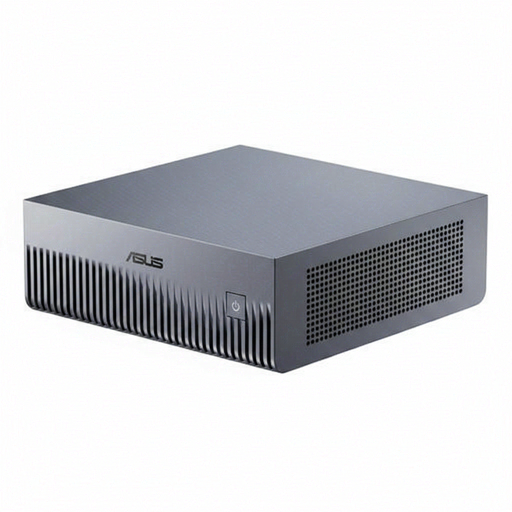
ASUS
The NUC 14 Pro is a compact Intel Core Ultra option for a workflow that has a confirmed compatible software path.
- ASUS describes a chassis under one litre with tool-less access and configurations offering Intel Arc graphics and an NPU.
- Processor features and business-management options vary by model; check the selected memory, storage and classifier compatibility.
GEEKOM
The IT13 Max offers an Intel Core Ultra route with connections and mounting options relevant to a standing desk.
- GEEKOM lists a Core Ultra 9 185H, dual USB4 and VESA compatibility for the IT13 Max.
- Check the exact memory variant, mount and software backend; those specifications do not establish classifier performance.
Minisforum
The UM890 Pro is relevant when replaceable memory, SSD expansion and wired connections take priority.
- Minisforum lists two DDR5 memory slots, two M.2 2280 PCIe 4.0 SSD slots, dual USB4 and dual 2.5Gb Ethernet.
- A listed barebone variant excludes an operating-system licence; confirm what your chosen configuration includes and how it will be delivered.
Lenovo
The ThinkCentre Neo Ultra is a compact-workstation option if your software has a tested need for a discrete NVIDIA GPU.
- Lenovo specifies a 3.6-litre chassis with configurations up to an NVIDIA GeForce RTX 4060.
- The GPU, memory and management features depend on the selected configuration; the stated maximum is not a specification for every unit.
Apple
Mac mini is a compact macOS option when the classification application, model runtime and camera workflow support Apple silicon.
- Apple’s UK specifications describe configurable unified memory and support for up to three external displays, depending on configuration.
- Intel’s documented OpenVINO NPU path applies to specified Intel systems and operating systems; it does not establish an equivalent route on Apple silicon.
Joybuy product choices
These compact desktop choices offer different memory, storage and connection configurations for a standing-desk setup. Match any of them to your classification software and camera workflow before choosing.
 No image available
ASUS Ascent GX10 NVIDIA GB10 Grace Blackwell, 128GB, 1TB, DGX OS
Consider this compact local-AI desktop only after checking that your plant-classification application and model runtime work with its NVIDIA hardware and DGX OS.
The product name specifies 128GB unified memory and a 1TB NVMe SSD. Check whether the memory can be changed and what power equipment is supplied.
View on Joybuy
 No image available
Lenovo IdeaCentre Mini PC 01IRH10R, 91B2000XUK, Core 5, 16GB, 512GB
This mini PC is an option for desk-based observation work if its operating system and connections meet your application, monitor and camera requirements.
The listed variant has an Intel Core 5 processor, 16GB RAM and a 512GB SSD. Assess the memory and storage against your model and image archive rather than assuming they will be sufficient.
View on Joybuy
 No image available
FIREBAT A8 Ryzen AI 9 365, 24GB DDR5, 1TB PCIe 4.0 SSD
This mini PC may suit a setup needing local file storage and several desk connections, provided the chosen classifier supports its operating system and hardware.
The product name lists Radeon 880M graphics, USB4 and OCuLink alongside 24GB DDR5 memory and a 1TB PCIe 4.0 SSD. Check display connections and mounting requirements for your desk.
View on Joybuy
Common questions
Do I need an NPU to classify plant images?
No: an NPU matters only if your chosen application and model runtime can use it. Intel’s OpenVINO documentation describes an NPU path for Intel Core Ultra systems under specified Windows 11 or Ubuntu 22.04 conditions, with an NPU driver required. Confirm those requirements for your actual classifier before making the NPU a buying condition.
How much memory and storage should I choose?
Choose memory and storage for your application, model, image library and other programs rather than relying on a universal figure. Check the capacity included in the exact PC you order and, if you expect the archive to grow, whether that model has documented upgrade slots. Minisforum, for example, lists two memory and two M.2 SSD slots for the UM890 Pro.
Can I mount a mini PC behind a standing-desk monitor?
Yes, if the selected PC and mount are compatible and the position leaves adequate ventilation and access to ports. GEEKOM lists VESA compatibility for the IT13 Max, but check the bracket and monitor mount for your exact setup, including cable slack throughout the desk’s height range.
What should I do if the delivered mini PC is faulty or not as described?
Contact the seller and keep the order details, listing and exact configuration you were supplied. Citizens Advice explains that broken, unusable or misdescribed goods can give rise to legal rights; those rights are distinct from a retailer’s voluntary change-of-mind policy.


