For a camera-and-sensor observation station that you are willing to assemble, consider a Raspberry Pi 5 and check that your classifier supports Arm and Linux. For importing and classifying photos at a desk, an x86 mini PC offers a more conventional Windows or Linux route; choose accelerator-focused hardware only after confirming that your particular model and software can use it. Neither an NPU specification nor a memory figure predicts plant-classification results on its own.
Who each setup suits
Field-observation node builders
If your station needs a camera and possibly sensors, you may value direct hardware connections more than a ready-made desktop. Raspberry Pi identifies MIPI camera/display connectors and a 40-pin GPIO header on the Raspberry Pi 5; this route also calls for Linux setup and separately selected accessories.
Desktop photo-classification users
If you bring photos in from a phone, camera or SD card, look for a desktop operating system that runs your classifier, enough installed storage for your collection and the connections you actually use. Check the delivered configuration rather than assuming every mini PC arrives with the same components.
Local-model experimenters
If you plan to try several models or work with a larger local photo collection, consider memory, storage and the execution backend together. An advertised accelerator matters only if your chosen framework and model can use it.
What matters when choosing
Choose the observation workflow before comparing processors: a connected camera station, a photo-importing desktop and a local-model development machine place different demands on the computer.
Single-board camera node
Consider it when: You want to build a Linux observation station with a compatible camera or sensors connected directly to the board.
Accept that: Raspberry Pi 5 is a board-level platform, so the complete build needs separately planned components and an Arm-compatible software stack.
x86 desktop mini PC
Consider it when: You mainly organise and classify imported photos in a Windows or Linux desktop workflow.
Accept that: Some models are kits rather than configured computers; ASUS, for example, specifies NUC 15 Pro+ kit configurations without an installed operating system, memory or storage.
AI-oriented x86 mini PC
Consider it when: You expect to keep substantial photo collections locally or experiment with models that have a compatible accelerator backend.
Accept that: Manufacturer memory, I/O and accelerator specifications are not benchmarks for your plant classifier.
| Concern |
What to check |
Who this matters to |
| Local model compatibility |
Check the classifier’s operating system and CPU architecture requirements, then confirm which CPU, GPU or NPU backend can run its model format. |
If I need classification to run locally, I want my chosen software to work before I select hardware for its accelerator. Around 36% of consumers put local model compatibility first. |
| Camera and sensor integration |
List the camera interface and sensor connections you need; check the matching ports, power arrangement and any adapters. |
For a fixed observation station, I need the camera and sensors to connect to the finished build. Camera and field integration come first for around 29% of consumers. |
| Photos and desktop workflow |
Check installed RAM and storage, available expansion and the method you will use to import photos. |
As my observation collection grows, I want room to store and review photos without changing my working setup. Around 21% of consumers prioritise the desktop and storage workflow. |
| Delivered configuration |
Confirm the exact model’s installed components, operating system, power accessories and support terms. |
If I want to start setting up the classifier rather than assemble a computer, I need to know what arrives with it. A complete, supportable system is the primary concern for around 14% of consumers. |
Mistakes to avoid
-
Assuming an NPU figure predicts classification results
Plant-recognition research published in Frontiers in Plant Science examines different model approaches, while TensorFlow documents execution choices that differ between CPU and GPU use. A hardware figure alone does not establish how your classifier will run or how accurately it will identify a plant.
Choose the model and runtime first. Look for compatibility information or a benchmark using the intended model, image resolution and execution backend.
-
Treating every mini-PC kit as ready to use
ASUS specifies NUC 15 Pro+ kit configurations without a preinstalled operating system, memory or storage. The work needed to make a kit usable differs from that for a configured desktop.
Check the exact delivered configuration, including installed RAM, storage, operating system and required peripherals.
A kit may also require component installation and operating-system setup before you can install the classifier.
-
Treating a Raspberry Pi board as a finished field station
Raspberry Pi lists separate accessories for Raspberry Pi 5 uses involving M.2 storage, PoE+ or additional cooling. The board’s camera and GPIO connections do not, by themselves, complete an observation setup.
Plan the camera, storage, power, cooling, enclosure and mounting alongside the board, selecting accessories for your actual installation.
-
Accepting a classifier label as a definitive identification
Plant-recognition results depend on the model and the images used to evaluate it. A label should not replace review when an observation record matters.
Keep the original photo and observation details, review alternative labels where the software offers them, and seek expert identification for consequential records.
Brands to consider for these routes
Raspberry Pi
A single-board option for builders who want to integrate a camera or sensors into a Linux observation station.
- Raspberry Pi specifies two interchangeable MIPI camera/display connectors, GPIO and Gigabit Ethernet for Raspberry Pi 5.
- It is not a complete conventional mini PC; plan the required power, storage and other accessories for the build.
ASUS NUC
An x86 mini-PC route for a desktop classifier and buyers considering configurable systems.
- ASUS specifies CPU, GPU and NPU engines for the NUC 14 Pro and memory and storage expansion options for the NUC 15 Pro+.
- Check the particular model and configuration: some NUC kits ship without an operating system, memory or storage.
Minisforum
An option to examine if a local photo or model-development setup calls for multiple storage drives and external connections.
- Minisforum lists three M.2 NVMe slots, USB4 and OCuLink for the AI X1 Pro-370.
- Its published AI specifications do not establish performance or accelerator compatibility for a particular plant classifier.
GEEKOM
A desktop mini-PC option to compare when memory expansion and photo-import connections matter.
- GEEKOM lists upgradeable DDR5 memory, two NVMe slots and an SD reader for the A9 Max.
- Confirm the exact configuration and your classifier’s software support; the manufacturer specifications are not plant-inference benchmarks.
Joybuy product choices
These compact desktop computers are choices to examine for imported-photo workflows or local-model experiments. Compare each one with your classifier’s operating-system and runtime requirements; the board-level camera-node route requires a different build.
 No image available
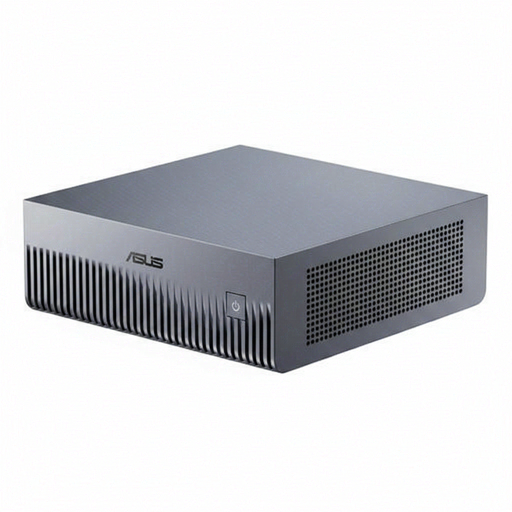
ASUS Ascent GX10, NVIDIA GB10, 128GB/1TB, DGX OS
Consider this compact desktop for a local-model project only after confirming that your classifier and dependencies support its Arm processor, NVIDIA DGX OS and intended execution backend.
The listed configuration has 128GB unified memory and a 1TB NVMe SSD. Check whether a compatible 180W USB-C power source comes with the delivered system.
View on Joybuy
 No image available
SOYO M5, Ryzen 4300U, 16GB/512GB, Win11
This Windows desktop configuration is relevant if you import observation photos and your classifier supports Windows 11.
Its listed configuration has a Ryzen 4300U, 16GB LPDDR4 memory and a 512GB SSD. Check memory-upgrade options if your project may grow.
View on Joybuy
 No image available
FIREBAT F1, Ryzen 5 7640HS, 24GB/512GB
Consider this compact desktop for organising and classifying imported photos after checking its operating system against your software.
The listed configuration includes 24GB LPDDR5 memory, a 512GB PCIe 4.0 SSD, USB4 and 2.5G Ethernet. Confirm whether the memory can be upgraded if that affects your choice.
View on Joybuy
 No image available
FIREBAT A8, Ryzen AI 9 365, 24GB/1TB
This desktop is worth examining if local photo storage and peripheral connections matter, but choose it for accelerator use only if your classifier supports the relevant execution path.
Its listed configuration has 24GB DDR5 memory, a 1TB PCIe 4.0 SSD, USB4 and OCuLink. Confirm the installed operating system and expansion options for the exact configuration.
View on Joybuy
Questions about plant-classification PCs
Will an NPU figure tell me how fast plant classification will run?
No: an NPU figure is not a benchmark for your classifier. Confirm that its model format and runtime support the intended accelerator, then look for a test using your model, image resolution and batch size. TensorFlow’s guidance also distinguishes execution choices for CPU and GPU workloads.
Can a Raspberry Pi 5 form the basis of a camera observation station?
Yes, if your chosen camera connection and classifier are compatible with the Raspberry Pi 5 and its Arm/Linux environment. Raspberry Pi specifies MIPI camera/display connectors; plan power, storage and any cooling or other accessories needed for your particular build.
Does an ASUS NUC kit arrive ready to classify photos?
Not necessarily: ASUS specifies NUC 15 Pro+ kit configurations without a preinstalled operating system, memory or storage. Check the exact configuration you are ordering and allow for installation and classifier setup where needed.


