What matters when choosing?
Decide whether you will classify saved photos, process a live feed or train a model, then check the software requirements before comparing hardware labels.
| Concern |
What to check |
Who this matters to |
| Saved photos and batches |
Check fitted memory and SSD capacity against your application, photo library and locally stored project files. |
If I organise plant photos and run short classification sessions, I want room for the files and my usual office tasks. Around 50% of consumers put saved-photo and batch work first. |
| Live camera input |
Confirm that the application accepts your camera or stream and that the required capture, display and network connections are present. |
When I observe plants through a live camera, I need the feed to work with my chosen application while my display stays connected. Live input is the main concern for around 20% of consumers. |
| Training and CUDA |
Check the framework’s hardware backend; a CUDA-dependent setup needs a compatible NVIDIA GPU and software installation. |
If I repeatedly train my own classifier, I need hardware that matches the computing backend I intend to use. Around 30% of consumers prioritise custom training or CUDA-dependent work. |
Joybuy product choices
These choices include two mini PCs for assessing local photo-classification setups and a more specialised desktop AI system for a buyer who intends to check its software and setup requirements. Choose by your actual application and workload, not by the presence of an AI label.
 No image available
FIREBAT A8 mini PC, Ryzen AI 9 365, 24GB DDR5, 1TB SSD
Consider this configuration for a local photo collection if its operating system and your classifier are compatible.
The listed configuration has Radeon 880M graphics, a 1TB PCIe 4.0 SSD, USB4 and OCuLink. If you intend to use OCuLink for graphics expansion, check the complete external-GPU setup before relying on it.
View on Joybuy
 No image available
SOYO M5 mini PC, Ryzen 4300U, 16GB LPDDR4, 512GB SSD
For short local photo sessions, assess this Windows 11 configuration against your classifier and the size of the files you expect to keep locally.
The listed model includes HDMI, Type-C and DisplayPort display connections. Check whether its fitted memory and storage meet your needs, and whether the memory can be upgraded if that matters to you.
View on Joybuy
 No image available
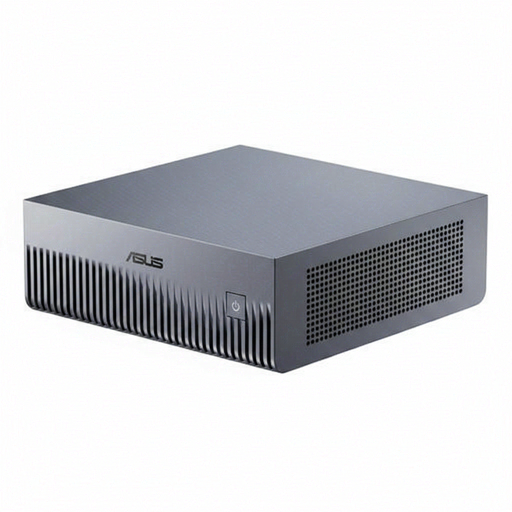
ASUS Ascent GX10, NVIDIA GB10, 128GB unified memory, 1TB NVMe SSD
This specialised desktop AI system is a consideration for local development only if your classifier and any camera workflow support its NVIDIA DGX OS environment.
The listed configuration uses a GB10 Grace Blackwell system. Check the required power source and your installation requirements before choosing it for a home-office desk.
View on Joybuy
Common questions
Do I need a discrete GPU to classify plant photos?
Not necessarily for local prediction from photos or batches. Ultralytics documents those input types, while PyTorch describes GPU use as recommended rather than required for its GPU computing routes. Check your chosen application and workload; a discrete NVIDIA GPU becomes a specific requirement if your intended setup depends on CUDA.
Will an NPU automatically speed up my classifier?
No: the application and model must support the particular NPU software path. AMD’s Ryzen AI installation guidance identifies supported NPU processors and associated setup requirements, so check your exact processor, runtime and model before treating an NPU as a deciding feature.
What should I check before ordering a barebone mini PC?
Check what is fitted and what you must install before use, particularly memory, storage and an operating system. Minisforum lists a UM890 Pro barebone option without an operating-system licence, so confirm the contents of the exact variant you choose.
How should I dispose of an old computer after replacing it?
Ask the retailer about an appropriate electrical-waste take-back route rather than putting the computer in ordinary household waste. GOV.UK guidance says retailers must offer take-back of waste of the same type as an item a customer buys, subject to the applicable scheme conditions.


