What matters when choosing?
Start with whether your work stays in the browser or extends to local files and repeatable analysis. Then check software compatibility before deciding how much fitted capacity and desk connectivity the exact configuration needs.
| Concern | What to check | Who this matters to |
|---|
| Local capacity |
Check fitted RAM and SSD capacity, then confirm any memory limit and available storage slots for the exact model. |
If I keep downloaded files and derived results beside my analysis software, I need space for the working set as well as storage for copies. Around 45% of consumers put local capacity first. |
| Software compatibility |
Confirm the required operating system, packages, databases and container images support the machine's processor architecture. |
A repeatable Python, R or container workflow is only useful to me if its essential tools run on the chosen system; compatibility comes first for around 33% of consumers. |
| Desk setup and support |
Match display outputs, peripheral ports and wired networking to your desk; check the included operating system and support terms for the selected configuration. |
For my compact desk setup, connecting the monitor and peripherals without complicating setup matters most. That is the primary concern for around 22% of consumers. |
Joybuy computers for public-data work
These compact computers offer different fitted capacities and operating environments for exploring public datasets. Match each configuration to your local files, required software and desk connections; the ASUS Ascent GX10 is a more specialised data-science option that warrants its own platform-compatibility check.
 No image available
SOYO S5Air Ryzen 5 7535HS, 16GB LPDDR5, 512GB NVMe SSD
Consider this configuration if your local files and applications fit its listed capacity. Check the compatibility of essential tools and the supported storage-expansion options before relying on either for future work.
The product name specifies Windows 11 Pro and a Ryzen 5 7535HS.
Joybuy
 No image available
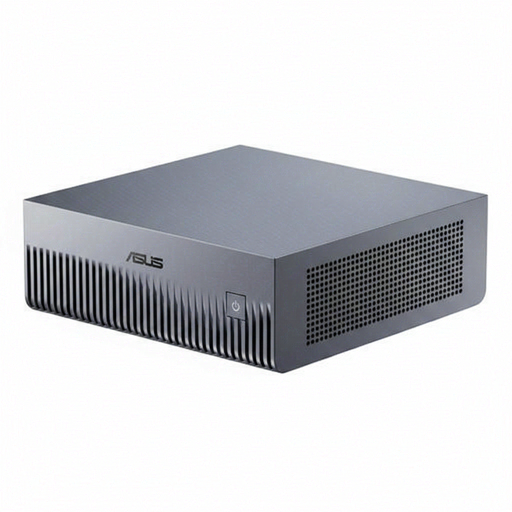
ASUS Ascent GX10 NVIDIA GB10 Grace Blackwell, 128GB unified memory, 1TB NVMe SSD
This specialised computer is worth considering only if its operating environment fits your intended data-science tools. Confirm package and container-image compatibility with NVIDIA DGX OS; its integrated memory is not user-upgradeable.
Joybuy
 No image available
SOYO S4PLUS Ryzen 7 H 255, 24GB LPDDR5, 512GB PCIe 3.0 SSD
Its listed memory and storage give you specific capacities to compare with your local working set. If wired networking or a later storage change is important, confirm the Ethernet speed and supported expansion configuration for this unit.
The product name identifies a Windows 11 configuration.
Joybuy
 No image available
SOYO M5 Ryzen 4300U, 16GB LPDDR4, 512GB SSD
Assess the listed capacity against the files and applications you expect to keep locally. The product name specifies Windows 11 and HDMI, Type-C and DisplayPort connections; check the requirements of your software before choosing.
Joybuy
 No image available
FIREBAT F1 Ryzen 5 7640HS, 24GB LPDDR5, 512GB PCIe 4.0 SSD
This ready-configured option is one to consider if its fitted capacity suits your local work. Its listing names USB4, HDMI 2.1 and 2.5Gb Ethernet; confirm the included operating system, software compatibility and upgrade options for your setup.
Joybuy
Common questions
Do I need a powerful mini PC just to browse public datasets?
Not necessarily: choose for the work you will actually do beyond browsing. The Office for National Statistics offers downloadable spreadsheets, customisable datasets and an API; keeping local copies or running notebooks, databases and containers creates different capacity and software requirements from viewing data in a browser.
Should I choose x86 or ARM for Python, R and containers?
Choose according to the architecture support of your essential tools, not the processor label alone. Docker documents both amd64 and arm64 Ubuntu hosts, but you still need to check each required package, binary dependency and container image for the operating system and architecture you intend to use.
What should I check before reusing a public dataset?
Check the licence and attribution instructions attached to that particular dataset. The National Archives' Open Government Licence v3.0 requires acknowledgement of the source for covered reuse, including any attribution statement specified by the information provider.
Is data labelled anonymous automatically safe to combine and share?
No: consider whether combining it with other information could identify people before sharing it. Seek appropriate privacy advice where that risk matters; the Information Commissioner's Office notes that its anonymisation guidance is under review following changes made by the Data (Use and Access) Act.
Can I hand in an old mini PC when buying a replacement?
For a like-for-like replacement in the UK, GOV.UK says the retailer must accept the equivalent old electrical product free when you buy a new one, including when the purchase is online. Check how the retailer arranges the handover.


