People stocking a shared sweet bowl
Individually wrapped sweets can be offered over several breaks without cutting or serving utensils. Keep the labelled pack available so colleagues can check ingredients before taking one.


Choose individually wrapped sweets for a shared office bowl, counted mini cakes or caramel bites for a planned meeting, and a separately packaged bar for one person’s break. Cakes and bars are different products from traditional toffee sweets, so check their storage instructions and the current allergen declaration before sharing them.
Individually wrapped sweets can be offered over several breaks without cutting or serving utensils. Keep the labelled pack available so colleagues can check ingredients before taking one.
A pack with a stated number of mini cakes or caramel shortcake bites helps plan servings. These are baked products rather than loose toffee sweets, so check their allergens and handling instructions for the meeting.
A separately packaged toffee-flavoured bar gives one person a defined portion without opening a shared bag. Check the current label: a bar is not the same product as a traditional toffee sweet.
Start with where the snack will be served, then check the exact pack for allergens, storage instructions and nutrition information.
| Priority | What to check | Your needs |
|---|---|---|
| Serving format | Check whether pieces are individually wrapped, how many servings the pack states, and whether opening it leaves loose food to handle. | I’d choose wrapped sweets for a shared bowl, but a counted pack of bites for a meeting. |
| Allergen information | Read the current ingredients and precautionary allergen statements for the exact product. Keep that information with food offered to colleagues. | When others will share the snacks, I want everyone to be able to check the label before taking one. |
| Storage | Check the storage directions, best-before date and any instructions for the pack after opening. Do not assume a mini cake can be handled like a wrapped sweet. | A desk drawer or reception bowl calls for a format whose pack instructions fit how long it will be left there. |
| Portions and nutrition | Check the stated portion size and compare nutrition figures on the same basis, such as per serving or per 100 g. Mini size alone does not establish sugar content. | For a single break, I’d look at what one piece or bar represents rather than judging it by the word ‘mini’. |
Mini describes a product’s size or format, not its nutrition. A small cake, caramel bite and wrapped sweet can also have different stated serving sizes.
Read the nutrition label per stated serving for an individual portion, and per 100 g when comparing products on the same basis.
Colleagues cannot check ingredients or allergen warnings from discarded packaging. Products sold as toffee, caramel bites and bars need not have the same declarations.
Leave the current labelled pack beside the snacks, or make its ingredients and allergen declaration clearly available.
Individually wrapped sweets, mini cakes and bars differ in how they are served and handled after opening.
Use the pack count to plan meeting portions, and follow the exact product’s storage and after-opening instructions before leaving any food in a shared area.
These examples cover different kinds of sweet snack; a toffee flavour does not make a cake or bar interchangeable with a wrapped toffee sweet.
Butter candies offer an individually wrapped sweet format for a shared bowl, as described in the Tesco Groceries listing.
Caramel shortcake bites are a counted meeting treat, not traditional toffee confectionery.
Mini Sticky Toffee Loaf Cakes provide a baked option for a planned coffee break rather than a loose sweet bowl.
The cited toffee-flavoured bars are an individual snack-bar format rather than traditional toffee sweets.
Its toffee, fudge and nougat category offers a starting point for considering confectionery formats.
These options include separately portioned toffee-flavoured bars for individual breaks and counted caramel pieces for planned sharing. Check the pack format and allergens before choosing either for a communal bowl.
 No image available
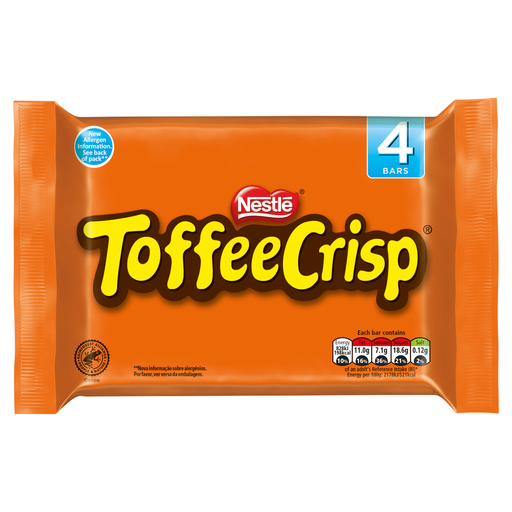
Four individually wrapped bars can be set out as separate portions for an office break. This is a chocolate-coated cereal bar rather than a traditional toffee sweet; the product information states 197 kcal per bar and cool, dry storage. It contains milk and wheat and may contain nuts, peanuts and soya, so check the current pack before sharing.
 No image available
The 15-piece pack gives a count for planned sharing, but check whether the pieces are individually wrapped if that matters for a communal bowl. The product is described as caramel, hazelnut, nougat and chocolate confectionery; its instructions specify cool, dry storage and resealing after opening. It contains hazelnuts, milk and soya and may contain almonds, peanuts and other nuts, so keep the current allergen declaration available.
Check the declaration on each current pack rather than relying on ‘toffee’ or ‘mini’ as a guide. The cited sweets, cakes, bites and bars have differing milk, soya, wheat, egg and nut information; keep their labelled packaging available to colleagues.
No. The cited Werther’s Original Sugar Free Butter Candy contains sweeteners, and its Tesco Groceries listing warns that excessive consumption may produce laxative effects. Check its current ingredients and allergen declaration as you would for any other shared sweet.
Follow the instructions on the exact pack, including any directions after opening. The cited Werther’s sweets specify cool, dry storage, while the cited M&S mini cakes have additional after-opening handling instructions; do not assume both formats can be left in a shared bowl in the same way.
The Department of Health and Social Care’s guidance addresses location and volume-price promotions of certain foods by businesses operating in and selling to England; it is not guidance on choosing snacks for an ordinary office break. School-food requirements are a separate matter: the Department for Education’s guidance concerns food and drink provided in state-funded schools in England.