Bake-sale organisers planning portions
A stated piece weight or pack count helps you plan how to offer sweets. You also need the product information and the school’s allergy arrangements before deciding how to handle them at the sale.


For a school bake sale, choose a toffee with a stated piece size if predictable portions matter, but check the school’s allergy policy and the current pack before bringing it in. Werther’s Original gives a 6.3 g per-piece figure for its Creamy Toffees, according to the manufacturer; the product contains milk and soya, and that figure does not establish whether it meets a school’s rules.
A stated piece weight or pack count helps you plan how to offer sweets. You also need the product information and the school’s allergy arrangements before deciding how to handle them at the sale.
Check the school’s requirements with the organiser, then read the pack you intend to bring. Department for Education guidance says schools must set out arrangements for reducing contact with pupils’ known allergens.
A small chewy toffee and a mini sticky-toffee loaf cake are different products. M&S says its mini loaf cakes are not suitable for people with a nut or peanut allergy, so assess them as a separate bakery option.
Confirm the school’s rules first, then compare the exact packs for allergens, portion format and any handling needed at the sale.
| Priority | What to check | Your needs |
|---|---|---|
| Allergens and school rules | Ask the organiser about the school’s current policy. Read the physical pack’s ingredients, allergen statements and any precautionary wording. | I need to know whether this exact product can be brought to the event, particularly if the school manages nut allergies or other known allergens. |
| Piece size | Look for a stated piece weight or count rather than relying on the word “mini”. Werther’s Original gives a 6.3 g per-piece figure for Creamy Toffees. | For planned portions, I want to know what one piece represents before deciding how many to bring. |
| Product format | Check whether pieces are individually wrapped or will need handling at the sale. Distinguish chewy confectionery from mini sticky-toffee cakes. | A bag of sweets may fit my sale differently from four cake portions; I need to know how each will be offered. |
| Packaging at the event | Check whether anyone will pack portions where they are sold before a buyer selects them. If a food business produces prepacked for direct sale food, Department for Education guidance says it requires a food name and full ingredients list. | If we plan to pack portions ahead of the sale, I need the organiser to establish which labelling requirements apply to that activity. |
Piece size says nothing about allergen compatibility. Werther’s Original Creamy Toffees list milk and soya ingredients, while M&S says its mini sticky-toffee loaf cakes are not suitable for people with a nut or peanut allergy.
Ask about the school’s policy and read the current pack, including precautionary allergen wording, before bringing a product in.
A pack weight alone does not tell you the weight of each piece or how the pieces are wrapped. Those details affect portion planning and handling at the stall.
Inspect the exact pack for a piece count, piece size and wrapping format before deciding how to distribute it.
Department for Education guidance says that when a food business produces food that meets the prepacked for direct sale definition, it must label it with the food name and a full ingredients list.
Before packing portions at the event, establish whether the organiser’s activity and packaging method meet that definition. Keep the original product information available for checking.
The ingredients shown online may not describe the pack being offered at the sale. That matters when the organiser needs accurate allergen information.
Use the current physical pack for the final ingredient and allergen check, and confirm its best-before date before the event.
These examples show which product details are worth comparing; a brand or retailer listing does not establish that a particular pack meets a school’s policy.
A reference for a chewy toffee with a stated piece size.
Offers distinct toffee-sweet and mini sticky-toffee cake formats.
A retailer reference for comparing a listed branded chewy toffee with own-label bags.
A retailer reference for a standard own-label toffee bag.
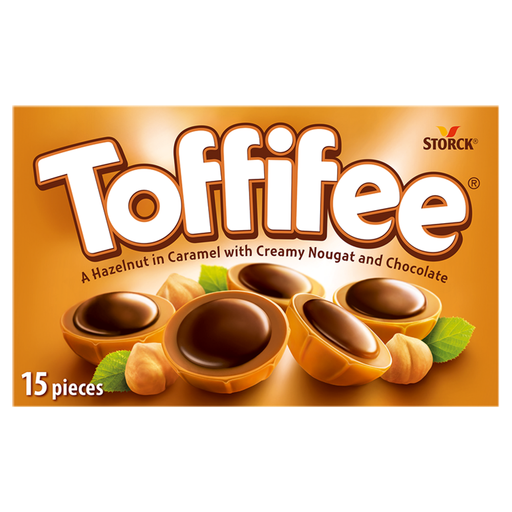
This counted-piece confectionery option may help with portion planning, but it contains hazelnuts and is not an option for a nut-free school zone. It is a caramel, nougat and chocolate sweet rather than a straightforward chewy toffee.
 No image available
The stated count of 15 pieces gives organisers a starting point for planning portions; check the pack if individual wrapping or piece weight matters.
Product information lists hazelnuts, milk and soya and warns that it may contain almond, peanut and other nuts. It also warns of a choking hazard and says the product is not suitable for children under 4. Check the current pack and the school’s allergy policy before bringing it to an event.
Check with the school or organiser before bringing in any particular pack. A product name or an online ingredient list does not settle whether it meets the school’s policy; read the current pack, including any precautionary allergen wording. M&S explicitly says its mini sticky-toffee loaf cakes are not suitable for people with a nut or peanut allergy.
Werther’s Original states a 6.3 g per-piece figure for its Creamy Toffees. That helps with portion planning, but does not establish individual wrapping or whether the product meets a school’s allergy rules.
Establish whether the organiser is acting as a food business and whether the portions meet the definition of prepacked for direct sale food. Department for Education guidance says food businesses producing such food must label it with its name and a full ingredients list. Check the proposed packaging method before preparing portions.
They are a separate bakery option, not the same portion format as chewy confectionery. M&S sells its mini sticky-toffee loaf cakes as four cakes and states that they are not suitable for people with a nut or peanut allergy. Check whether cake portions fit the sale and the school’s requirements before choosing them.