Parents planning occasional holiday treats
A countable sweet can make a planned serving easier to manage at home or on an outing. Check the child’s ability to manage the sweet, as well as the ingredients, rather than choosing by size alone.


For an occasional treat at home or on a holiday outing, choose a countable toffee only if the child can safely manage it, and check the pack’s ingredients and age warning. A small piece or wrapper can help you plan a serving, but it does not turn confectionery into a routine snack; food supplied by a school in England also needs a separate check against school-food standards.
A countable sweet can make a planned serving easier to manage at home or on an outing. Check the child’s ability to manage the sweet, as well as the ingredients, rather than choosing by size alone.
Age warnings matter more than a description such as “mini” or “chewy”. Marks & Spencer warns that its Toffee Assortment is not suitable for children under 36 months because of a potential choking hazard.
Food supplied by a school calls for a different decision from a family treat at home. England’s Requirements for School Food Regulations 2014 classifies non-chocolate sweets as confectionery; check the applicable school-food standards before choosing a supplied snack.
Decide where and how the snack will be served, then compare portions, ingredients and age warnings on the exact pack.
| Priority | What to check | Your needs |
|---|---|---|
| Portion size | Look for a stated piece count and nutrition per piece or serving. Storck UK lists 3.7 g sugars per 5.2 g Werther’s Original Butter Candy; Tesco lists 11.9 g sugars per stated 25 g serving of its toffee. | I’d like to decide how many sweets to serve, rather than reach into a bag without a planned amount. |
| Snack occasion | Distinguish an occasional sweet from a regular between-meal snack. NHS snack suggestions include plain rice cakes or crackers with lower-fat cheese. | For everyday holiday snacking, I’m looking beyond confectionery; toffee is for a planned treat. |
| Ingredients | Read the current pack’s allergen declaration. Storck UK lists milk ingredients and soya lecithin in Werther’s Original Butter Candies; Tesco’s dairy toffee contains milk ingredients. | Milk or soya matters for the child I’m buying for, so a vegetarian label alone does not answer my question. |
| Age warning | Check the warning on the exact product. Marks & Spencer says its Toffee Assortment is not suitable for children under 36 months because of a potential choking hazard. | Before offering a hard or chewy sweet, I need to know whether the child can safely manage it. |
| School setting | Establish whether the snack is for home or will be supplied by a school. England’s Requirements for School Food Regulations 2014 includes non-chocolate sweets within its definition of confectionery; check the standards that apply to the provision. | If I’m planning food supplied by a school in England, I cannot treat a household snack choice as the answer. |
A smaller piece can be easier to count, but it remains confectionery. Storck UK lists 3.7 g sugars in each 5.2 g Werther’s Original Butter Candy.
Plan toffee as an occasional treat. For regular between-meal snacks, consider the non-confectionery options suggested by the NHS.
Marks & Spencer warns that its Toffee Assortment is not suitable for children under 36 months because of a potential choking hazard.
Follow the exact pack’s age warning, and do not offer hard or chewy sweets to a child who cannot safely manage them.
Vegetarian status does not rule out milk or soya. The Werther’s Original Butter Candies ingredient list includes both.
Read the current physical pack for ingredients relevant to the child before serving.
England’s school-food regulations classify non-chocolate sweets as confectionery. A treat bought for home and food supplied by a school are different contexts.
If you are arranging food supplied by a school in England, check the applicable school-food standards and choose the snack for that setting.
Its Butter Candies are a countable hard sweet for an occasional treat; Storck UK publishes nutrition per 5.2 g piece.
Tesco’s 175 g dairy toffee has a stated 25 g serving, rather than a confirmed individually portioned format.
The Toffee Assortment is a chewy assortment for family sharing at home, rather than a hard sweet with stated nutrition per piece.
Waitrose groups toffee with fudge and nougat, but a category listing is not enough to identify a particular mini-toffee format.
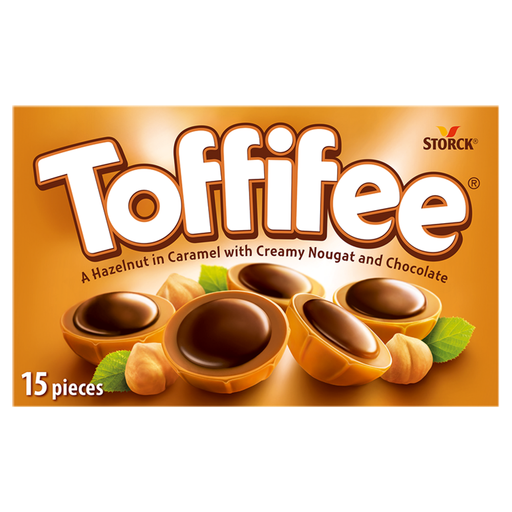
This countable, toffee-style confection is an option to assess for an occasional treat at home or on a holiday outing. Check its age warning and ingredients before offering it to a child.
 No image available
The stated 15-piece count lets you plan how many pieces to serve as an occasional treat. The product details flag an under-4 warning and identify milk, soya and hazelnut; check the current pack, including its warning and full allergen declaration, before serving. If individual wrappers or nutrition per piece matter to you, confirm those details on the pack.
No. England’s Requirements for School Food Regulations 2014 defines confectionery to include non-chocolate sweets, whether or not they contain sugar. Check the applicable school-food standards for food supplied by a school; that is a separate context from choosing a treat at home.
No. Storck UK lists less than 0.1 g sugars per 3.2 g Werther’s Original Sugar Free Butter Candy, but also warns that excessive consumption may produce laxative effects. Check that variant’s pack rather than treating its sugar declaration as permission for unrestricted snacking.
Check the exact current pack. Storck UK lists milk ingredients and soya lecithin in Werther’s Original Butter Candies; Tesco’s dairy toffee contains milk ingredients, and Marks & Spencer identifies milk and soya in its Toffee Assortment.
For a regular between-meal snack rather than an occasional sweet, NHS suggestions include plain rice cakes or crackers with lower-fat cheese. Check the ingredients of any packaged option against the child’s needs.