Hotel breakfast-buffet buyers
Choose a format guests can take one piece at a time, while planning how staff will access current ingredient and allergen information during service.


For a self-service hotel breakfast buffet, individually wrapped toffees offer a straightforward take-one format, provided the hotel keeps accurate allergen information for the exact product served. Consider a sugar-free or chocolate-coated alternative when it meets a specific requirement, but check its ingredients, warnings and presentation before putting it on display.
Choose a format guests can take one piece at a time, while planning how staff will access current ingredient and allergen information during service.
Keep information for the exact sweets on display accessible to guests and staff. The Food Standards Agency’s allergen guidance covers both prepacked and non-prepacked food served by UK food businesses.
Compare the named product’s sugars, ingredients and pack warnings rather than assuming that a sugar-free label makes it suitable as the standard buffet choice.
Start with how guests will take the sweets, then check the exact product’s label and any conditions that change how it should be displayed.
| Priority | What to check | Your needs |
|---|---|---|
| Take-one format | Confirm individual wrapping on the pack if guests need to pick up a piece without a shared scoop. Piece weight alone does not establish wrapper type. | I want guests to take one sweet easily from a self-service display. Marks & Spencer describes its Double Devon Toffees as individually wrapped. |
| Allergen information | Check the delivered pack’s ingredients and allergen statements, and keep the current information accessible during service. The Food Standards Agency’s UK guidance covers both prepacked and non-prepacked food. | If a guest asks about a sweet, staff need information that matches the product actually on display, including sweets taken from an outer bag. |
| Sugar-free alternative | Compare sugars per piece, sweeteners and warnings for the specific product. Werther’s Original lists under 0.1 g sugars per 6 g Sugar Free Creamy Toffee and warns that excessive consumption may produce laxative effects. | Where a reduced-sugar sweet is requested, I need its full product information available rather than treating it as an unrestricted replacement for standard toffee. |
| Chocolate and nuts | Check whether the sweet is plain or chocolate-coated and read its exact allergen and may-contain statements. Sainsbury’s lists milk, soya and a may-contain statement for several nuts for Riesen Chewy Toffee. | I may want a chocolate-coated option, but I need to know what its ingredient information adds to the buffet’s allergen records. |
| Age warning | Read the current pack’s choking and age guidance before deciding where to display it. Marks & Spencer states that Double Devon Toffees are not suitable for children under 36 months. | For a buffet used by families, I need to check whether a particular sweet is appropriate for the area where it will be offered. |
Individual wrapping changes how guests pick up a sweet, not the UK food business’s obligation to provide allergen information for the food it serves, as set out in Food Standards Agency guidance.
Keep the current pack information or a maintained allergen record for every toffee offered, and make sure staff can find it during breakfast service.
Werther’s Original Sugar Free Creamy Toffees contain sweeteners, and the manufacturer warns that excessive consumption may produce laxative effects.
Offer this product when a reduced-sugar alternative is wanted, with its ingredients and warning available alongside the other buffet information.
Sainsbury’s Riesen listing identifies milk and soya and says the product may contain hazelnuts, almonds, peanuts and other nuts.
Check the exact pack’s ingredients and may-contain statement before adding a chocolate-coated option to the display.
Marks & Spencer states that its Double Devon Toffees are not suitable for children under 36 months because of a choking hazard.
Follow the warning on the selected pack and consider where that product will be placed in a buffet used by families.
These examples illustrate formats and label checks; a retailer reference does not establish that a particular sweet is suitable for every buffet.
The manufacturer publishes information for both standard and sugar-free creamy toffees.
Double Devon Toffees provide a documented individually wrapped option for comparing self-service formats.
Tesco lists a 135 g pack of Werther’s Original Butter Candies as a standard retail-pack reference.
Its Riesen listing offers a chocolate-coated chewy toffee to compare with plain formats.
Its toffee, fudge and nougat category provides references for comparing other confectionery formats.
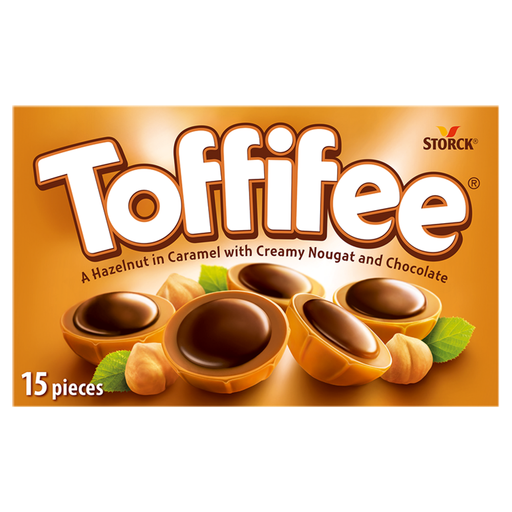
For a breakfast buffet considering a portioned chocolate-and-caramel sweet rather than a plain toffee, check this pack’s presentation and label before planning the display.
 No image available
The 15-piece pack offers separate sweets for a portioned buffet display; confirm individual wrapping before relying on a wrapped take-one format. Its product information lists hazelnuts, milk and soya and says it may contain almonds, peanuts and other nuts. It also states that the sweets are not suitable for children under 4 years because of a choking hazard. Check the delivered pack against the buffet’s current allergen record.
Yes. Food Standards Agency guidance says UK food businesses must provide allergen information for prepacked and non-prepacked food. Keep information that matches the exact sweets being served accessible to staff and guests.
If the hotel packages the food before guests select it and it qualifies as prepacked for direct sale, Food Standards Agency guidance requires the food name and a full ingredients list with allergens emphasised on the package. Allergen information must also be available for sweets served loose.
Not automatically. Werther’s Original lists under 0.1 g sugars per 6 g Sugar Free Creamy Toffee, but the product contains sweeteners and carries a warning that excessive consumption may produce laxative effects. Consider it for a defined reduced-sugar choice and provide its exact ingredient information.
Check the warning for the particular product. Marks & Spencer states that Double Devon Toffees are not suitable for children under 36 months because of a choking hazard; that age guidance should not be assumed to apply identically to every sweet.
Update the buffet’s product and allergen information to match the sweets now being served. The Food Standards Agency describes hazard analysis as a way for food businesses to identify food-safety-critical points; a hotel’s receiving, storage, display and replenishment procedure should reflect its actual service.