Cyclists planning longer rides
For rides over about 90 minutes, plan drinks and carbohydrate separately from any mini tonic. British Cycling advises regular fuelling and sipping from a bottle, ideally containing a sports drink.


A 150–200ml tonic mixer is a separate drink for a stop or after a ride, not a replacement for planned on-bike drinks and food. British Cycling says extra fuel is generally unnecessary on rides up to about 90 minutes, but advises regular sipping from a bottle, ideally containing a sports drink, on longer rides. If you want a mini tonic, choose its serving size and flavour independently of your cycling nutrition plan.
For rides over about 90 minutes, plan drinks and carbohydrate separately from any mini tonic. British Cycling advises regular fuelling and sipping from a bottle, ideally containing a sports drink.
A sealed 150–200ml tonic can be a convenient separate drink at a stop or after riding. The portion size does not establish that it will meet your needs during the ride.
If the tonic is for flavour rather than ride fuel, compare carbohydrate values on the label. Tesco lists 3.8g carbohydrate per 100ml for Fever-Tree Refreshingly Light Indian Tonic; ASDA lists 4.9g per 100ml for Schweppes Indian Tonic Water.
Decide what you will drink during the ride before choosing a mini tonic for a separate occasion.
| Priority | What to check | Your needs |
|---|---|---|
| Ride length and fluid | Check the ride duration, weather and your bottle plan. For rides over about 90 minutes, British Cycling advises regular sips from a bottle, ideally containing a sports drink; its roughly 500ml-per-hour guide varies with conditions and the rider. | On a longer ride, I need a drink I can sip regularly, rather than one 150–200ml can as my only drink. |
| Drink composition | Read carbohydrate per 100ml and the listed electrolytes, rather than judging by sugar alone. NHS Tayside describes isotonic drinks as containing electrolytes and 4–8g carbohydrate per 100ml; ASDA lists 4.9g carbohydrate per 100ml but 0g salt for Schweppes Indian Tonic. | If I am choosing a sports drink for a longer ride, I want to check its formulation instead of assuming a tonic with carbohydrate serves the same purpose. |
| Separate serving | Check the volume of each can, not just the multipack total. Listed examples include 150ml Fever-Tree and Schweppes cans and Fentimans Naturally Light in 200ml. | A small sealed tonic suits me as a separate drink at a stop or after the ride; I will carry my planned on-bike drink as well. |
| Ingredients and flavour | Compare standard and light variants using the exact product label. Check the ingredients for quinine, particularly if you have reacted to it before. | For a taste-led drink, I can choose the variant I prefer without treating its carbohydrate content as my ride-fuelling plan. |
ASDA lists 7.4g carbohydrate and 0g salt in a 150ml can of Schweppes Indian Tonic. NHS Tayside describes isotonic drinks as containing both carbohydrate and electrolytes; a carbohydrate figure alone does not establish the same formulation.
When a sports drink is part of your ride plan, check that product’s label rather than substituting a tonic by its sugar value.
British Cycling’s guidance for rides over about 90 minutes centres on regular bottle sipping. A single 150–200ml can is a separate serving, not that bottle plan.
Carry the water or sports drink you have planned for the ride; add a mixer only if you want it as a separate drink.
Tesco lists 3.8g carbohydrate per 100ml for Fever-Tree Refreshingly Light Indian Tonic. Its label value can inform a choice between tonic variants, but does not turn a mini can into a long-ride fuelling plan.
Choose light tonic for the separate drink if you prefer that variant, and plan any on-bike carbohydrate independently.
Verified tonic ingredient lists include quinine. The Medicines and Healthcare products Regulatory Agency identifies previous adverse reactions, including reactions to quinine in tonic water, as relevant to quinine prescribing.
If you have reacted to quinine before, check the label and ask a pharmacist or clinician about a suitable alternative.
These brand and retailer examples help distinguish a small individual serving from a larger can; they are not cycling-sports-drink recommendations.
UK retailer listings include several Fever-Tree tonic variants in 150ml cans.
ASDA lists Schweppes Indian Tonic Water in a 12 × 150ml can format.
Fentimans lists Naturally Light Tonic Water in a 200ml format.
Britvic’s September 2023 retail announcement describes classic and zero-sugar Indian Tonic cans of 330ml, intended as two serves.
Tesco’s grocery listings show tonic multipacks in different can sizes and variants.
Sainsbury's lists Fever-Tree Premium Indian Tonic Water in an 8 × 150ml pack.
These 150ml tonic multipacks are options for a separate drink at a stop or after cycling. Choose what to carry and drink during the ride independently.
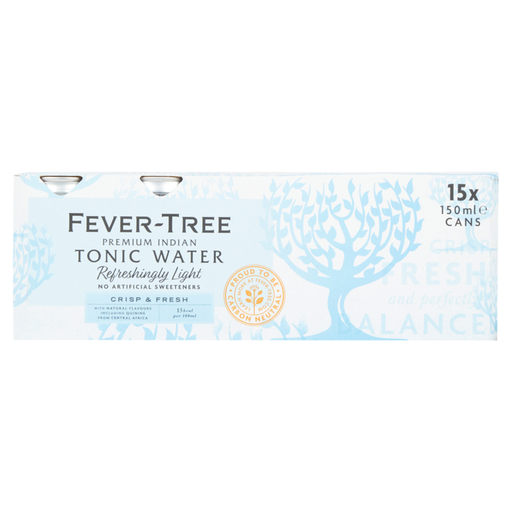 No image available
The 150ml cans are sized for a separate tonic serving, not a replacement for drinks planned during a longer ride. Check the can’s current nutrition and ingredient label when choosing this variant.
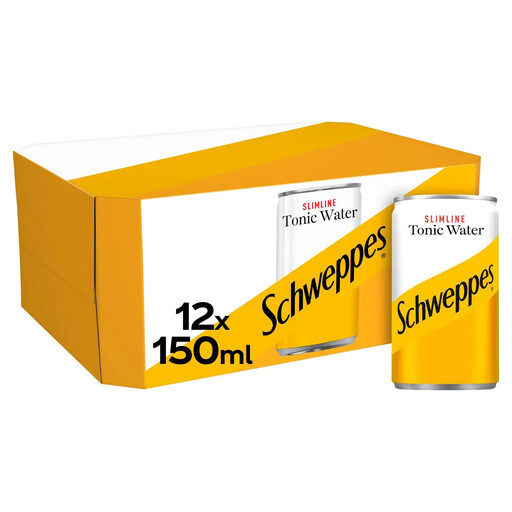 No image available
This 150ml slimline tonic is a separate single serving, not a source to rely on for planned ride fuelling. Check the current ingredients and nutrition label if they affect your choice.
 No image available
Each 150ml can is a defined tonic serving for a stop or after a ride. If you are comparing it with a light variant, use the labels of the exact products rather than the pack size to compare carbohydrate.
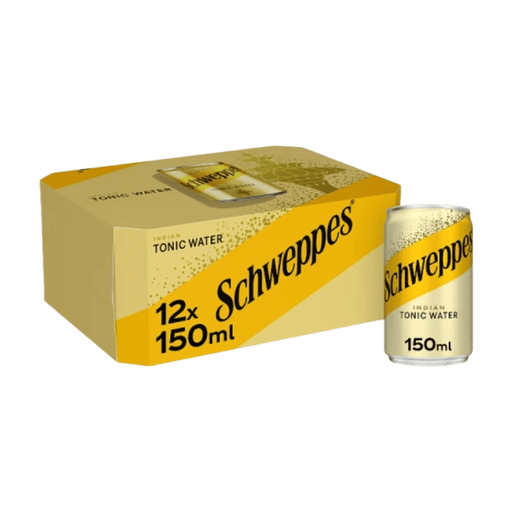 No image available
The 150ml can is a separate tonic serving rather than a bottle for regular on-bike sipping. ASDA’s listing for Schweppes Indian Tonic Water gives 4.9g carbohydrate per 100ml and 0g salt; that does not establish an isotonic-drink formulation. Check the current can label, including its quinine ingredient.
Do not use a mini tonic as the replacement for a planned sports drink on a longer ride. British Cycling advises regular sipping from a bottle, ideally containing a sports drink, for rides over about 90 minutes. NHS Tayside describes isotonic drinks as containing electrolytes alongside 4–8g carbohydrate per 100ml; a tonic’s carbohydrate value alone does not establish that formulation.
British Cycling says additional fuel is generally unnecessary for rides up to about 90 minutes. Your ride’s demands and individual circumstances may affect what you carry, but a mini tonic is not needed simply because it is a convenient serving size.
The cited product listings include 150ml Schweppes and Fever-Tree cans, while Fentimans lists Naturally Light Tonic Water in 200ml. Check the volume of each can rather than the multipack’s total volume; a single serving is not necessarily enough fluid for a ride.
Choose by flavour preference and the exact product’s label when the tonic is a separate drink, not planned ride fuel. Tesco lists 3.8g carbohydrate per 100ml for Fever-Tree Refreshingly Light Indian Tonic, while Sainsbury's lists 8.9g per 100ml for Fever-Tree Premium Indian Tonic.
Check tonic ingredients and ask a pharmacist or clinician about a suitable alternative. The Medicines and Healthcare products Regulatory Agency identifies previous adverse reactions to quinine, including quinine in tonic water, as relevant to quinine prescribing; tonic should not be assumed interchangeable with quinine-free sparkling water.