
24/7 Customer Support

Free returns

Same-day & Next-day Delivery

Quality Guaranteed

Unlock Your Welcome Offers: FREE Delivery | Up to 80% OFF | Free 30-day JoyPlus trial
Download the APP
Finding the right equipment for your home can be a challenge. Whether you're a parent searching for a safe way for your children to burn off energy indoors, or an adult looking for a compact and effective home fitness solution, a mini trampoline can be an excellent choice. Also known as a rebounder, this simple device offers a surprising range of benefits.
However, the market is filled with options, and it's not always clear which model is right for your needs. This guide is designed to help you understand the key features to look for, so you can make an informed decision without the marketing hype. We will explore the differences between a kids trampoline and an adult rebounder, and highlight some recommended models for different uses.
Before you buy, it's helpful to consider a few key factors. Analysing your specific needs will ensure you select a product that is both safe and suitable for its intended user.
Safety is the top priority, especially when choosing an indoor trampoline for children. A small trampoline with handle provides crucial stability for younger users or adults who are new to rebounding. These T-shaped bars help maintain balance and reduce the risk of falls.
The rebound system is another critical feature. Traditional models use steel springs, which provide a firm and responsive bounce. Newer designs often use elastic bands or bungee cords. These springless systems offer a quieter, lower-impact bounce that can be gentler on the joints, making them a popular choice for both rehabilitation and quiet home use.
Mini trampolines are not one-size-fits-all. A kids trampoline is typically smaller, often around 36 inches in diameter, and has a lower maximum user weight, usually around 25-50 kg. This ensures the bounce is appropriate for a child's lighter frame.
In contrast, an adult rebounder or fitness trampoline is built to be more robust. These are often larger, around 42 inches or more, with a reinforced frame and a much higher weight capacity, frequently exceeding 100 kg. Always check the manufacturer's specified maximum user weight to ensure safety and product longevity.
Defining your primary goal will help narrow your search. If you're looking for a structured workout, you'll want a dedicated exercise trampoline. These are designed to withstand repetitive, high-intensity movements and provide the right level of tension for an effective cardio session.
If the primary purpose is children's recreation, the focus shifts to features like padded edges, a sturdy handle and a design that encourages safe play rather than high-performance bouncing.
Based on these considerations, we've selected two distinct models that cater to the main user groups: one for children's play and one for adult fitness.
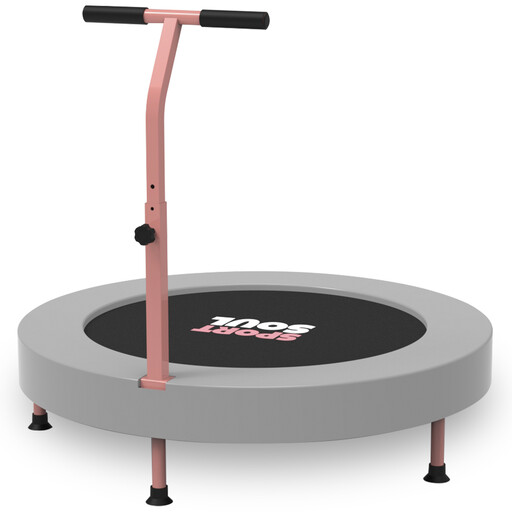
Why It Stands Out
This model is specifically designed with young children in mind. Its standout feature is the springless system, which uses 24 elastic resistance bands instead of metal springs. This creates a quieter and softer bounce, reducing noise during play and being gentler on small joints. The integrated T-shaped handlebar is adjustable, providing stable support as your child grows.
Pros
Who is it for? This is an excellent choice for parents seeking a safe and engaging indoor trampoline for young children. With a maximum user weight of 25 kg (55 lbs), it is strictly intended for kids' recreational use, providing a fun way to develop balance and coordination.
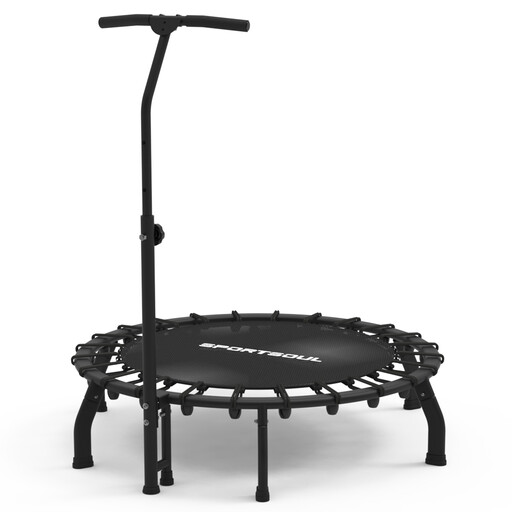
Why It Stands Out
Built for performance, this rebounder trampoline is geared towards adults serious about home fitness. It features a robust steel frame and a high-quality spring system designed to deliver a responsive and energetic bounce, perfect for effective cardio workouts. Its generous 120 kg (264 lbs) maximum user weight and durable construction make it suitable for a wide range of users and exercise routines.
Pros
Who is it for? This model is designed for health-conscious adults looking for a reliable fitness trampoline for low-impact cardio, rehabilitation or general home fitness. Its robust build and performance-oriented design make it a solid piece of home gym equipment.
While these two models cover the primary needs for kids' play and adult fitness, you may be looking for other features or types of equipment. If you'd like to explore a wider variety of fitness gear, including larger outdoor trampolines and other exercise tools, feel free to browse our full collection.
Discover more options in our Outdoor sports equipment category.
Yes, rebounding on a mini trampoline is a form of cardiovascular exercise that can be very effective for burning calories. It elevates your heart rate while remaining a low-impact activity, which means it's easier on your joints than running. Consistent use as part of a balanced lifestyle can contribute to weight management goals.
Neither is definitively "better"; they simply offer different experiences.