Hosts setting out a self-serve tea
Ready-made bites can sit alongside the other sweet items without cutting fudge during service. Check what the bites contain: some combine fudge with biscuit or chocolate rather than offering plain fudge.


Choose ready-made fudge bites if guests will help themselves and you do not want to cut portions during afternoon tea. A traditional pack gives you control over how the fudge is portioned, but allow time to arrange it and check the flavour, serving information and current pack label before putting it out.
The useful distinction for afternoon tea is whether the fudge is ready to set out or needs portioning beforehand.
Ready-made bites can sit alongside the other sweet items without cutting fudge during service. Check what the bites contain: some combine fudge with biscuit or chocolate rather than offering plain fudge.
Check the ingredients, allergen declarations and precautionary statements on the current pack before serving. A product name or an older online image is not enough to establish whether a particular fudge is suitable for a guest.
A standard pack lets you decide how to arrange the portions. If its label gives a serving measure, use that alongside the pack size when planning the plate, and check whether the flavour suits the rest of the tea.
Decide how you will serve the fudge first, then compare the current labels of the packs that fit that plan.
| Priority | What to check | Your needs |
|---|---|---|
| Serving format | Check whether the pack contains ready-made bites or fudge you will portion yourself. Look at the pack size and any stated serving measure rather than assuming every small-looking piece is a mini. | I want guests to help themselves without cutting fudge at the table. If I have time to arrange it beforehand, a traditional pack could work too. |
| Ingredients and allergens | Read the current ingredients, declared allergens and precautionary statements for the exact product. Marks & Spencer describes its Blond Fudge Bites as fudge with biscuit crumb and chocolate coatings; Waitrose & Partners lists peanuts and nuts as possible allergens for its Stem Ginger Crumbly Fudge. | Guests need to know what is on the shared plate. I cannot judge suitability from the word “fudge” or from how plain a piece looks. |
| Nutrition and portions | Compare nutrition figures on the same per-100 g basis, then check each product’s stated serving. GOV.UK’s nutrition-labelling guidance identifies per 100 g as the standard basis for food nutrition information. | I want to decide how many pieces to put out without treating “mini” as a claim about sugar or energy per serving. |
| Event timing | Check the best-before date on the pack, its storage instructions and whether you can obtain it in time. Follow any instructions that apply after opening. | If I am buying ahead, the date and storage directions need to work for the day of the tea. |
Marks & Spencer describes its Blond Fudge Bites as a fudge core with biscuit crumb and milk and white chocolate. That is a different ingredient mix from a traditional fudge pack.
Choose by the ingredients and the format you want to serve, not by “fudge” in the name alone.
Ingredients and precautionary statements differ between products, and the label on the pack is the information guests will need at the table. Waitrose & Partners, for example, lists possible peanut and nut presence for its Stem Ginger Crumbly Fudge.
Read the current physical pack before serving anyone with an allergy or intolerance; do not rely on a previous purchase.
Piece size alone does not give a sugar or energy value. Waitrose & Partners lists 18.1 g sugars per two pieces of its Stem Ginger Crumbly Fudge; that figure describes its stated serving, not mini fudge generally.
Use the per-100 g panel for like-for-like comparisons, then check the serving basis when deciding how many pieces to offer.
The best-before date and storage directions determine whether a particular pack works for a planned tea, especially if you intend to open it beforehand.
Check the date when the pack arrives and follow its directions for storage before and after opening.
These examples show different formats to compare; a brand name alone does not tell you how a particular pack should be served.
M&S Blond Fudge Bites are a 128 g sharing-bag product with a fudge core, biscuit crumb and chocolate coatings, according to Marks & Spencer.
Waitrose Stem Ginger Crumbly Fudge is a 150 g, ginger-flavoured pack with nutrition information for a two-piece serving.
Tesco Groceries lists 125 g Salted Caramel Fudge and All Butter Fudge packs in its toffee-and-fudge range.
Roly’s Fudge lists build-your-own flavour boxes and a Mini Fudge Taster Trio in its online shop.
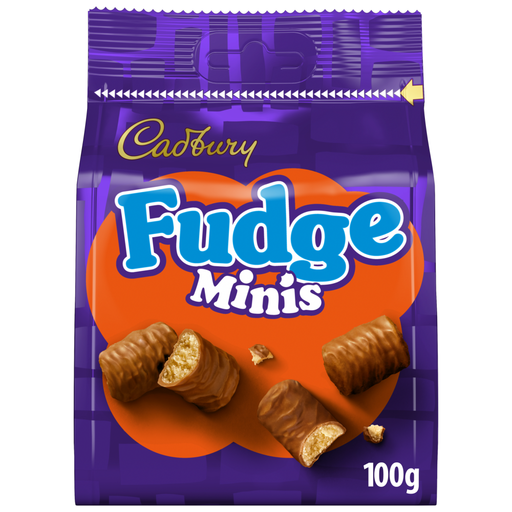
This Joybuy option is a ready-made mini fudge format for a self-serve afternoon tea.
 No image available
A 100 g pack of fudge minis with milk chocolate for a self-serve sweet plate. Check the current pack’s allergens, piece count and best-before date when planning for guests.
No. Ready-made minis are convenient when guests will help themselves, while traditional fudge works if you are happy to portion and arrange it beforehand. Either can be one sweet item alongside the tea’s other food.
Read the current physical pack’s ingredients, allergen declarations and precautionary statements before serving. Fudge products can have different components: Marks & Spencer describes biscuit and chocolate in its Blond Fudge Bites, while Waitrose & Partners lists possible peanut and nut presence for its Stem Ginger Crumbly Fudge.
Compare products using their per-100 g figures, then look at each pack’s own serving measure to plan the plate. A value for two pieces is not directly comparable with another product’s per-100 g value without accounting for the different basis.
Yes, provided the pack’s best-before date covers the event and you can follow its storage directions. Check any after-opening instructions if you intend to arrange the fudge in advance.