Bright-lounge astronomy viewers
If daylight, windows or room lights are visible on the screen, start by assessing reflections and whether the picture remains comfortable to watch in your usual lighting.


For regular daylight and screen reflections, shortlist exact-model Mini LED LCD TVs with a stated anti-reflection treatment. If you can reduce the room light and care most about dark-scene contrast, consider OLED instead. Manufacturer specifications identify features worth checking, but they do not establish which TV will handle the windows and lamps in your lounge.
If daylight, windows or room lights are visible on the screen, start by assessing reflections and whether the picture remains comfortable to watch in your usual lighting.
If faint stars and black space backgrounds matter most, consider how the TV handles dark scenes—and whether you can reduce the room light when you watch.
If the TV will also serve everyday streaming and people seated in different parts of the room, check its placement, mounting requirements and energy information alongside picture features.
Decide how much light you can control before weighing dark-scene features; then check that the screen and installation suit the lounge.
Consider it when: Windows or lamps regularly reflect on the screen and you cannot darken the room for astronomy programmes.
Bear in mind: Samsung lists Glare Free for the QN90F, while Sony lists X-Anti Reflection and local dimming for the K-85XR90. Those model-specific specifications do not establish how evenly either TV displays a dark sky in your room.
Consider it when: You can close blinds or reposition lamps and want to prioritise contrast in night skies and other dark footage.
Bear in mind: LG describes self-lit pixels in its OLED evo range, but that description does not tell you how a particular model will handle a nearby window reflection.
| Concern | What to check | Who this matters to |
|---|---|---|
| Daylight and reflections | Check the exact model and size for an anti-reflection treatment, then consider where windows and lamps will appear on its screen. | If I watch while the lounge is bright, I need space footage to remain visible without a window obscuring the picture. Around 46% of consumers put reflection control first. |
| Dark-scene detail | Compare the exact LCD model’s local-dimming features or an OLED model’s self-lit-pixel design; view familiar dark footage where possible. | When I can lower the room light, I want stars and shadowed objects to remain distinct against dark backgrounds. Dark-scene detail comes first for around 36% of consumers. |
| Practical fit and energy information | Check screen and stand dimensions, weight and mounting requirements; compare the energy label and product information sheet. | Before choosing a picture type, I need to know that the TV fits its intended position and works for the household. Around 18% of consumers prioritise those practical checks. |
Resolution does not tell you whether a window will reflect across a dark scene or whether an LCD has local dimming.
Read the specification for the exact model and, where possible, view dark footage with lighting similar to your lounge.
Samsung, Sony and LG describe features using different terms. Their claims can guide a shortlist, but do not establish a performance winner across models and room conditions.
Confirm the precise variant and screen finish, then check how its placement affects reflections before committing.
A large screen needs suitable furniture or a wall installation. Sony lists the K-85XR90 at approximately 55.7 kg with its stand, making the weight of that particular model an important planning check.
Measure the intended space, check the chosen TV’s stand or mounting specifications, and arrange an appropriate recycling route for the old set.
Wall fitting, old-TV removal and recycling may require separate bookings.
Samsung’s QN90F is a model-specific reference point for comparing Mini LED and screen-glare features.
Sony’s K-85XR90 provides specifications to examine if you are considering a large Mini LED TV.
LG’s OLED evo range is relevant if dark-scene contrast is the priority and room lighting can be controlled.
These Samsung TVs offer 75-inch and 55-inch options to consider for astronomy viewing. For a bright lounge, check each exact screen’s reflection behaviour and its fit in the room before choosing.
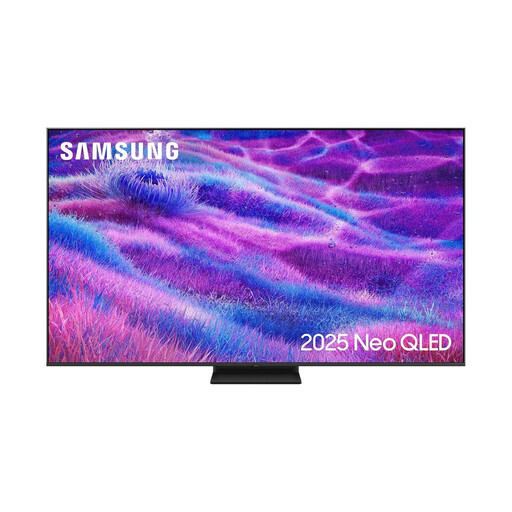 No image available
Consider this size if a 75-inch screen fits your seating and installation space; check its screen finish against the light sources in your lounge.
4K Ultra HD smart TV with Wi-Fi.
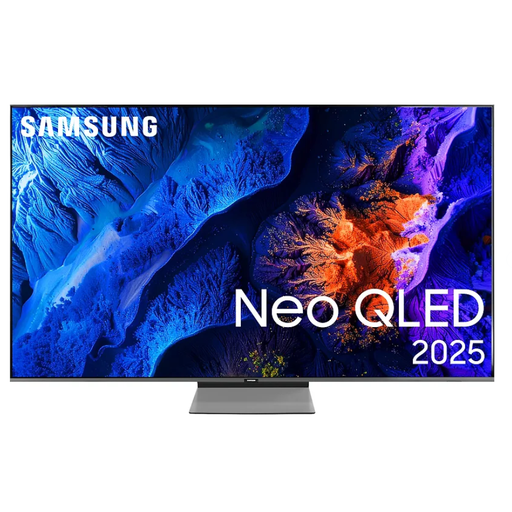 No image available
This 55-inch option may suit a smaller intended screen position; assess reflections at that position before choosing it for daytime viewing.
4K Ultra HD smart TV with Wi-Fi.
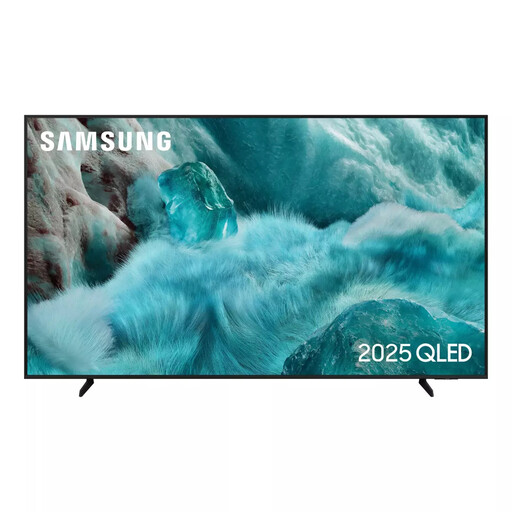 No image available
Consider this 55-inch model for the planned viewing space, but check its screen finish, installation dimensions and energy information before deciding whether it suits the lounge.
4K Ultra HD smart TV with Wi-Fi.
No: choose by the light you can control and the exact TV’s features. Shortlist Mini LED LCD models with stated reflection control when daylight is the main obstacle; consider OLED when you can reduce reflections and place greater weight on dark-scene contrast.
Compare the energy label and product information sheet alongside screen size when assessing an in-scope television. GOV.UK identifies electronic displays, including TVs, within its energy-information guidance.
Where the right to repair or replacement applies to an installed TV, the trader bears the relevant removal and reinstallation costs, according to the explanatory notes to the Consumer Rights Act 2015. Keep your order and installation records when raising the fault with the trader.
Check an appropriate electrical-equipment collection or recycling route before the new TV arrives. GOV.UK describes the UK WEEE rules as supporting recovery, reuse and recycling; ask the retailer about collection or check your local authority’s accepted arrangements.