
24/7 Customer Support

Free returns

Same-day & Next-day Delivery

Quality Guaranteed

Unlock Your Welcome Offers: FREE Delivery | Up to 80% OFF | Free 30-day JoyPlus trial
Download the APP
Mint tea is a convenient choice for UK households wanting a fresh-tasting drink without the bitterness of some traditional teas. However, the category includes pure peppermint infusions, organic mint blends, green tea combinations and ready-to-drink bottles. Checking the label carefully can help you avoid paying for a product that does not suit your routine.
Pure peppermint tea and many herbal mint tea blends are naturally caffeine-free. However, a Moroccan mint tea containing green tea is different, as green tea naturally contains caffeine. Matcha blends may also contain caffeine because matcha is made from powdered green tea leaves.
If you want a bedtime drink or are limiting caffeine, look for clear wording such as peppermint leaves only, herbal infusion or caffeine-free. Do not rely on the word “mint” alone.
A product with several herbs is not automatically more suitable. Liquorice root, chamomile, ginger, moringa and mint all create different flavour profiles. Liquorice can add sweetness, while peppermint creates a cooling finish. A simple 100% peppermint tea may be more appropriate if you want a clean, direct taste.
Always check the percentage of each ingredient rather than choosing based only on front-of-pack descriptions.
Tea bags are convenient, but pack sizes vary considerably. A 15-bag pack may suit occasional drinking, while an 80-pack can be more practical for a household that drinks mint tea daily. Ready-to-drink mint iced tea is convenient for work, travel or outdoor use, but bottles take up more storage space and may contain sweeteners or sugar.
For loose or bagged products, store the pack in a cool, dry place away from strong odours. Mint can absorb surrounding aromas, affecting the finished cup.
Peppermint generally produces a sharper, cooler flavour than spearmint. Three-mint blends can taste rounder and more layered, while peppermint and liquorice tea tends to have a naturally sweet, warming note.
For a straightforward refreshing herbal infusion, consider a high peppermint percentage. For an after-meal drink, a blend with liquorice or other herbs may be more appealing, although flavour preference remains personal.
Check both the ingredients and the nutrition information. A pure peppermint infusion should not contain tea leaves, matcha or other caffeinated botanicals. Moroccan mint tea made with green tea is not equivalent to a caffeine-free herbal mint tea.
Some product labels state caffeine directly. For example, English Tea Shop Organic Perfect Peppermint lists 0 mg caffeine and contains organic peppermint and spearmint. If caffeine matters to you, confirm the current packaging before purchase because formulations can change.
For tea bags, check the number of sachets and the recommended water volume and steeping time. Teapigs Liquorice & Mint contains 15 tea bags and recommends 200–250ml of freshly boiled water for 3–5 minutes. Twinings Pure Peppermint provides 80 bags, making it more suited to frequent use.
If you are buying a bottled drink, check the serving size, sugar content and storage instructions. Once opened, some drinks need refrigeration and should be consumed within a stated period.

Why This Fits Their Persona: The 80-bag pack is a practical cupboard staple for regular tea drinkers, flat sharers and families who want a simple peppermint option.
The ingredient list identifies 100% peppermint, avoiding hidden green tea or matcha when a caffeine-free herbal infusion is the priority.
100% peppermint; 80 tea bags; no declarable allergens listed.

Why This Fits Their Persona: This is suited to shoppers who prefer organic ingredients, a layered mint profile and individually prepared sachets for daily use.
The label gives the blend percentages: peppermint leaf 45%, spearmint leaf 39% and fieldmint leaf 16%, so the flavour balance is clear.
Organic three-mint blend; 20 plant-based tea bags; no allergens listed.

Why This Fits Their Persona: A suitable option for shoppers who want a fuller drink, Moroccan-style flavour and the flexibility to serve it hot or as mint iced tea.
It clearly lists green tea and peppermint leaves, making it easier to avoid mistaking a tea-based blend for caffeine-free herbal mint tea.
75g pack; 15 larger tea bags; suitable for hot or chilled serving.
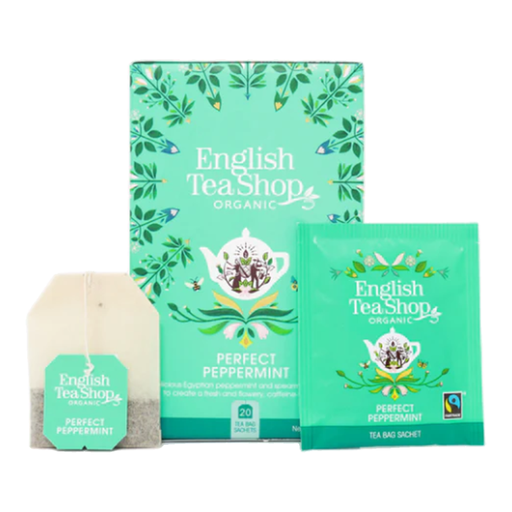
Why This Fits Their Persona: A sensible match for vegan and organic shoppers wanting a direct peppermint flavour without a complex blend.
The product specifies organic peppermint at 70% and organic spearmint at 30%, alongside a stated 0 mg caffeine value.
Organic peppermint and spearmint; caffeine-free; compostable tea bags listed.
We have compiled a complete, real-time list of products that fully satisfy these strict selection criteria and UK safety regulations.
Pure peppermint and spearmint herbal infusions are generally caffeine-free because they do not contain tea leaves. Blends containing green tea, black tea or matcha may contain caffeine. Check the ingredients and nutrition information before buying.
Follow the pack instructions, as strength varies. A typical peppermint infusion takes around 3–5 minutes in freshly boiled water. Steeping for longer can produce a stronger, more concentrated flavour.
Yes. Brew the tea as directed, allow it to cool, then refrigerate and serve over ice. Alternatively, choose a ready-to-drink mint iced tea for convenience. Check sugar and sweetener levels if you are comparing bottled drinks with a plain herbal infusion.