
24/7 Customer Support

Free returns

Same-day & Next-day Delivery

Quality Guaranteed

Unlock Your Welcome Offers: FREE Delivery | Up to 80% OFF | Free 30-day JoyPlus trial
Download the APP
As a road cyclist in the UK, you understand that a helmet is non-negotiable. But with technology advancing, simply wearing one isn't enough; choosing the right one is crucial. The term "MIPS" is now common, but its presence alone doesn't guarantee a superior helmet. Many riders invest in new gear only to discover it's uncomfortable, poorly ventilated, or, worse, improperly fitted.
Before you make a decision, let's look at the common pitfalls that can lead to a disappointing purchase.
adjustable road helmet should offer precise, secure and easy-to-use customisation, not a wobbly, one-size-fits-all approximation.To ensure you get a helmet that delivers on its promises, focus on these fundamental parameters. These are the details that separate a genuinely safe bike helmet for adults from one that just looks the part.
MIPS stands for Multi-directional Impact Protection System. It is a low-friction layer, typically found between the comfort padding and the EPS foam liner, designed to allow a sliding motion of 10-15mm in all directions. This movement is intended to help reduce rotational forces on the head during certain angled impacts. When inspecting a MIPS road cycling helmet, look for the small yellow MIPS logo on the exterior and check for the visible internal liner. The helmet's main structure should consist of a durable polycarbonate (PC) outer shell bonded to a shock-absorbing expanded polystyrene (EPS) foam core. This "in-mold" construction creates a lightweight cycling helmet without compromising structural integrity.
Forget the vent count. The critical factor is the design of the internal airflow channels. A well-designed ventilated bike helmet pulls air through the front, guides it over your head via deep channels, and expels hot air out the back. This creates a constant cooling effect that is essential for comfort on long rides and daily commutes. Without effective channelling, vents do little more than create aerodynamic drag and let rain in. This is a key feature for any serious adults road bike helmet.
A secure fit is paramount. Look for a helmet with a rear dial-based retention system that allows for single-handed, micro-adjustments to the circumference. The straps should be made from soft, durable webbing and feature an adjustable Y-splitter around the ears to ensure they lie flat. A proper fit means the helmet sits level on your head, with the front edge about two finger-widths above your eyebrows, and does not shift when you shake your head. This is equally important for a men's road cycling helmet and a women's road cycling helmet, as head shapes vary widely.
Here are a few options that align with the key principles of safety, comfort and fit, matched to different types of UK riders.
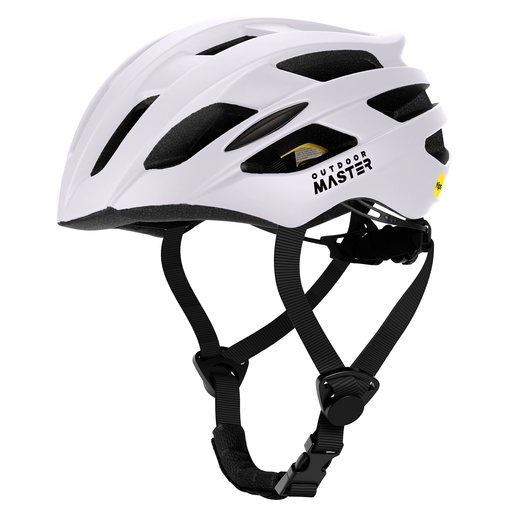
Why This Fits Their Persona: Ideal for the cyclist who spends hours on country lanes. Its ultra-light build reduces neck fatigue on long distances, and the extensive ventilation is perfect for tackling climbs without overheating.
This helmet avoids the ventilation illusion with 21 vents connected by deep internal channels, ensuring genuine airflow rather than just superficial holes.
Features a genuine MIPS system integrated into a solid, in-mold PC shell with shock-absorbing EPS foam for comprehensive protection.
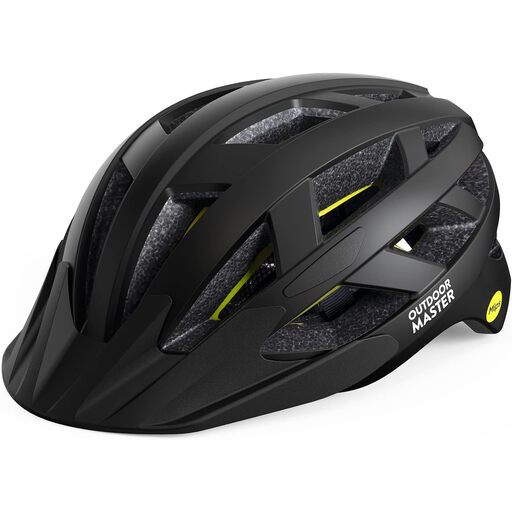
Why This Fits Their Persona: A practical choice for the `commuter bicycle helmet`. Its robust construction and removable visor are well-suited to the demands of city riding in variable UK weather. The versatile design works for both cycling and other activities like skating.
It directly counters the "one-size-fits-most" problem by offering a double adjustment system, including two different thicknesses of removable liners and a dial-fit mechanism for a truly customised fit.
Excellent versatility with 25 vents for airflow and a removable visor, making it adaptable for different riding conditions and styles.
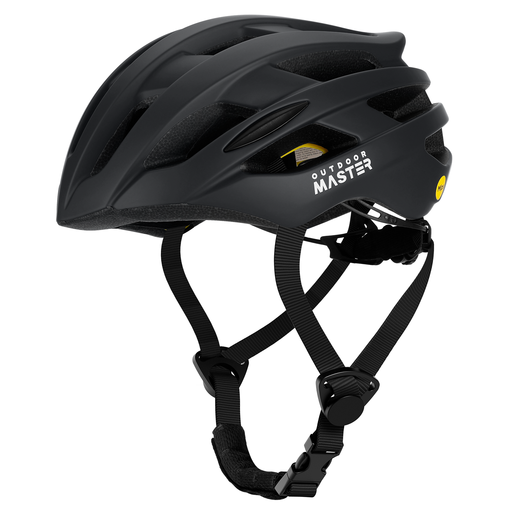
Why This Fits Their Persona: For the rider whose primary concern is protection, this helmet's construction provides reassurance. It combines multiple safety technologies into one cohesive unit, offering a high level of protection for road use.
This model avoids the "MIPS sticker" trap by integrating the technology into a robust in-mold shell with a shock-absorbing EPS foam core, ensuring the system is part of a complete safety structure.
Its primary advantage is the multi-layered approach to safety, combining the MIPS liner with a reinforced shell for comprehensive impact management.
We have compiled a complete, real-time list of products that fully satisfy these strict selection criteria and UK safety regulations.
Most manufacturers recommend replacing your helmet every 3 to 5 years, as the materials can degrade over time due to exposure to UV light and sweat. Crucially, you must replace your helmet immediately after any significant impact or crash, even if there is no visible damage. The protective EPS foam is designed for a single impact and will be compromised after doing its job.
When correctly fitted, a MIPS helmet should feel no different from a non-MIPS equivalent. The low-friction layer is designed to move only during an impact, not during normal wear. If you notice any uncomfortable pressure points or a "wobbly" feeling, it is likely an issue with the helmet's fit or shape for your head, not the MIPS system itself.
A correctly fitted helmet is level and stable. Follow these simple steps: