Repeatable portfolio builders
If you photograph a series of covers or craft pieces, a level overhead position helps you keep framing consistent. Adobe recommends a steady, downward-facing support for flat-lay photography.


For repeatable book-cover photographs, choose a mirrorless camera and lens that can frame the whole cover from your available shooting height, alongside steady overhead support and consistent lighting. A standard zoom can serve whole-cover images; if tiny binding or material details regularly need to fill the frame, check a compatible macro lens rather than assuming the zoom will be enough.
If you photograph a series of covers or craft pieces, a level overhead position helps you keep framing consistent. Adobe recommends a steady, downward-facing support for flat-lay photography.
If your portfolio needs close views of binding, embossing, stitches or paper texture as well as complete covers, lens magnification becomes a separate decision. Canon UK lists 0.25x magnification for the RF-S 18-45mm; Fujifilm X Series UK lists 1:1 for its XF30mmF2.8 Macro.
If the camera will also leave your overhead setup for other creative work, a body with a standard zoom offers a starting point without an immediate dedicated macro-lens purchase. Check what the particular kit includes before deciding.
Plan how to hold the camera level and light the cover, then check whole-cover framing and the size of the smallest detail you need to photograph.
| Concern | What to check | Who this matters to |
|---|---|---|
| Consistent cover images | Check that a downward-facing support fits your workspace and holds the camera level. If you plan to edit files, check the camera's RAW options. | When photographing many covers, I want stable framing and files I can edit consistently; around 46% of consumers would put that repeatable workflow first. |
| Small craft details | Compare the lens's magnification and minimum focusing distance with the size of your smallest subject. | To show stitching or embossed lettering up close, I need a lens that can frame those details; roughly 36% of consumers would prioritise close-detail capability. |
| One camera for several uses | Check the exact supplied zoom lens and kit contents, as well as whether the system suits how you intend to carry it. | If I also use the camera away from my portfolio setup, I want a manageable zoom kit rather than a dedicated close-up setup; about 18% of consumers would make that flexibility their primary concern. |
Handholding a camera above a cover makes level, repeatable framing harder. Adobe identifies steady support and a good light source as important parts of flat-lay photography.
Check that your workspace can accommodate a downward-facing tripod or stand and suitable lighting before committing to a camera kit.
The support and lighting take equipment and setup space beyond the camera itself.
A standard zoom may cover whole books and some nearer details. A dedicated macro lens matters more when very small features need to fill the frame.
Identify your smallest subject and compare lens magnification: Canon UK lists 0.25x for the RF-S 18-45mm, while Fujifilm X Series UK lists 1:1 for the XF30mmF2.8 Macro.
A separate macro lens means another item to carry and manage.
Kit contents differ. Nikon UK says a charger is not included with its specified Z50II 16-50mm plus 50-250mm kit; Panasonic Store UK says its G9II body-only package excludes a USB cable and AC adapter.
Read the box contents and charging information for the exact bundle you intend to buy.
The UK Intellectual Property Office explains that images are generally copyright-protected and that exceptions depend on specific circumstances. Photographing someone else's cover does not, by itself, settle whether you may publish the image in a portfolio.
Identify the relevant rights holder and check whether permission is needed for your intended public use; seek legal advice if the position remains unclear.
The EOS R50 and RF-S 18-45mm are one compact APS-C body-and-zoom combination to consider for complete covers and general use.
The X-S20 is an APS-C option for a portfolio workflow that may later include a dedicated close-up lens.
A Z50II kit with the retractable NIKKOR Z DX 16-50mm is another standard-zoom route for portfolio and general photography.
The LUMIX G9II is a Micro Four Thirds body to consider if your photography also extends beyond a fixed cover setup.
These Sony mirrorless camera-and-zoom choices are relevant to framing whole covers and to broader creative use. For small craft details, check the exact supplied lens and its close-focus capability before choosing a kit.
 No image available
Consider this zoom kit for whole-cover framing and general creative use. Its title specifies a 26-megapixel APS-C camera and a 16–50 mm f/3.5–5.6 Power Zoom lens.
Check the lens's close-focus capability for your smallest craft details, and plan a level overhead support for repeatable covers.
 No image available
The supplied 16–50 mm Power Zoom makes this a kit to consider for framing complete covers. Check its close-focus capability if your portfolio also needs small details.
If RAW editing is part of your workflow, confirm the recording options for this exact camera and kit.
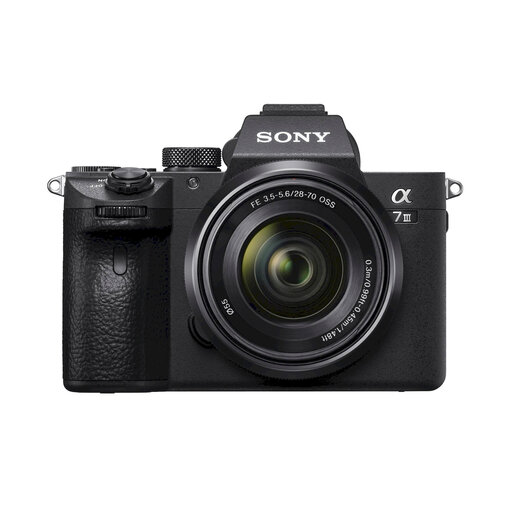 No image available
This full-frame camera and 28–70 mm zoom combination offers a lens range to assess against your available overhead shooting height and cover size.
Check RAW recording and the supplied lens's close-focus capability if editable files or small craft details are priorities.
 No image available
Consider this standard-zoom kit for whole-cover framing alongside other creative photography. The product title identifies an APS-C camera and a 16–50 mm lens.
Confirm RAW options and lens close-focus capability for your intended editing and detail work; use level overhead support for consistent covers.
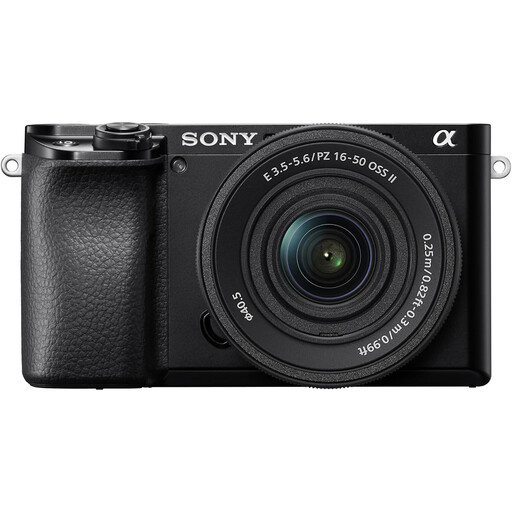 No image available
This zoom-lens camera is relevant to whole-cover photographs, but confirm the lens before choosing it: the product title says 16–55 mm, while its description says 16–50 mm.
Check that lens's close-focus capability and the camera's RAW options if detailed craft photographs and editable files matter to you.
No: steady overhead support and lighting also matter for repeatable flat-lay photographs. Adobe recommends a good light source and a way to hold the camera steadily above the subject, so account for your workspace as well as the body and lens.
Not necessarily if your main images show entire covers; decide based on how closely you need to frame small details. Canon UK lists 0.25x magnification and 15cm close focusing for the RF-S 18-45mm, whereas Fujifilm X Series UK lists 1:1 magnification and a 10cm minimum focusing distance for the XF30mmF2.8 Macro.
Mount the camera above the cover on a stable, level support and keep the composition and lighting consistent between photographs. Adobe describes a downward-facing tripod or stand as useful for holding the camera steady in flat-lay photography.
Do not assume that photographing a cover gives you permission to publish its artwork. UK Intellectual Property Office guidance explains that images are generally copyright-protected and exceptions apply only in specific circumstances; check the rights and your intended use, and seek permission or legal advice where needed.
Confirm the lens and charging accessories for the exact bundle, not just the camera model. Nikon UK says its specified Z50II 16-50mm plus 50-250mm kit excludes a charger, while Panasonic Store UK says its G9II body-only package excludes a USB cable and AC adapter.