Choose a mirrorless camera for ceramic bowls around the exact lens and tabletop setup, rather than body specifications alone. An adjustable screen helps with awkward camera positions, but close-focus capability, consistent lighting and stable support matter when you need repeatable views of a bowl and its details. Check depth of field carefully when photographing curved surfaces up close.
Who is this setup for?
Ceramic sellers making listing images
You need consistent full-bowl and angled photographs that show shape, colour and detail against a controlled background. Adobe identifies these as useful purposes of product-only images; an adjustable camera screen can also help when the camera is mounted above or beside the bowl.
Makers documenting glaze and texture
You need closer views of glaze variation, rim finish or maker's marks. Check the lens's focusing distance and the space left for lighting: as Adobe explains, close-up photographs naturally have shallow depth of field.
Creators building a flexible studio kit
You want an interchangeable-lens camera for bowls, wider studio scenes and occasional video. Choose the lens for the details you need to show, while checking that the camera and lens suit your usual working space.
What matters when choosing?
Start with the smallest detail you need to photograph and your usual camera position. Those choices determine what to check in the lens and screen before comparing camera bodies.
| Concern |
What to check |
Who this matters to |
| Repeatable listing composition |
Check screen movement for your camera height and whether the exact lens frames your usual bowl sizes from the available space. |
I need the bowl's shape and colour to look consistent across a set of listings, even when the camera is mounted at an awkward angle. Around 37% of consumers would put repeatable composition first. |
| Close ceramic detail |
Check the lens's minimum focusing distance, stated magnification and room for lights; review how much of the curved surface stays sharp. |
When a glaze variation or maker's mark needs its own photograph, I need to frame it closely without losing the detail I meant to show. This would be the primary concern for around 36% of consumers. |
| Compact, adaptable kit |
Confirm the lens mount, exact supplied lens and options for a closer-focusing lens if your work changes. |
I want a kit that is manageable beyond the tabletop and can also cover wider studio views or occasional video. Around 27% of consumers would prioritise that flexibility. |
Common buying pitfalls
-
Choosing the body before checking the lens
A camera's resolution does not tell you whether its supplied lens can frame a small maker's mark. Canon specifies 12 cm close focusing for the RF-S 18-150mm F3.5-6.3 IS STM, but that figure does not apply to other lenses.
Check the exact lens's minimum focusing distance and magnification, where stated, alongside the space you need around the bowl for lighting.
-
Using the widest aperture for every close-up
Adobe notes that close-up photographs inherently have shallow depth of field. On a curved bowl, focusing correctly on one spot can still leave another important part soft.
Choose an aperture for the area that needs to appear sharp, stabilise the camera and inspect a photograph at useful magnification before shooting the whole batch.
-
Relying on stabilisation for a repeatable setup
Lens stabilisation addresses camera movement; it does not hold the camera in the same position between shots or control reflections on a glazed surface.
Use a stable camera position, controlled lighting and a consistent background for repeat images. Treat stabilisation as a separate feature, not a substitute for that setup.
-
Considering the camera body in isolation
The camera and lens are only part of a working tabletop arrangement. Adobe also identifies a tripod and lighting as relevant product-photography equipment.
Before choosing a kit, identify the exact lens and the support, lighting and background materials needed for your photographs.
Brands to consider for ceramic photography
These named camera and lens combinations offer different starting points; the brand alone does not establish close-up suitability.
Canon
An EOS R option for buyers considering one zoom for full-bowl views and nearer details.
- Canon specifies a 24.2-megapixel APS-C sensor and vari-angle touchscreen for the EOS R50, and 12 cm close focusing for the RF-S 18-150mm F3.5-6.3 IS STM lens.
- That general-purpose zoom is not a dedicated macro lens; check its magnification and working distance if tiny texture details must fill the frame.
Nikon
A Z50II kit option for buyers who want a retractable lens and an adjustable monitor.
- Nikon describes the Z50II's vari-angle monitor and a 16-50mm kit lens covering wide-angle to portrait views, with in-lens vibration reduction.
- Check the exact kit lens's focusing distance and magnification before choosing it for small glaze details.
Sony
An E-mount option for buyers who intend to select their close-focusing lens separately.
- Sony specifies an APS-C sensor measuring 23.5 × 15.6 mm and E-mount lens compatibility for the α6400.
- Those body specifications do not establish how closely a particular lens can frame ceramic texture; assess the selected lens on its own terms.
Fujifilm
An X-mount option for makers who place particular value on a portable camera body.
- Fujifilm specifies a 26.1-million-effective-pixel APS-C sensor for the X-M5 and an approximate body weight of 355 g.
- Body size does not establish close-up framing: check the chosen X-mount lens and how the camera handles on your support.
Joybuy camera choices
These Sony camera-and-zoom kits offer starting points for full-bowl photographs and adaptable tabletop framing. If glaze texture or small marks are central to your work, check the exact supplied lens's close-focus specifications before choosing a kit.
 Image unavailable
Sony A6400 APS-C with 16–50mm Power Zoom Lens
A camera-and-zoom option for general bowl framing. Check the supplied lens's minimum focusing distance and magnification if small surface details need to fill the frame.
View on Joybuy
 Image unavailable
Sony Alpha 7 III Full-Frame with 28–70mm Zoom Lens
A zoom-lens kit to consider for full-bowl framing. If you also need close views of glaze or maker's marks, check the lens's magnification against the size of those details.
View on Joybuy
 Image unavailable
Sony A6700 APS-C with 16–50mm Lens
A supplied-zoom option for varied bowl compositions. Confirm the 16–50mm lens's close-focus distance and magnification before relying on it for texture photographs.
View on Joybuy
 Image unavailable
Sony Alpha ZV-E10 II K with 16–50 mm f/3.5–5.6 Power Zoom
An interchangeable-lens kit for bowl photographs alongside other creator work. Its supplied 16–50 mm f/3.5–5.6 lens should be checked for the focusing distance and magnification your smallest details require.
View on Joybuy
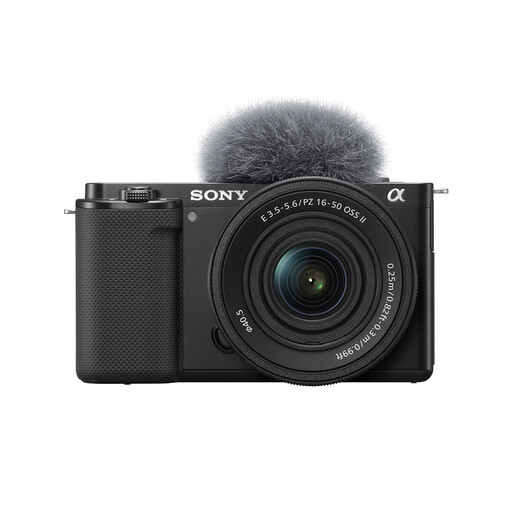 Image unavailable
Sony ZV-E10K with 16–50mm Power Zoom Lens
A supplied-zoom kit for flexible full-bowl framing. For close photographs of rim texture or maker's marks, check the exact lens's minimum focusing distance and magnification.
View on Joybuy
Frequently asked questions
Do I need a macro lens to photograph ceramic bowls?
Not necessarily: a general zoom can cover full bowls and some nearer views if it frames the detail you need. Canon specifies 12 cm close focusing for its RF-S 18-150mm lens, but focusing distance alone does not tell you how large a small mark will appear; check magnification and room for lighting when choosing any lens.
Should I use a wide aperture for close bowl photographs?
Use a wide aperture only when its shallow in-focus area suits the photograph. Adobe notes that close-up images inherently have shallow depth of field, so inspect whether the rim and other important parts of a curved bowl remain sharp, and use stable support when adjusting your setup.
What do I need besides a camera and lens?
Plan a stable camera position, lighting and a consistent background for repeatable bowl images. Adobe identifies a tripod and lighting as relevant product-photography equipment; consider how you will position them around both full-bowl and close-detail shots.
What if a camera bought online is unsuitable or faulty?
Treat a change-of-mind cancellation and a fault claim as different matters. GOV.UK says customers ordering online, by mail or by telephone have a limited-time right to cancel even if an item is not faulty; separate rights apply to faulty goods. Keep your order details and check the appropriate procedure for the issue you have.


