Ceramic sellers building a consistent catalogue
If you photograph many bowls under the same lights, RAW capture, white-balance control and repeatable exposure decisions matter more to your workflow than a high ISO specification.


Choose the camera system around your tabletop workflow, not sensor size alone. For repeatable photographs of ceramic bowls, prioritise controllable exposure and white balance, RAW capture, a suitable lens and consistent lighting and camera position. Higher resolution matters more if you crop heavily; in-body stabilisation matters more if you also shoot handheld.
If you photograph many bowls under the same lights, RAW capture, white-balance control and repeatable exposure decisions matter more to your workflow than a high ISO specification.
For rims, texture and maker’s marks, assess the lens as carefully as the body. If you need life-size detail, look for a suitable macro lens: Nikon specifies 1:1 reproduction for its NIKKOR Z MC 105mm f/2.8 VR S.
If you sometimes photograph finished pieces handheld in a workshop or at a market, body size and stabilisation become more relevant. They do not replace a fixed camera position for repeatable catalogue framing.
Start with the photographs you need to deliver, then check the body, lens and support equipment as one system. A controlled tabletop setup calls for different priorities from occasional handheld detail work.
| Concern | What to check | Who this matters to |
|---|---|---|
| Consistent colour and editable files | Check for RAW capture, manual exposure and a way to set or review white balance under your lamps. | If I photograph a series of bowls, I want to make consistent exposure and colour decisions while retaining room to edit the files. Roughly 30% of consumers put this colour workflow first. |
| Close-up glaze and rim detail | Check the exact lens’s magnification, close-focus distance, working distance and mount compatibility. | When a maker’s mark or glaze texture needs its own photograph, I need the lens to frame that detail closely. For around 30% of consumers, close detail is the primary need. |
| Handheld flexibility | Check the conditions behind any stabilisation specification and whether the camera and intended lens suit carrying. | I usually work at a tabletop but also need to photograph pieces where setting up support is awkward. Handheld flexibility comes first for roughly 20% of consumers. |
| A usable body-and-lens kit | Compare the exact lens and charging accessories supplied, alongside any support equipment you need. | I want my initial kit to cover full-bowl photographs without overlooking a lens needed for closer shots. Around 20% of consumers make the complete kit their main concern. |
A standard kit lens may not provide the magnification or working distance needed for a life-size photograph of a rim, glaze or maker’s mark.
Decide how small a detail you need to frame, then check the exact lens’s magnification, focusing distances and mount compatibility before settling on a body.
A dedicated macro lens is an additional part of the system to account for if that level of detail is essential.
Handheld and low-light capabilities do not, by themselves, keep the lights, camera position and framing consistent across a catalogue of bowls.
Try your planned lamps and camera support with the body you are considering; treat handheld specifications as a separate benefit if you also photograph work away from the tabletop.
Body-only listings and lens bundles differ. For example, Canon’s cited EOS R8 bundle lists two lenses but says a USB-C charger is not included in the box.
Read the exact listing for its lens models, battery and charging arrangements, then check whether the supplied lens suits your close-up photographs.
A product title or image alone cannot establish which model, charging accessories or support terms a seller will supply.
Confirm the exact model, seller identity, applicable guarantee and supplied accessories before ordering, particularly when comparing listings from different sellers.
The α7C II is a compact full-frame route for photographers who expect to crop product images. Sony UK lists approximately 33.0 effective megapixels and a 2500 K to 9900 K colour-temperature range.
The full-frame Z5II offers a route for photographers who combine tabletop work with handheld photographs and may add a dedicated close-up lens.
The APS-C X-S20 is an option for a controlled tabletop setup where manual exposure and RAW capture are priorities.
The EOS R8 is a 24.2-megapixel full-frame body to assess alongside the particular RF lenses and support equipment your photographs require.
These Sony cameras offer full-frame and APS-C starting points for a bowl-photography setup. Choose between the listings by checking the lens actually supplied and the controls you need for repeatable tabletop photographs.
 No image available
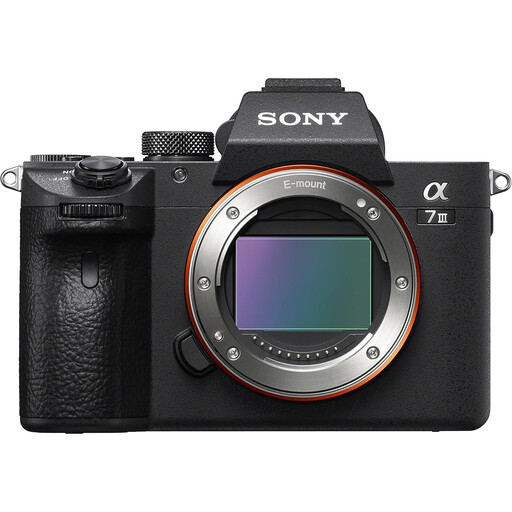
For a tabletop setup, confirm which lens you would use before choosing this full-frame body. The listing title says body only, while its description mentions a 28–70 mm lens; check the exact bundle contents and the lens’s close-up capability if glaze or rim detail matters to you.
 No image available
This APS-C camera-and-zoom listing is a starting point for full-bowl photographs. Its title specifies 26 megapixels and a 16–50 mm f/3.5–5.6 lens; check manual exposure controls for a repeatable catalogue workflow and the lens’s close-focus capability before planning detailed glaze shots.
No: a controlled tabletop setup can also use an APS-C body with the exposure controls, RAW capture and lens capability your photographs require. Fujifilm lists those capture options for the X-S20; a higher-resolution full-frame option such as Sony’s 33.0-megapixel α7C II is more relevant if you regularly need substantial cropping.
Not for every full-bowl photograph. A macro lens becomes more relevant when you need very close images of glaze, texture, rims or maker’s marks. Nikon specifies 1:1 reproduction for its NIKKOR Z MC 105mm f/2.8 VR S; check the capability of the exact lens you plan to use rather than assuming a standard zoom offers it.
No: stabilisation is useful to assess for handheld work, but it does not hold your framing or lighting arrangement constant across a series of bowls. For repeatable tabletop photographs, plan how you will keep the camera position fixed; treat the stabilisation specifications published by Nikon and Fujifilm as relevant to your handheld work.