What matters when choosing?
For a stationary bowl, decide how small a detail must fill the frame, then check the lens mount and how you will confirm focus in your lighting setup.
Canon EOS R50 with an RF close-up lens
Consider it when: You want an APS-C RF-system starting point and the magnification you need can be met by your chosen lens.
Trade-off: Canon specifies the RF 35mm F1.8 MACRO IS STM at 0.5x, not 1:1, so compare the smallest detail you need to photograph before choosing it.
Nikon Z50II with NIKKOR Z MC 50mm f/2.8
Consider it when: Small maker marks or glaze details call for the lens’s Nikon-specified 1:1 reproduction.
Trade-off: Its close focusing can restrict space for lights and reflectors near a glossy bowl; plan the camera and lighting positions together.
Sony α6400 with FE 50mm F2.8 Macro
Consider it when: You want 1:1 close-ups and the α6400’s specified Focus Magnifier and peaking for deliberate focus checks.
Trade-off: Sony specifies a 75mm-equivalent view for this lens on APS-C, so check your camera position when framing an entire bowl.
| Concern |
What to check |
Who this matters to |
| Close-up detail |
Check the exact lens’s maximum magnification and minimum focus distance; a macro label alone does not establish 1:1 reproduction. |
If maker marks or small areas of glaze must fill the frame, I need enough enlargement without losing space for my lights. Around 33% of consumers put close-up detail first. |
| Focus confirmation |
Look for focus magnification, peaking or viewfinder controls on the exact body, then check focus with your intended lens and lighting. |
On a dark-looking set, I want to see whether the rim or the chosen patch of glaze is sharp before taking the photograph. Focus confirmation comes first for around 27% of consumers. |
| Lens-system fit |
Confirm whether the listing includes a lens and match its mount to the body; check any adapter requirement separately. |
I want a straightforward first setup without choosing a lens that will not fit when I move to closer shots. Around 27% of consumers prioritise a compatible system start. |
| Mixed-use flexibility |
Check the supplied lens and the complete camera-and-lens setup before weighing general portability against close-up capability. |
If the same camera will also leave the tabletop setup, I need to consider broader framing and carrying the kit as well as bowl details. That flexibility is the primary concern for around 13% of consumers. |
Joybuy cameras for bowl photography
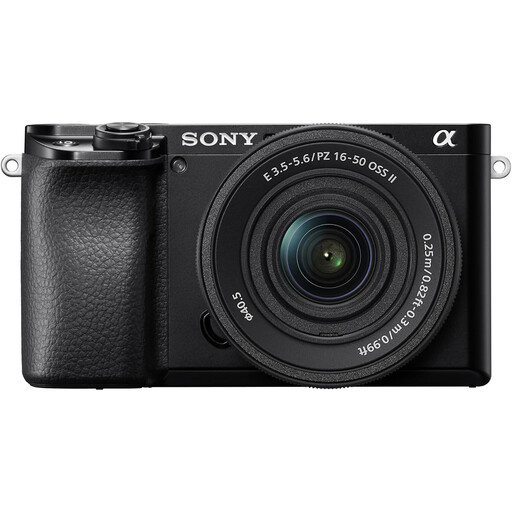
This Sony A6100 listing offers an APS-C mirrorless starting point with a zoom lens for framing bowls. If small glaze details are your priority, check the supplied lens’s close-up capability before choosing it.
 No image available
Sony A6100 APS-C Mirrorless Camera with 16–55mm Zoom Lens
The listed zoom lens and tilting screen suit shoppers planning whole-bowl views and high-angle tabletop compositions.
The listing identifies a 24.2MP APS-C camera and a 16–55mm zoom lens. If maker marks or small glaze details must fill the frame, confirm the supplied lens’s magnification; check the A6100’s focus controls if you intend to inspect sharpness manually.
View on Joybuy
Questions before you buy
Do I need a 1:1 macro lens to photograph ceramic bowls?
No: choose 1:1 when small maker marks or glaze details need to fill the frame, rather than assuming every bowl photograph requires it. Nikon specifies the NIKKOR Z MC 50mm f/2.8 and Sony the FE 50mm F2.8 Macro at 1:1; Canon specifies its RF 35mm F1.8 MACRO IS STM at 0.5x, so compare that difference with the size of the details you need to show.
How should I check focus against a dark background?
Check the point of sharpness using the bowl, lens and lighting arrangement you intend to use. Sony specifies Focus Magnifier and peaking on the α6400; Canon publishes an EOS R50 autofocus working range under stated test conditions, while Nikon describes the Z50II viewfinder as clearer in dark environments. None of those descriptions replaces a focus check in your own setup.
What should I check besides the camera body?
Check which lens is included and whether its close-up capability meets your needs. The EOS R50 natively supports RF/RF-S lenses, the Nikon macro option discussed here uses Z mount, and Sony lists its FE 50mm F2.8 Macro as compatible with E-mount APS-C cameras. Confirm the exact body-and-lens pairing before purchase.
What can I do with a camera I replace?
Ask the retailer or local authority about a suitable reuse, take-back or recycling route for the camera and its electronic accessories. GOV.UK identifies the UK Waste Electrical and Electronic Equipment Regulations 2013, as amended, as underpinning measures that encourage recovery, reuse and recycling of electrical equipment.


