Choose a mirrorless system around a compatible macro lens and a stable overhead setup, rather than choosing the body by megapixels alone. The Canon EOS R7 offers a 32.5 MP APS-C sensor and access to a 1.4x macro lens; Sony α6700 and Nikon Z50II routes offer compatible 1:1 macro options if their systems suit you better. Whichever route you take, diffuse the window light and keep the coin parallel to the camera sensor to manage reflections and uneven focus.
Who is this setup for?
Collectors recording fine details
If mint marks, die varieties or edge lettering matter, prioritise repeatable close focus and enough magnification to record the feature you need. Files with room to crop can help, but they cannot correct glare or missed focus.
Collectors building a whole-coin catalogue
Consistent photographs of both sides call for an overhead setup that keeps the coin flat and parallel to the sensor, with window light controlled across the frame.
Photographers adding coin work
If you also use the camera for other subjects, consider which body and everyday lenses you will use regularly. For close coin details, check the availability of a compatible dedicated macro lens as part of that system choice.
What matters when choosing?
Choose the lens and overhead working space together, then compare bodies for the files and controls you need. Venus Optics and Coin Photography Studio both emphasise the importance of the physical setup for coin photographs.
Canon EOS R7 with RF 100mm macro
Consider it when: You want the EOS R7’s 32.5 MP APS-C files and the RF 100mm F2.8L Macro IS USM’s 1.4x magnification for small details, as specified by Canon UK.
Allow for: The macro lens is a separate, substantial part of the overhead setup; its stabilisation does not correct a tilted coin or reflections.
Sony α6700 with FE 90mm macro
Consider it when: You want Sony’s 26.0 MP APS-C body with 14-bit RAW capture and a compatible E-mount 1:1 macro lens, as specified by Sony UK.
Allow for: The FE 90mm F2.8 Macro G OSS is a full-frame lens; check how it fits above your coin while leaving space to control the light.
Nikon Z50II with Z MC 105mm macro
Consider it when: You prefer the Nikon Z system and want the NIKKOR Z MC 105mm f/2.8 VR S’s 1:1 reproduction and close-up controls, as described by Nikon UK.
Allow for: A 105mm macro lens needs a workable overhead position and room around the coin for diffusion.
| Concern | What to check | Who this matters to |
|---|
| Close-up detail |
Check that a compatible lens reaches 1:1 magnification or greater, and that its focusing distance leaves room to position the camera and light. |
If tiny inscriptions or surface features determine what I record, I need magnification before relying on a tighter crop. Around 42% of consumers put close-up detail first. |
| Repeatable whole-coin images |
Plan a stable overhead position with the coin parallel to the sensor, and space to diffuse the window light. |
For an obverse-and-reverse catalogue, I want framing and illumination I can repeat without glare obscuring the design. Repeatability comes first for roughly 33% of consumers. |
| Use beyond coins |
Check the lens mount and the everyday lenses you would use alongside a compatible macro option. |
If this camera also comes with me for other subjects, I need a system that works beyond the coin setup without giving up a route to close focus. About 25% of consumers make that wider use their primary concern. |
Buying pitfalls
-
Assuming a kit zoom is a macro setup
A general zoom may not give the magnification or close focus needed for small coin details. Canon UK, Sony UK and Nikon UK specify dedicated macro lenses reaching 1:1 or greater for the routes discussed here.
Choose the macro lens and confirm its mount, magnification and working room before settling on the body.
A dedicated macro lens is a separate item to account for alongside a camera kit.
-
Pointing the coin at an undiffused window
Direct light can produce bright reflections on metal and obscure the detail you intended to photograph.
Diffuse the window light, adjust its angle relative to the coin and inspect the resulting reflections before recording a full set.
Diffusion or light-blocking material, and time spent adjusting it, may be part of the setup.
-
Expecting stabilisation to fix an uneven frame
Stabilisation cannot make a tilted coin parallel to the sensor; one edge may remain less sharp than the other.
Position the camera squarely overhead and check alignment before changing focus technique.
A tripod or copy stand may still be needed to hold that position consistently.
-
Choosing by megapixels alone
More resolution can leave room to crop, but glare, missed focus and insufficient magnification can limit the detail in the file.
Confirm the macro lens and lighting arrangement first, then use body resolution to distinguish systems that otherwise meet your needs.
Relevant brands to consider
Canon
Canon UK specifies a 32.5 MP APS-C sensor for the EOS R7 and 1.4x maximum magnification for the compatible RF 100mm F2.8L Macro IS USM.
- The RF macro lens offers a route to photographing small details at greater than life size.
- It is a separate 100mm lens; check that its size and overhead position work with your lighting setup.
Sony
Sony UK specifies 26.0 MP still images and 14-bit RAW capture for the α6700; its FE 90mm F2.8 Macro G OSS offers 1:1 magnification for a compatible E-mount setup.
- The FE 90mm provides a dedicated close-focus option within the E-mount system.
- It is a full-frame 90mm lens, so assess how the complete setup fits above your coin.
Nikon
Nikon UK describes the Z50II and the NIKKOR Z MC 105mm f/2.8 VR S as a Z-system body and close-up lens option; the lens offers 1:1 reproduction.
- The 105mm macro lens offers close-up-oriented manual-focus control.
- Check the physical space needed for the lens and for light control above a copy stand.
Mirrorless camera kits on Joybuy
These Sony mirrorless camera kits provide starting points for an E-mount coin-photography setup. Compare their bodies and supplied zooms for your wider photography needs, and choose a compatible macro lens if close coin details are your priority.
 Image unavailable
Sony Alpha ZV-E10 II K with 16–50 mm power zoom
Consider this APS-C kit if you also want a zoom for general photography while planning a separate close-focus option for coin details.
The product title specifies 26 megapixels and a 16–50 mm f/3.5–5.6 power zoom. Confirm the camera configuration and the supplied lens’s close-focus capability before buying.
View on Joybuy
 Image unavailable
Sony A6700 with 16–50 mm lens
Consider this kit if the α6700 body suits your wider photography and you intend to add a compatible macro lens for detailed coin images.
Sony UK specifies a 26.0 MP APS-C sensor and 14-bit RAW capture for the α6700. Check the supplied zoom’s close-focus capability rather than treating it as a dedicated macro lens.
View on Joybuy
 Image unavailable
Sony A6400 with 16–50 mm power zoom
This kit is a route into Sony mirrorless photography if you want a general-purpose zoom as well as the option to select an E-mount macro lens for coins.
The product title identifies an APS-C body and 16–50 mm power zoom. Check the zoom’s magnification and minimum focusing distance against the size of the coin details you need to record.
View on Joybuy
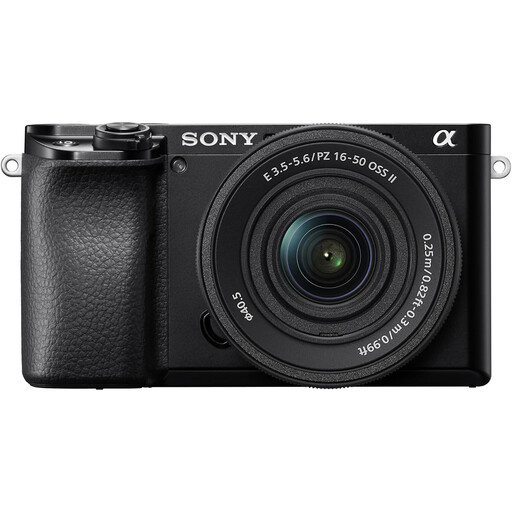 Image unavailable
Sony A6100 with zoom lens
Consider this APS-C kit if you want a zoom for general photographs and plan to choose a compatible macro lens for close coin work.
Confirm which lens variant is supplied: the product title gives a 16–55 mm range, while its description gives 16–50 mm. Also check that lens’s close-focus capability for your intended coin framing.
View on Joybuy
Questions about photographing coins
Is window light enough for photographing collectible coins?
Window light can work if you control its reflections on the coin. Diffuse direct light, check that illumination reaches the whole surface and adjust the angle when bright patches hide detail.
Do I need a 1:1 macro lens for whole-coin photographs?
Not necessarily for every whole-coin frame: the magnification needed depends on the coin and your framing. A 1:1 macro lens gives you close-focus flexibility for smaller features; greater magnification is worth considering when the detail you need to record justifies the tighter framing and shallower depth of field.
Can camera stabilisation replace a tripod or copy stand?
No, not when you need repeatable top-down coin photographs. Stabilisation may reduce camera shake, but it cannot align the coin with the sensor, remove reflections or hold the framing consistent across a catalogue.
What do I need besides a mirrorless camera body?
Plan for a compatible macro lens if fine coin detail matters, plus a stable tripod or copy stand and a way to diffuse or block window light. Check what your chosen camera kit includes before deciding which parts of that setup you still need.


